


Listen to the article
Supreme Court to Rule on Geofence Warrants in Case That Could Reshape Digital Privacy
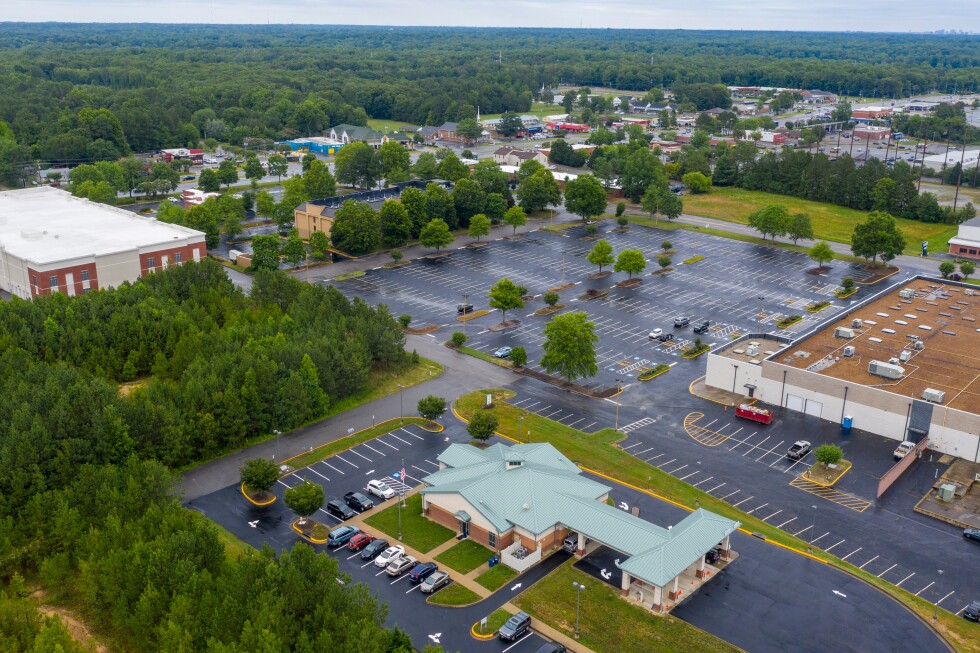
When Okello Chatrie robbed a credit union in suburban Richmond, Virginia, making off with $195,000, he thought he had escaped without a trace. He didn’t count on his cellphone betraying his location.
Police, facing a stalled investigation, turned to a controversial technology known as a geofence warrant, which allowed them to collect location data from Google on all mobile devices near the Call Federal Credit Union in Midlothian around the time of the 2019 robbery. Chatrie’s phone was among those identified, leading investigators to his doorstep where they found nearly $100,000 in cash, including bills wrapped in bands signed by the bank teller.
Now the Supreme Court will determine whether this increasingly common police tool violates Americans’ constitutional rights. The justices are hearing arguments in a case that forces them to interpret the Fourth Amendment’s ban on unreasonable searches in the context of 21st-century technology.
Geofence warrants fundamentally reverse traditional investigative approaches. Rather than identifying a suspect first and then obtaining a warrant to search their property or electronic devices, police use these warrants to identify everyone in a specific location during a crime, then narrow down potential suspects.
“This technology turns traditional policing on its head,” explains Jake Laperruque, deputy director of the Center for Democracy and Technology’s Security and Surveillance Project. “Instead of starting with a suspect and getting their data, you’re starting with everyone’s data and finding your suspect.”
Law enforcement officials defend the practice as an essential tool in solving crimes where traditional evidence is lacking. Prosecutors credit geofence warrants with helping crack cold cases and identifying perpetrators when surveillance cameras fail to capture faces or license plates. The technology has been used in high-profile investigations, including identifying participants in the January 6, 2021 Capitol riot and in the search for the person who planted pipe bombs outside political party headquarters the night before.
Police departments across the country have reported successes using these warrants to solve homicides and violent crimes in California, Georgia, North Carolina, and other states.
Civil liberties advocates, however, see geofence warrants as dangerous fishing expeditions that violate innocent people’s privacy rights merely because their phones happened to be near a crime scene. The Electronic Frontier Foundation and other digital rights organizations warn that upholding the practice could “unleash a much broader wave of similar reverse searches” across digital platforms.
In Chatrie’s case, he pleaded guilty but challenged the constitutionality of the evidence against him. His lawyers argued that the geofence warrant violated his privacy by gathering location history without any evidence connecting individuals to the crime. Prosecutors countered that Chatrie had no reasonable expectation of privacy because he voluntarily opted into Google’s location history feature.
A federal judge agreed the search violated Chatrie’s rights but allowed the evidence under the “good faith” exception because the officer who applied for the warrant believed he was acting properly. A federal appeals court in Richmond upheld the conviction in a split decision, creating a circuit split when the federal appeals court in New Orleans ruled in a separate case that geofence warrants are “general warrants categorically prohibited by the Fourth Amendment.”
The case highlights the growing challenge courts face in applying centuries-old constitutional principles to rapidly evolving technology. In 2018, the Supreme Court ruled 5-4 in favor of a defendant whose movements were tracked for nearly four months without a warrant through cellphone tower data. In that case, Chief Justice John Roberts acknowledged the “seismic shifts in digital technology” and the “exhaustive chronicle of location information casually collected by wireless carriers today.”
The Policing Project at New York University School of Law has urged the court to avoid an all-or-nothing approach, warning that a ruling fully supporting the government would allow police to use geofence warrants “with no judicial supervision or constitutional safeguards,” while a complete ban would impede “legitimate law enforcement activities.”
The Supreme Court’s decision, expected by June, could establish new boundaries for digital privacy in an era when smartphones track our every movement, potentially affecting millions of Americans and reshaping how police investigate crimes in the digital age.
Fact Checker
Verify the accuracy of this article using The Disinformation Commission analysis and real-time sources.

14 Comments
This case highlights the need for the legal system to keep pace with rapidly evolving technology. The Supreme Court’s ruling could have a lasting impact on digital privacy rights.
Absolutely. As technology continues to advance, it’s crucial that the law provides clear guidelines to protect individual liberties while also enabling effective law enforcement.
Interesting case that examines the limits of digital privacy in the modern age. The Supreme Court will have to carefully weigh the need for effective law enforcement against individuals’ constitutional rights.
Indeed, the rise of geofence warrants highlights the growing tension between technology and privacy. This ruling could set an important precedent.
The bank robber’s case is a fascinating intersection of crime, technology, and constitutional rights. I’m curious to see how the Supreme Court will navigate this complex issue.
Me too. This ruling could have far-reaching implications for how law enforcement uses digital data in investigations going forward.
This case highlights the tricky balance between public safety and individual privacy. The Supreme Court’s decision could have far-reaching implications for how law enforcement uses emerging technologies.
Agreed. It will be interesting to see if the Court provides clear guidelines on the use of geofence warrants or leaves more room for interpretation.
The bank robber’s case raises important questions about the Fourth Amendment’s protections in the digital age. I’m eager to see how the Supreme Court rules on this issue.
Me too. This case could set a precedent that significantly impacts law enforcement’s ability to utilize location data in future investigations.
The bank robber’s cellphone inadvertently betraying his location is a cautionary tale in the digital age. I’m curious to see if the Supreme Court will impose limits on this investigative technique.
Good point. As technology continues to advance, the boundaries of privacy become increasingly blurred. This ruling will be closely watched.
This case touches on the complex balance between public safety and civil liberties. It will be fascinating to see how the Court rules on the use of geofence warrants.
Absolutely. The outcome could have broad implications for how law enforcement leverages digital data in future investigations.