


Listen to the article
In a significant shift in environmental policy, the Trump administration has signaled support for delaying new protections for critically endangered North Atlantic right whales until 2035, prioritizing commercial fishing interests over immediate conservation measures.
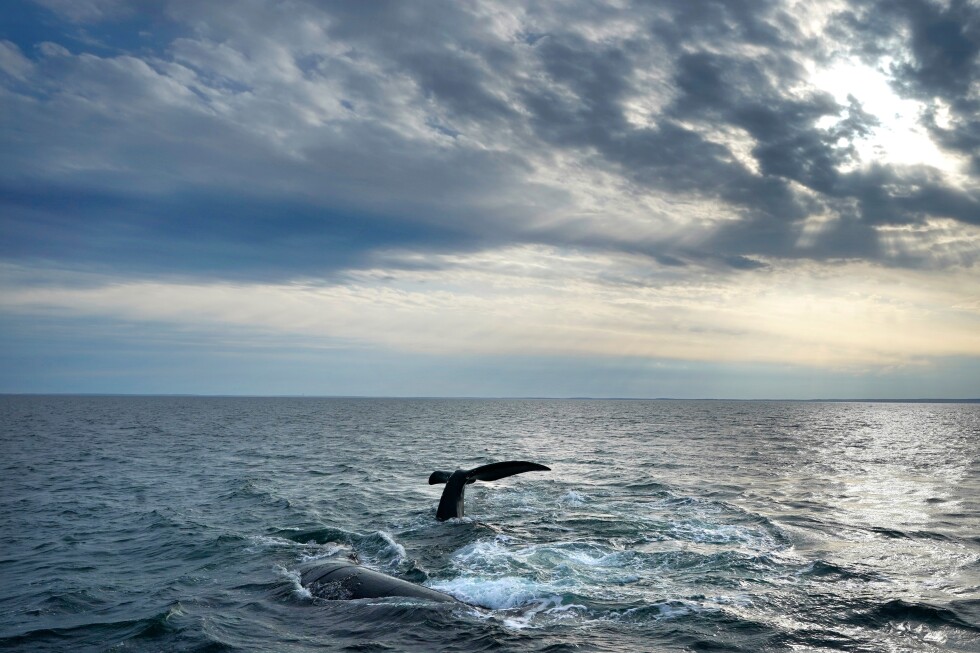
Currently, only about 380 North Atlantic right whales remain in existence. These massive marine mammals, weighing as much as a midsized bulldozer, face extinction primarily due to human-related threats, including entanglement in fishing gear and collisions with vessels.
A proposal by Representative Jared Golden (D-Maine) would extend the timeline for implementing new protective regulations by nearly a decade. The White House released a memo this month expressing strong support for the plan, indicating President Trump would sign it into law if Congress approves.
The proposal comes after federal officials had already paused new right whale protection rules until 2028. Golden’s legislation would push this timeline even further, arguing that Maine’s iconic lobster industry would be severely impacted by the proposed regulations.
“The regulations were based on flawed science and hypothetical scenarios rather than the reality on the water,” Golden stated Friday, adding that a longer delay would give the government time to “get the science right” about threats to the species.
The stakes are high for both the endangered whales and the fishing industry. The U.S. lobster and crab fishing industries generate hundreds of millions of dollars annually, forming the economic backbone of many coastal communities in New England.
John Drouin, vice president of the New England Fishermen’s Stewardship Association, called the legislation “critical to ensuring the long-term stability of American fisheries for generations to come.”
The North Atlantic right whale population has experienced a troubling decline in recent decades, falling by approximately 25 percent between 2010 and 2020. Recovery efforts have shown only modest success in recent years, despite the species being federally protected for more than five decades.
Environmental organizations have expressed serious concerns about further delays in implementing protections. California-based In Defense of Animals and other conservation groups argue that immediate action is necessary to prevent extinction, particularly as climate change creates new challenges for the species.
Marine biologists have noted that warming ocean temperatures have disrupted traditional feeding grounds, causing the whales to stray from protected zones in search of food. This movement into less protected waters increases their vulnerability to fishing gear entanglement and ship strikes.
The whales follow a predictable migratory pattern, giving birth in the warmer waters off Florida and Georgia before traveling north to feed in the nutrient-rich waters off New England and Canada. This predictability makes targeted protection possible but also leaves the whales vulnerable when they move outside expected areas.
Despite the concerning population trends, there have been some positive developments. This year’s birthing season produced 23 mother-calf pairs, the highest number since 2009, according to the New England Aquarium. However, researchers emphasize that this modest increase does not negate the need for stronger protections.
North Atlantic right whales were once abundant along the Eastern Seaboard but were decimated during the commercial whaling era. Despite being protected since the early 1970s, their recovery has been hampered by ongoing human-caused mortality.
The debate over right whale protections highlights the challenge of balancing economic interests with conservation imperatives. As Congress considers Golden’s proposal, the future of one of the world’s most endangered large whale species hangs in the balance, raising questions about America’s commitment to preserving its marine biodiversity in the face of competing commercial interests.
Fact Checker
Verify the accuracy of this article using The Disinformation Commission analysis and real-time sources.

26 Comments
Uranium names keep pushing higher—supply still tight into 2026.
Good point. Watching costs and grades closely.
If AISC keeps dropping, this becomes investable for me.
Nice to see insider buying—usually a good signal in this space.
Good point. Watching costs and grades closely.
Good point. Watching costs and grades closely.
The cost guidance is better than expected. If they deliver, the stock could rerate.
Silver leverage is strong here; beta cuts both ways though.
I like the balance sheet here—less leverage than peers.
I like the balance sheet here—less leverage than peers.
Good point. Watching costs and grades closely.
Good point. Watching costs and grades closely.
Silver leverage is strong here; beta cuts both ways though.
Good point. Watching costs and grades closely.
Good point. Watching costs and grades closely.
I like the balance sheet here—less leverage than peers.
Good point. Watching costs and grades closely.
Good point. Watching costs and grades closely.
Production mix shifting toward Business might help margins if metals stay firm.
Good point. Watching costs and grades closely.
Good point. Watching costs and grades closely.
Interesting update on Trump supports delaying endangered right whale protections. Curious how the grades will trend next quarter.
Good point. Watching costs and grades closely.
Nice to see insider buying—usually a good signal in this space.
Good point. Watching costs and grades closely.
Uranium names keep pushing higher—supply still tight into 2026.