


Listen to the article
Concerns Grow in Syria as Government Imposes Religious Restrictions
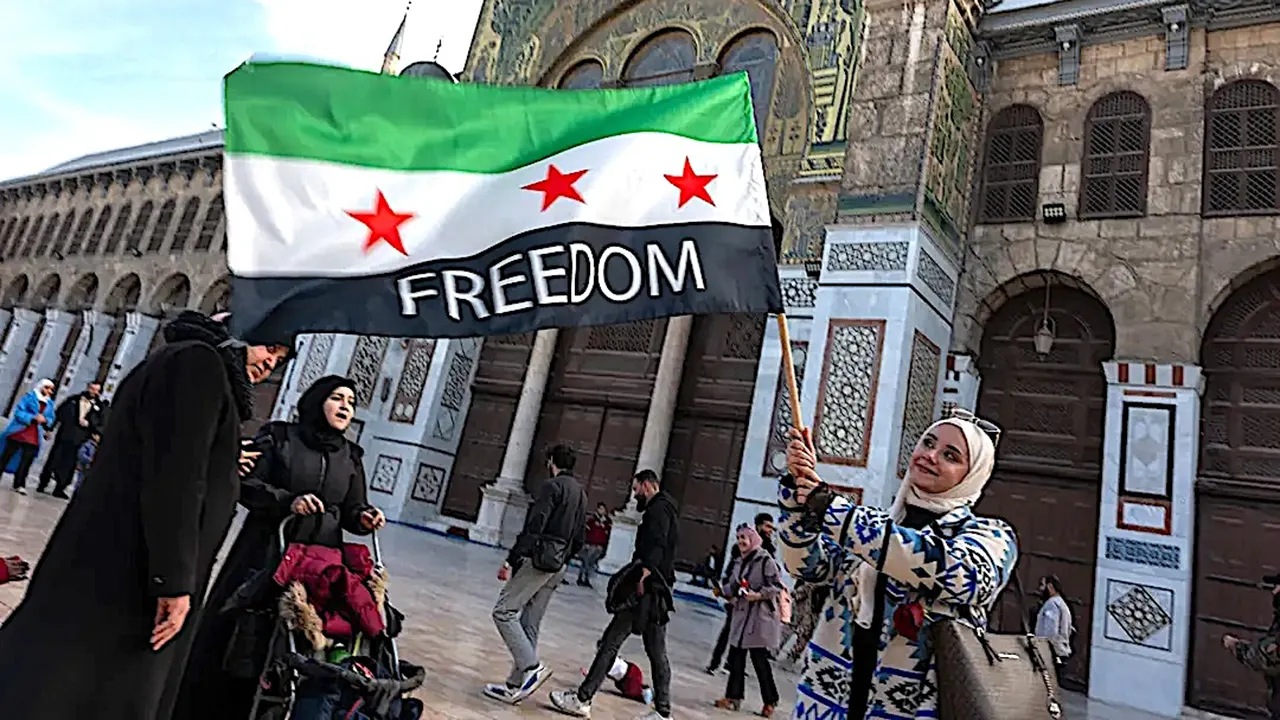
Fears are mounting among segments of Syrian society that President Ahmed al-Sharaa’s government is gradually imposing more conservative Islamic interpretations to restrict civilian freedoms. Recent measures in Damascus have sparked protests and raised questions about the direction of post-Assad Syria.
Local authorities in Damascus recently attempted to ban restaurants and bars from selling alcohol in most parts of the capital, allowing only venues in majority-Christian neighborhoods to continue sales, and then only for takeaway. The unexpected restrictions prompted small protests throughout Damascus, with security forces deployed to maintain order.
“What you’re seeing is pressure from one part of Syrian society, the clerics and sort of harder-line Islamists who have a vision, an Islamist vision of how Syrian society should be,” explained Robert Ford, the last U.S. ambassador to Syria before diplomatic relations were suspended in 2011.
In response to public outcry, Damascus authorities partially walked back the ban, saying alcohol purchases could continue in tourism-focused establishments such as hotels and certain restaurants. The attempt at restriction represents a significant shift for Damascenes, who have had ready access to alcohol in bars and restaurants for decades, even under the oppressive rule of former dictator Bashar al-Assad.
Syria’s Social Affairs Minister Hind Kabawat, a Christian and the only woman in al-Sharaa’s cabinet, pushed back against the restrictions. “Our neighborhoods are not places for alcohol, but the heart of Damascus,” she wrote on Facebook. “The strength of our nation is in its diversity, and any radical, extremist voice will cause our nation’s weakness.”
The alcohol ban is not an isolated incident. Officials in the port city of Latakia banned women from wearing makeup at work in February, while another town outside Damascus prohibited men from working in women’s clothing stores, citing public decency concerns.
These developments are particularly significant given al-Sharaa’s international charm offensive since taking power. After leading the Islamist rebel group Hay’at Tahrir al-Sham (HTS) to victory over Assad in 2024, al-Sharaa has worked to reintegrate Syria into the global community. President Trump has even endorsed him, hosting him at the White House in November 2025—the first time a Syrian leader had visited since the country gained independence in 1946.
“Steps like these, which restrict freedoms in Syria, are worrying,” said Mara Karlin, a former Department of Defense official and professor at Johns Hopkins School of Advanced International Studies. “When they have occurred far from Damascus, the central government can argue that it lacks sufficient control. But it is particularly meaningful to see such steps in Damascus since President al-Sharaa dominates there.”
The restrictions could potentially harm Syria’s fragile post-conflict reconstruction efforts, especially as al-Sharaa attempts to rebuild the country’s economy and tourism sector. The World Bank has estimated Syria’s reconstruction costs at approximately $216 billion after nearly 14 years of civil war. Syria’s tourism ministry previously stated the country would need at least $100 million over the next seven years to rebuild its tourism industry alone.
Karlin, who testified before the House Foreign Affairs Committee on challenges facing post-Assad Syria, noted that while the Syrian government includes former jihadists, they have been “mostly pragmatic and non-ideological in their governance.” However, she cautioned that “troubling instances of restrictions on women’s freedom” and similar indicators “merit close scrutiny for evidence of the Syrian government’s influence and ideology.”
Ambassador Ford emphasized that while al-Sharaa is “not a democrat and probably would like to impose parts of an Islamist vision on Syria,” he has so far shown restraint since overthrowing the Assad regime. Ford added that although local ordinances are cause for concern, determining the role of religion in post-Assad Syria remains fundamentally “a domestic issue” that Syrians themselves will need to resolve.
As Syria attempts to rebuild after years of devastating conflict, the tension between religious conservatism and personal freedoms appears likely to remain a significant challenge for its people and government alike.
Fact Checker
Verify the accuracy of this article using The Disinformation Commission analysis and real-time sources.

8 Comments
This temporary alcohol ban in Damascus raises concerning questions about the government’s plans to restrict personal freedoms and impose more conservative Islamic policies. It seems like a worrying step towards eroding the diverse and secular nature of Syrian society.
I agree, the protests against this ban indicate that many Syrians value their personal liberties and want to maintain a pluralistic social fabric. It will be important to see if the government backs down or pushes forward with further restrictions.
This alcohol ban in Damascus seems to be a worrying step towards imposing a more conservative Islamic agenda on Syrian society. While the partial reversal is somewhat reassuring, the underlying motivations of the government remain unclear and concerning.
The imposition of religious restrictions on alcohol sales in Damascus is a troubling development that could signal a broader crackdown on civil liberties under President al-Sharaa’s rule. One hopes this is not a harbinger of a more authoritarian and intolerant future for Syria.
Absolutely. The partial reversal of the ban in response to public outcry is somewhat encouraging, but the government’s motivations remain concerning. Maintaining a secular, inclusive society should be a priority as Syria rebuilds after the conflict.
This alcohol ban in Damascus is a concerning sign that the Syrian government may be moving in a more conservative, Islamist direction. It’s important to closely monitor whether this is an isolated incident or part of a broader effort to reshape Syrian society along religious lines.
The temporary alcohol ban in Damascus is a troubling development that raises questions about the al-Sharaa government’s commitment to pluralism and personal freedoms. One hopes this is not a harbinger of a more restrictive, theocratic vision for post-conflict Syria.
I share your concerns. The public protests against this measure indicate that many Syrians value their secular, diverse society and do not want to see it eroded by religious restrictions. The government’s response will be crucial to watch going forward.