


Listen to the article
Mali’s Military Officers Collaborated with Militants in Recent Attacks, Authorities Reveal
Malian authorities announced late Friday that some military officers collaborated with jihadists and separatists in coordinating the most significant attacks the West African nation has experienced in over a decade. The revelation comes as Mali’s junta faces mounting pressure after losing control of strategic territories in the country’s north.
The Azawad Liberation Front (FLA), a separatist group, claimed it captured a strategic military camp in the northern town of Tessalit following the withdrawal of Malian forces and their Russian allies. This development represents another major setback for Mali’s military government, which earlier this week lost control of Kidal, a significant northern city, in attacks that killed Defense Minister Sadio Camara.
“Solid evidence regarding the complicity of certain military personnel” has been uncovered through investigations, according to a statement from the public prosecutor at the Military Court of Bamako that was broadcast on state television. The statement indicated that both active and recently dismissed officers participated in “the planning, coordination, and execution” of the attacks, while also implicating politicians, including exiled Malian politician Oumar Mariko.
Mali has been governed by a military junta since a 2020 coup and has long struggled with extremist violence. The country serves as a critical flashpoint in the wider Sahel region, an area south of the Sahara Desert that has become notorious as a global hotspot for violent extremism.
The current wave of attacks began last Saturday when al-Qaida-backed Jama’at Nusrat al-Islam wal-Muslimin (JNIM) joined forces with the FLA to conduct near-simultaneous assaults on multiple targets, including the main international airport in Bamako, the capital city. The militants mobilized using motorcycles and trucks to strike various locations across the country.
Achafghi Ag Bouhanda, a senior FLA commander, announced the capture of Tessalit in a verified online video. The military camp holds strategic importance due to its proximity to both an airport and the Algerian border. Before the FLA’s arrival on Friday, Malian forces and members of Russia’s Africa Corp reportedly evacuated the facility, though Malian authorities have not officially commented on the situation.
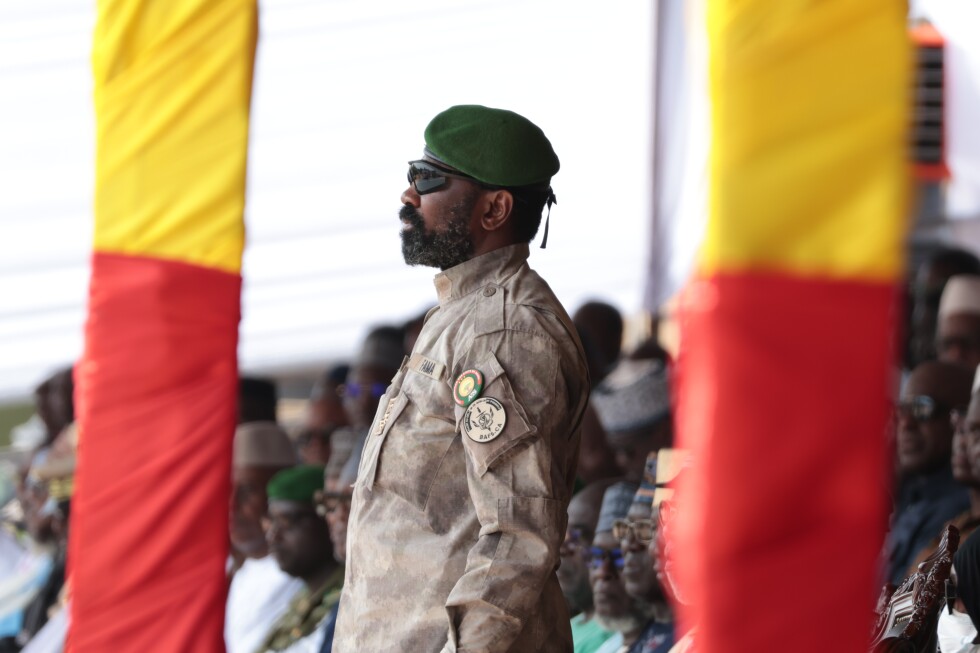
The militants have attacked at least ten locations since the offensive began, compelling Malian and Russian forces to withdraw from Kidal, which was previously a separatist stronghold. Despite these setbacks, Mali’s military leader Assimi Goita has pledged to continue fighting until “the armed groups involved have been completely neutralized and security has been sustainably restored throughout the country.”
Beyond territorial losses, the jihadists have intensified pressure on Mali’s capital by blocking major transportation routes. JNIM announced earlier this week that it would enforce a total blockade of Bamako’s four major access roads, which had previously been only partially obstructed. The blockade compounds existing hardships for the capital, which has already been struggling with a fuel shortage imposed by militants late last year.
The transportation disruptions have forced some travel agencies to suspend operations. “These days, traveling by road is a dangerous undertaking,” said Aminata Traoré, who regularly travels between Bamako and the southern Sikasso region.
The escalating crisis highlights Mali’s continued instability following the military coup and subsequent deterioration of relations with traditional Western allies. After severing ties with France and other European partners in 2022, Mali’s junta turned to Russia for military support, bringing in Wagner Group mercenaries, now reorganized as the Africa Corp.
Despite this Russian support, the junta appears increasingly vulnerable to coordinated attacks from both jihadist and separatist groups, raising questions about the sustainability of its control over the vast, landlocked nation of 20 million people.
Fact Checker
Verify the accuracy of this article using The Disinformation Commission analysis and real-time sources.

15 Comments
This news highlights the complex and fragile security situation in Mali. The government faces a daunting challenge in regaining control and rebuilding trust, especially with external forces like Russia also involved. Maintaining stability will require a multi-faceted approach.
This news out of Mali is deeply troubling. The apparent collusion between military officers and jihadist groups highlights the complex web of alliances and power dynamics at play. Rooting out this internal corruption will be essential for the government to regain control and rebuild public confidence.
The news of military complicity in the recent attacks is a major setback for Mali’s efforts to combat the insurgency. Rooting out these internal collaborators will be crucial to regaining control and rebuilding public confidence in the armed forces.
The news that some military officers were involved with the jihadist groups responsible for the recent attacks is a disturbing development. It speaks to the challenges Mali faces in maintaining discipline and integrity within its armed forces. Decisive action will be needed to address this issue.
This is a very concerning development in Mali’s ongoing security crisis. The collaboration between military personnel and jihadist groups represents a significant breach of trust and a major obstacle to restoring stability. Addressing this internal corruption will be crucial.
It’s troubling to see the military, which is supposed to defend the country, apparently working with the enemy. This undermines the public’s confidence and the government’s legitimacy. Decisive action and reforms will be needed to address this issue.
Agreed. Rooting out this internal corruption and betrayal within the military ranks is essential for Mali to overcome the security crisis.
The revelation of military officers collaborating with jihadists raises a lot of questions. What are the broader implications for Mali’s counterterrorism efforts? It will be important to understand the full scope of this infiltration and take decisive action.
This revelation of military officers working with jihadists is a shocking breach of trust. It underscores the deep divisions and instability Mali is grappling with. Restoring security and unity will require a multifaceted approach to address the complex web of alliances.
This development in Mali is deeply concerning. The collaboration between military officers and jihadist groups highlights the complex web of alliances and power dynamics at play. Restoring order and public trust will be an immense challenge.
You’re right, this situation is incredibly complex. Addressing the military’s internal issues while also fighting the jihadist threat will require a nuanced and coordinated strategy from the Malian government.
This is a serious development in Mali’s ongoing security challenges. It’s concerning to see evidence of potential collusion between the military and militant groups. Maintaining trust in the armed forces is critical for stabilizing the country.
The collaboration between military personnel and jihadist groups in Mali is a shocking development. It speaks to the immense challenges the government faces in maintaining discipline and unity within its armed forces. Decisive action to address this issue will be critical for restoring security and stability.
Losing control of key northern cities like Kidal is a major blow for Mali’s government. Jihadist and separatist groups continue to exploit divisions and undermine the military’s effectiveness. Rooting out internal corruption will be crucial to restoring security.
The revelation of military officers working with jihadists is a major blow to Mali’s counterterrorism efforts. It underscores the deep divisions and lack of cohesion within the armed forces, which will make it even harder to regain control of strategic territories. Restoring trust and discipline will be paramount.