


Listen to the article
Cricket Club Transforms Stadium into Coworking Space, Draws Thousands of Remote Workers
In a creative response to the post-pandemic work revolution, Surrey County Cricket Club has transformed its historic ground into what might be the UK’s most unique coworking space, attracting thousands of remote workers while boosting match attendance figures.
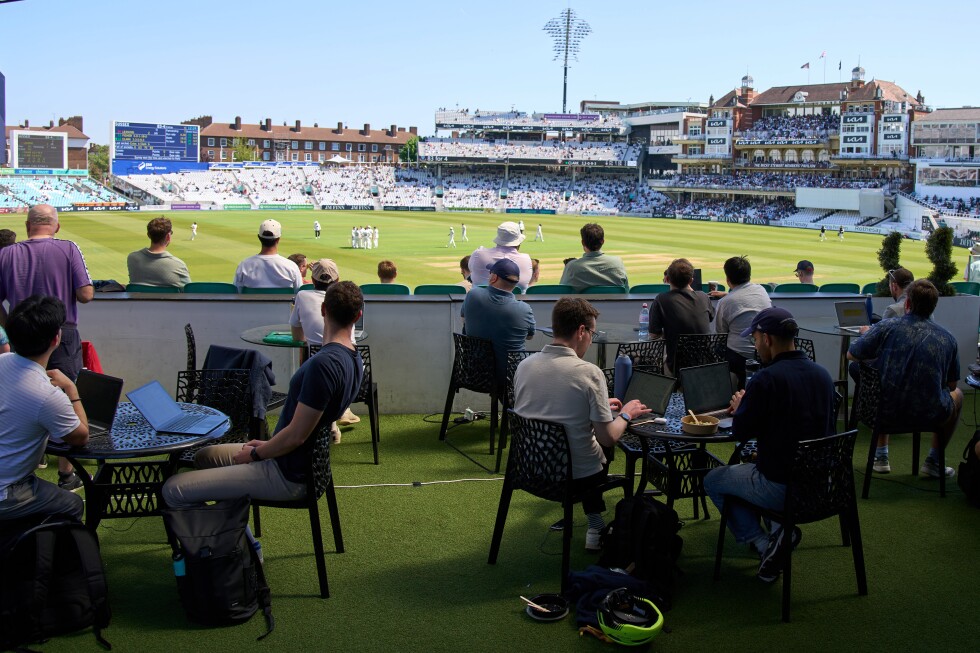
The 180-year-old Kia Oval stadium in south London, home to one of England’s most successful cricket teams, now welcomes professionals to “Work From Oval” during matches. For £15 ($20), remote workers gain access to enhanced Wi-Fi, dedicated desk areas with power outlets, and unobstructed views of the playing field.
“We won’t tell your boss,” the club playfully assures potential attendees on its promotional materials, where it boldly asks if the stadium might be the “best home office in the country.”
The initiative appears to be hitting its mark. During Friday’s County Championship match between Surrey and Sussex, over 6,000 spectators filled the stands—an impressive turnout for a weekday game in a competition often derided for sparse attendance. While this remains well below the 27,500 capacity that sells out for international test matches and shorter-format games, it represents a significant boost for domestic four-day cricket.
Harry Ashton, director of Elite Finance Solutions, typically works from a coworking facility in nearby Wimbledon but jumped at the opportunity to relocate his workday to the cricket ground. “It’s not quite as good as Lytham Cricket Club,” he joked, referencing his local club in northwest England. As the day progressed, Ashton was joined by friends, and after completing his work, enjoyed a few beers—it was Friday before a bank holiday weekend, after all.
The pandemic has fundamentally altered the UK’s work landscape. According to the Office for National Statistics, more than a quarter of British working adults now operate remotely at least part-time, despite some companies pushing for greater office attendance. Critics of hybrid working claim it negatively impacts productivity, work ethic, and the broader economy, but observations at the Oval suggest otherwise.
Throughout the ground, dozens of professionals were visibly engaged in genuine work—analyzing data, participating in video conferences, and managing tasks while occasionally glancing up to catch the cricket action.
“I have great belief in life generally, if you treat someone like an adult, they will behave like an adult,” said Neil Munro, owner of Munron Consulting Ltd. “I don’t see any downside provided everyone treats it with respect.”
Matthew Balch, himself an amateur cricket player, suggested the concept could be expanded: “I think all of the counties should lean into the remote worker-freelancer market to grow attendances.”
Despite the growing acceptance of remote work, some stigma remains. A 46-year-old woman employed by a global corporation requested anonymity when interviewed, expressing concern about potential perceptions of her working arrangement.
Surrey’s innovative approach addresses multiple challenges simultaneously. For the club, it increases attendance and creates additional revenue during typically lower-attended weekday matches. For workers, it offers a refreshing change of scenery from home offices or commercial coworking spaces, with the added benefit of live sport as a backdrop.
The concept may represent the future for many sporting venues with daytime events that struggle to attract crowds during working hours. By embracing rather than fighting against the hybrid work trend, Surrey has potentially created a model that other sports and entertainment venues might adopt.
As remote work continues to evolve from pandemic necessity to permanent fixture in professional life, the boundary between leisure and work spaces appears increasingly fluid—with cricket grounds perhaps becoming as common a workplace as coffee shops and home studies.
Fact Checker
Verify the accuracy of this article using The Disinformation Commission analysis and real-time sources.

8 Comments
A £15 daily rate seems quite reasonable for access to enhanced facilities and unobstructed views of the pitch. This could be a game-changer for cricket club revenues.
The “best home office in the country” tagline is certainly eye-catching. I imagine many remote workers would jump at the chance to work from such an iconic location.
Agreed, the club is really leaning into the remote work trend in a fun, attention-grabbing way. It could become a popular perk for local businesses to offer their staff.
Impressive turnout for a weekday match – the remote work option seems to be drawing more fans to the ground. Wonder if this trend will continue as more companies embrace hybrid work.
Good point. The coworking concept could become a new revenue stream for cricket clubs if it helps boost attendance, even for regular season games.
Kudos to Surrey for this innovative move. Providing a professional work environment in a historic sporting venue is quite unique. I’d be curious to see if other clubs follow suit.
What a clever idea to transform the iconic Oval into a remote work hub! Blending cricket with coworking – that’s a win-win for Surrey’s club and local professionals alike.
Absolutely, this is a great example of adapting to the shifting work landscape. Workspace with a view of the pitch, why not?