


Listen to the article
Argentine President Restores Media Access to Government Headquarters Amid Press Freedom Concerns
Argentine President Javier Milei has reinstated journalists’ access to Casa Rosada, the country’s presidential headquarters, following more than a week of restrictions that sparked widespread criticism from lawmakers and press freedom advocates.
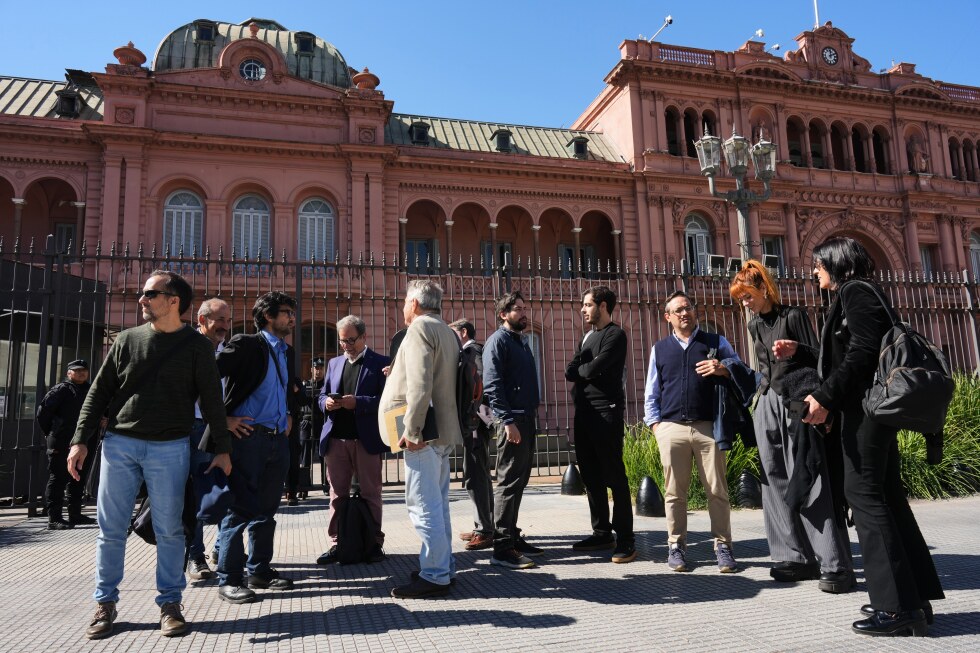
Most credentialed reporters regained entry to the iconic pink government building on Monday, ending a ban that began April 23. The restoration comes with caveats, however, as authorities denied entry to two major television networks—Todo Noticias and Channel 13—without explanation and implemented new restrictions on journalists’ movements within the building.
The government has installed frosted glass on windows, erected barriers blocking access to hallways and stairwells, and introduced more rigorous security procedures. Journalists now must surrender their press credentials when leaving the building, a practice previously not required.
Manuel Adorni, Milei’s Cabinet chief, defended these measures during a rare press conference Monday. “We are fully in favor of press freedom, but we will not in any way allow acts endangering national security to be committed behind its back,” Adorni told reporters. When questioned about the continued exclusion of the two TV networks, Adorni claimed he wasn’t aware of the issue and that “in principle, there shouldn’t be any limitations.”
The government has justified the initial press room closure as a security measure, accusing Todo Noticias of espionage for using smart glasses to film parts of the headquarters allegedly without authorization. The network maintains it received official permission for the footage and that the areas shown have long been accessible to the public.
The tensions reflect a growing hostility toward media under Milei’s administration, which took office in December. The libertarian president has regularly attacked journalists on social media, frequently posting the provocative slogan “We don’t hate journalists enough.” Last week, as Milei entered Congress to support Adorni against corruption allegations, he shouted at questioning journalists: “You’re the corrupt ones.”
These confrontations with the press mirror tactics employed by former U.S. President Donald Trump, whom Milei considers a political ally and powerful backer. Milei’s antagonism toward media has intensified as his administration faces challenges in its anti-corruption and anti-inflation campaigns.
The impact of these policies on press freedom has been swift and measurable. According to Reporters Without Borders, Argentina’s ranking on their press freedom index has plummeted from 66 to 98 over the past two years—one of the most significant declines in South America.
“Insults, defamation, and threats from Javier Milei’s administration toward journalists and media critical of his government have become commonplace since he took office,” the organization noted in a report released last week. The group also observed a “rise in government hostility toward and pressure on the press” from Trump’s most vocal Latin American supporters, including Milei and El Salvador’s President Nayib Bukele.
Press freedom advocates argue that the level of media antagonism under Milei is unprecedented in Argentina’s recent history, with tensions reaching heights unseen since the restoration of democracy in 1983 following years of military dictatorship.
The restrictions at Casa Rosada have drawn condemnation from across Argentina’s political spectrum, as well as from business chambers and the influential Catholic Church. Critics view the measures as part of a concerning pattern that threatens democratic norms in a country with a complex history of authoritarianism.
As journalists cautiously return to their posts at Casa Rosada, many remain concerned about the future of press freedom in Argentina. With physical barriers now limiting access and the president maintaining his combative rhetoric, the relationship between Milei’s government and the media appears likely to remain fraught with tension in the months ahead.
Fact Checker
Verify the accuracy of this article using The Disinformation Commission analysis and real-time sources.

6 Comments
The restoration of media access is a positive step, but the denial of entry to specific outlets and new security protocols are concerning. Protecting national security is important, but it should not come at the expense of the public’s right to information.
Interesting to see Argentina’s new president taking steps to restore media access to the presidential headquarters. It will be important to monitor how these new security measures impact journalists’ ability to report freely and hold the government accountable.
The restrictions on certain media outlets and increased security procedures raise some concerns about press freedom in Argentina. I hope the government can find a balance between security needs and ensuring open access for journalists.
I agree, the situation bears close watching. Transparency and access are critical for a healthy democracy.
While I’m glad to see journalists regaining access to the presidential building, the selective denials and increased restrictions raise red flags. The government needs to uphold press freedom and ensure all credible media outlets can report freely and safely.
This is a complex issue where security concerns need to be balanced with democratic principles of transparency and accountability. I hope the government can work constructively with the media to find an appropriate solution that respects press freedom.