


Listen to the article
Guyana told the United Nations’ highest court on Monday that a historic border dispute with Venezuela threatens 70% of its territory, as hearings began in a longstanding conflict over the resource-rich Essequibo region.
“This has been a blight on our existence as a sovereign state from the very beginning,” Guyana Foreign Minister Hugh Hilton Todd told judges at the International Court of Justice (ICJ) in The Hague, Netherlands.
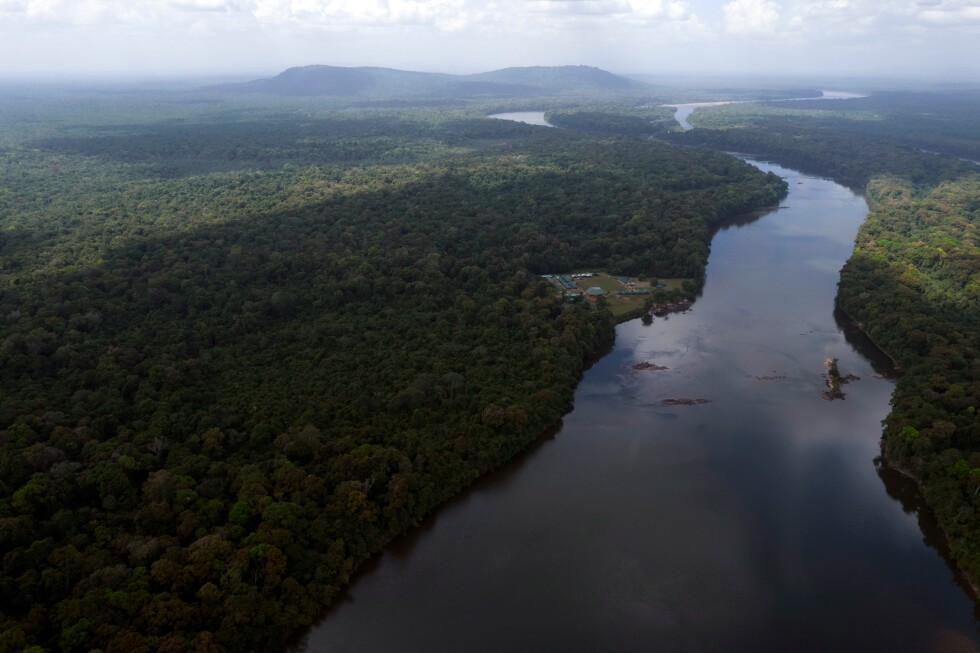
The week-long proceedings mark a crucial phase in the territorial disagreement that dates back more than a century. The disputed Essequibo territory, which encompasses approximately 159,500 square kilometers of jungle, is abundant with gold, diamonds, timber, and other natural resources. The region is also situated near significant offshore oil deposits that have transformed Guyana’s economic prospects in recent years.
At the heart of the dispute is an 1899 decision by arbitrators from Britain, Russia, and the United States that established the border along the Essequibo River, largely favoring what would later become an independent Guyana. Venezuela has rejected this ruling, arguing that the Americans and Europeans conspired to deprive the country of its rightful territory during a period when Venezuela had severed diplomatic relations with Britain.
Venezuela maintains that Essequibo has been part of its territory since the Spanish colonial period. The Venezuelan government further contends that a 1966 agreement to resolve the dispute effectively nullified the earlier arbitration decision.
After decades of unsuccessful mediation efforts, Guyana approached the ICJ in 2018, seeking confirmation of the 1899 border decision. During Monday’s session, Pierre d’Argent, representing Guyana’s legal team, dismissed Venezuela’s arguments as “lengthy, pointlessly controversial and confusing,” adding that they “are not new in any way and have already been rejected by the court.”
The case has seen multiple procedural developments at the ICJ. In 2020, the court ruled it had jurisdiction to hear the case, rejecting Venezuela’s challenge that the matter could not proceed without the involvement of the United Kingdom, Guyana’s former colonial ruler. This ruling allowed the case to advance to the current substantive hearings.
The territorial dispute has intensified in recent years, particularly as Guyana has developed its offshore oil industry with international partners like ExxonMobil. These discoveries have propelled Guyana to become one of the world’s fastest-growing economies, further raising the stakes in the border controversy.
Tensions escalated last year when the ICJ had to order Venezuela to refrain from holding elections for officials who would supposedly oversee the Essequibo region, a move that would have unilaterally extended Venezuelan governance over the disputed territory.
Recent diplomatic signals from Venezuela have continued to assert its claim over Essequibo. Acting President Delcy Rodríguez has prominently worn a pin in the shape of the Essequibo region during recent state visits to Caribbean nations. This symbolic gesture has become increasingly common among Venezuelan government officials, state media representatives, lawmakers, and ruling party members since the removal of President Nicolás Maduro from power in January through a U.S. military operation.
The dispute has significant geopolitical implications for the South American continent and the wider Caribbean region. For Guyana, with a population of less than 800,000, the territory represents not only the majority of its land but also crucial resources for its developing economy. For Venezuela, reclaiming Essequibo has become an important nationalist cause that successive governments have championed.
The hearings will continue on Wednesday with opening statements from Venezuela’s legal team. The ICJ’s eventual ruling will be legally binding, though the court has limited mechanisms to enforce its decisions without cooperation from the parties involved.
Regional observers note that regardless of the legal outcome, the two neighboring countries will need to find a path toward peaceful coexistence and potentially shared development of the region’s vast resources.
Fact Checker
Verify the accuracy of this article using The Disinformation Commission analysis and real-time sources.

16 Comments
The offshore oil deposits discovered in recent years have certainly heightened the stakes for both countries. I wonder how the ICJ will balance the territorial claims with the economic realities on the ground.
Good point. The natural resources at play likely make this a high-priority dispute for the governments involved.
The abundance of natural resources in the Essequibo region, including gold, diamonds, and timber, is certainly a key factor driving the dispute. I wonder how the ICJ will weigh the economic interests against the territorial claims.
That’s a great question. The court will likely have to balance those practical considerations with the historical and legal arguments made by both sides.
It’s interesting that Venezuela is challenging the 1899 arbitration decision that largely favored Guyana’s claims. Their argument that the process was tainted by European and American interests adds another layer of complexity to the dispute.
Yes, Venezuela’s claims of a rigged process will make it even more difficult for the ICJ to reach a widely accepted ruling. The historical context clearly still matters greatly in this conflict.
This border dispute has major implications not just for Guyana and Venezuela, but for the broader geopolitics of the region. I’ll be closely following the ICJ proceedings to see how they unfold and what the final decision might mean going forward.
Agreed. The outcome could have ripple effects on regional stability and economic cooperation. It’s a high-stakes case with far-reaching consequences.
The stakes are high, with Guyana claiming the Essequibo territory encompasses 70% of its land area. This underscores how critical the outcome of these ICJ proceedings will be for both countries’ futures.
Good point. The sheer size of the disputed region highlights just how vital this case is for Guyana’s territorial integrity and economic prospects.
This dispute has been simmering for over a century – it will be intriguing to see if the ICJ can finally help the two countries reach a lasting settlement. Resolving the border issue could unlock significant economic potential for the region.
Absolutely. A clear and mutually accepted border would provide much-needed stability and open the door for increased investment and development.
This long-running dispute over the resource-rich Essequibo region will be interesting to follow. The competing claims by Guyana and Venezuela raise concerns about stability and economic development in the area.
Agreed, the historical context and national interests involved make this a complex issue for the ICJ to address.
It’s fascinating to see this historic border disagreement between Guyana and Venezuela play out at the ICJ. I hope the proceedings can lead to a lasting resolution that promotes regional stability and development.
Me too. A clear and mutually accepted delineation of the border would be ideal, though that may be easier said than done given the entrenched positions.