


Listen to the article
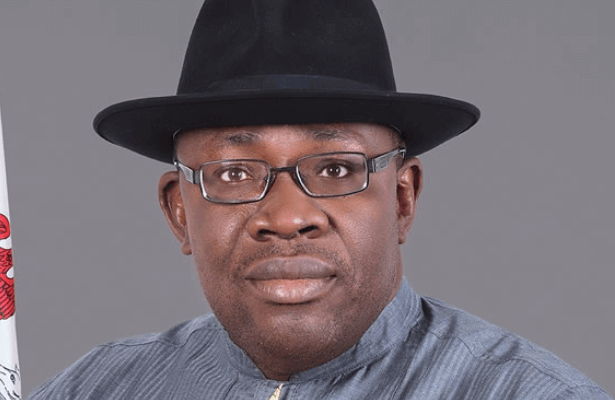
Nigerian politics has entered a new chapter of realignment as Senator Seriake Dickson, National Leader of the Nigeria Democratic Congress (NDC), pushed back against what he termed “propaganda and misinformation” regarding the party’s formation and leadership structure.
In a statement posted on his verified X account, the former Bayelsa State governor revealed that the NDC’s registration process dates back to 2017, significantly predating recent political shifts that have seen high-profile politicians joining the party’s ranks.
“For the record, the annexures show that we initiated the registration process for the NDC as far back as 2017 and that INEC granted approval at that time before the process was halted,” Dickson explained, referencing documents attached to his social media post.
According to Dickson, the party resumed its registration efforts last year when the Independent National Electoral Commission (INEC) reopened the process for political party registration. The NDC then updated its earlier application, contradicting claims that the party was hastily formed in response to recent political developments.
To further substantiate his timeline, Dickson shared evidence of a Google search conducted on February 3, 2017, when the founding members were considering the “V-sign” as the party’s logo. This detail appears aimed at establishing the party’s long-term planning and deliberate development.
The NDC has recently gained prominence in Nigeria’s political landscape, attracting significant attention after several prominent politicians, including two unnamed but apparently influential colleagues of Dickson, joined its ranks. This influx has positioned the party as a potential force in upcoming electoral contests.
“What we are witnessing is a powerful convergence: my role as a party organiser and builder, alongside two political heavyweights with immense grassroots support, popularity and political experience, as well as several other leaders in their own right across the country, all coming together under one platform,” Dickson stated.
Nigeria’s political environment has been characterized by frequent realignments and party-hopping by politicians, particularly as election cycles approach. The NDC appears to be positioning itself as different from this pattern, with Dickson emphasizing its ideological foundations.
In his statement, Dickson drew ambitious comparisons between the NDC’s vision and established global political institutions. “Our goal in the NDC is to build an ideological political party, one that can be compared to the ANC in its finest years in South Africa, as well as established political parties across Europe, America, India and even the Communist Party of China—in terms of stability, structure, and the ability to endure beyond its founders for generations to come,” he said.
Political analysts note that such comparisons are bold in Nigeria’s context, where political parties have historically been criticized for lacking ideological clarity and functioning primarily as vehicles for electoral ambitions.
The NDC’s growing visibility in the political space has not come without challenges. Dickson acknowledged that the party’s rising profile has attracted scrutiny and opposition. “With my experience in politics, I am fully aware that an ambitious project of this nature will attract distractions—rumours, gossip, propaganda, and even blackmail,” he remarked, urging Nigerians to disregard such narratives.
As Nigeria approaches its next electoral cycle, the NDC appears to be positioning itself as an alternative political platform. Dickson concluded his statement with a call for citizen participation, encouraging Nigerians to join the party, register as members, and engage actively in the democratic process.
“Together, let us reclaim and rebuild our country,” he stated, framing the NDC’s growth as part of a larger national renewal project in a country facing significant economic, security, and governance challenges.
Fact Checker
Verify the accuracy of this article using The Disinformation Commission analysis and real-time sources.

22 Comments
Interesting to see the timeline around the NDC party registration process in Nigeria. It’s important to have accurate information and avoid misleading propaganda, especially in the lead-up to elections.
Agreed. Transparency and clear communication from political parties are crucial for maintaining public trust.
While political tensions can run high, it’s good to see the NDC leader calling for Nigerians to disregard propaganda and focus on the facts. Maintaining an objective, fact-based discourse is vital for a healthy democracy.
Absolutely. Cutting through the noise of misinformation with a clear, evidence-based narrative is crucial, especially around important electoral processes.
This is a good example of a political party trying to be transparent and accountable, even in the face of potential propaganda or misinformation. Kudos to the NDC leader for taking this approach.
Agreed. Transparency and accountability from political parties are essential for a healthy democracy, regardless of the specific local context.
The NDC leader’s efforts to provide documentation and timeline details are a positive step in addressing any concerns or doubts about the party’s formation. Transparency is key, especially in the midst of political tensions.
Agreed. Cutting through the noise of misinformation with a clear, evidence-based narrative is crucial for maintaining a healthy democratic process.
It’s good to see the NDC leader taking a proactive approach to address concerns about the party’s registration process. Providing documentation and a clear timeline is a sensible way to counter any misleading claims or propaganda.
Yes, staying ahead of potential misinformation and being upfront about the facts can go a long way in building trust and credibility, especially for newer or lesser-known political entities.
While I don’t have a deep understanding of Nigerian politics, I can appreciate the importance of having clear and transparent processes for political party registration. Addressing propaganda and misinformation is crucial.
Absolutely. Maintaining integrity and public trust in the electoral system is essential for any democracy, regardless of the local context.
This seems like a complex issue with competing narratives. I appreciate the former governor’s efforts to provide a transparent timeline and documentation to support the NDC’s registration process.
Yes, having a clear paper trail and being upfront about the history can go a long way in dispelling any doubts or conspiracy theories.
Nigerian politics can be quite dynamic, with parties and alliances shifting quickly. It’s good to see the NDC leader taking a proactive stance to address concerns about the party’s formation.
Agreed. Staying ahead of misinformation and providing factual information is crucial, especially for newer or less established political entities.
The NDC leader’s call to disregard propaganda and focus on the facts seems like a prudent approach. Providing documentation to support the party’s timeline is a sensible way to counter any misleading claims.
Yes, taking a proactive, fact-based stance can help cut through the noise and build confidence in the political process.
While I don’t have a deep understanding of Nigerian politics, I can appreciate the importance of having clear and transparent processes for political party registration. Addressing propaganda and misinformation is essential.
Absolutely. Maintaining integrity and public trust in the electoral system is crucial for any democracy, regardless of the specific local context.
The former governor’s explanation of the NDC’s registration history seems reasonable. Providing supporting documentation helps counter any claims of a hasty or illegitimate party formation.
True, substantiating the timeline with evidence is a smart move to address any concerns or doubts about the party’s origins.