


Listen to the article
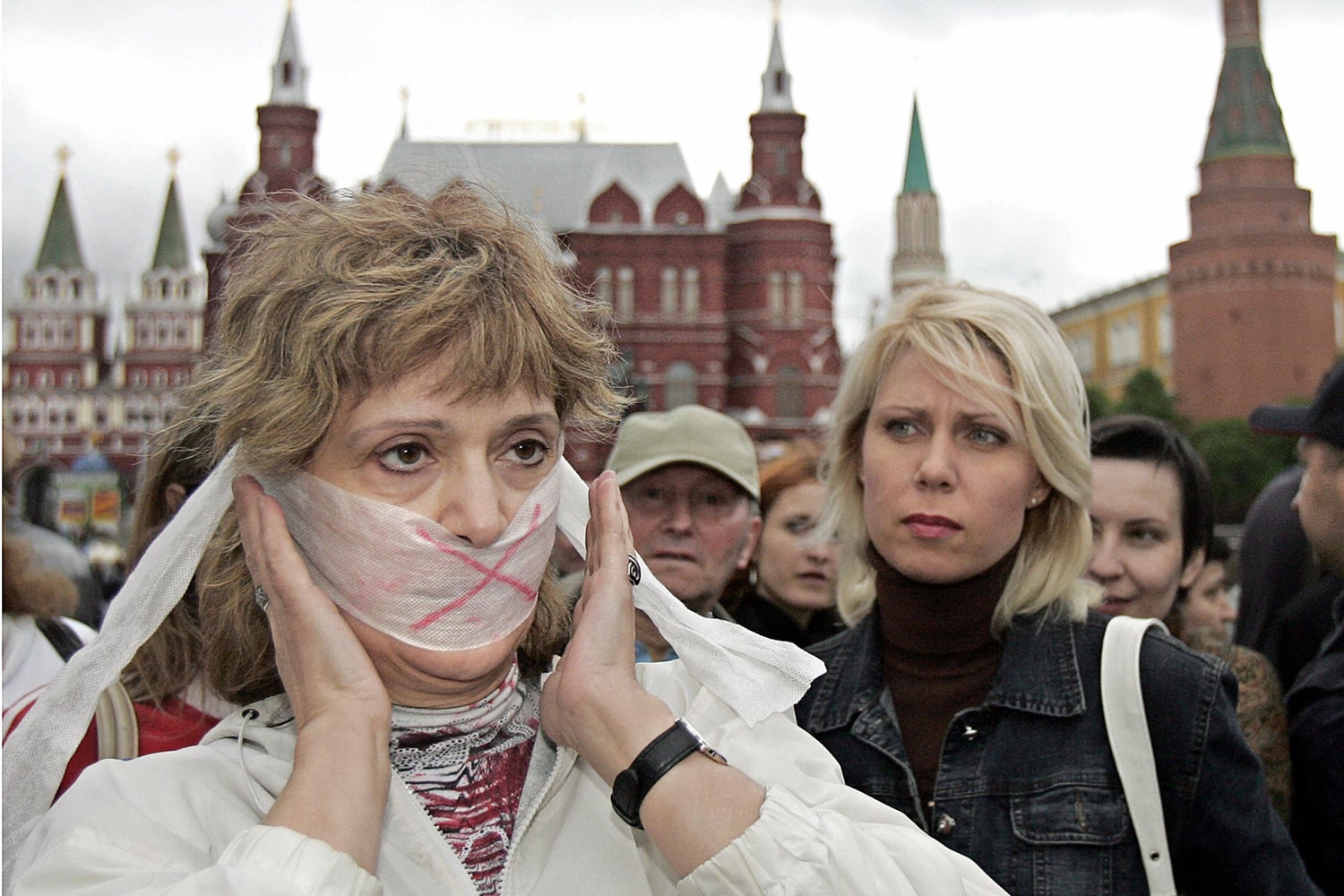
A sweeping new Russian law that took effect on March 1 is forcing the country to retroactively sanitize decades of cultural output, from rock songs to classic literature, in what legal experts are calling an unprecedented attempt to rewrite post-Soviet cultural history. The legislation, which targets “propaganda of narcotic drugs, psychotropic substances, their analogues and precursors,” applies retroactively to all content produced since August 1, 1990—the date the Soviet Union officially abolished censorship.
While formally presented as an amendment to existing narcotics regulation passed by the Russian Duma in 2024, the law’s far-reaching scope extends well beyond online content to encompass all “works of literature and arts.” This includes the entire archive of Russian print products, music, and film that could be vaguely interpreted as promoting drug use or portraying it in a positive light. Content deemed offensive must now carry special visible warnings, with violators facing substantial fines and potential prison time for repeat offenses.
The cultural impact has been immediate and dramatic. One of the most prominent casualties is “Opium for Nobody,” a 1995 anthem by post-punk band Agata Kristi that has garnered 25 million views on YouTube and remains a staple of Russian popular music. On Yandex Music, Russia’s flagship streaming service, the title has been changed to “For Nobody,” with all drug references scrubbed from the lyrics. For Russian listeners without access to the original recording, the sanitized version is now the only reality.
The law places a particularly heavy burden on Russia’s hip-hop community. Legal experts predict that up to 80 percent of tracks in some streaming catalogs will require changes, removal, or censorship. Record labels are now asking musicians to delete lyrics written decades ago, even though those words violated no laws at the time and have been performed for millions of Russians for thirty years.
The literary world faces similar upheaval. The Russian Book Union’s compliance list has already flagged works by international authors including Stephen King, Haruki Murakami, Chuck Palahniuk, and post-1990 translations of John Steinbeck and Erich Maria Remarque. Even nineteenth-century Russian literary giants Alexander Pushkin and Nikolai Gogol have not escaped scrutiny, with online bookstores placing narcotic-content warnings on their writings.
Biographies of iconic Soviet-era figures like writer Mikhail Bulgakov and singer-songwriter Vladimir Vysotsky now require warning labels because their well-documented drug addictions are considered biographical facts. The head of Eksmo, Russia’s largest publishing group, estimates the law technically affects more than 3 million titles. Books marked under the new rules are automatically classified as adults-only, wrapped in sealed packaging, and taxed at 22 percent VAT rather than the standard 10 percent rate for literary works, effectively turning the law into a revenue mechanism for the state.
The enforcement mechanism relies heavily on artificial intelligence, which has produced farcical results. Eksmo’s internal AI compliance system flagged writer Denis Dragunskiy as a drug propaganda offender because its algorithm identified the first syllable of his surname as resembling the English word “drug.” Publishers caught between uncooperative writers and million-ruble fines find themselves negotiating undefined compromises under rules that even the Ministry of Digital Development has failed to clarify.
The new legislation follows a familiar pattern established by Russia’s 2013 ban on “propaganda of non-traditional sexual relations,” which effectively outlawed any depiction of gay or lesbian life. That law resulted in biographies of Italian filmmaker Pier Paolo Pasolini being sold with pages blacked out and significant portions of “The Sopranos” being edited on Russian streaming services. The drug propaganda law now joins an expanding list of restrictions covering suicide, “childfree lifestyles,” onscreen smoking, content that might “discredit the armed forces,” and other subjects deemed incompatible with the Putin regime’s ideological requirements.
The choice of August 1, 1990 as the retroactive start date carries symbolic weight. By selecting the exact day the Soviet Union disbanded Glavlit, its feared communist censorship agency, the Putin regime makes an unmistakable statement that the brief period of artistic freedom following the Soviet collapse never legitimately existed. The two eras are now seamlessly joined, with the burst of free expression in the 1990s being expunged from Russian cultural memory.
The result, as one journalist told Forbes, is “two realities”—one version of cultural works existing on legal Russian platforms and another preserved as pirated downloads or in private archives. The piracy that the Russian publishing industry spent two decades suppressing has become the only mechanism for Russians to maintain access to their own cultural history in its original form. Russians are now stocking up on old MP3 players and using torrent clients to assemble underground archives, echoing the Soviet-era “samizdat” network that circulated forbidden materials.
Sergei Shargunov, editor of literary magazine Yunost, described the situation bluntly: “What I see can only be described as a witch hunt.” Meanwhile, Agata Kristi band member Vadim Samoylov, who has publicly supported the Ukraine war and anti-LGBT laws, rationalized his song’s removal with apparent resignation: “We will soon make some changes. Just cross out some words.”
Fact Checker
Verify the accuracy of this article using The Disinformation Commission analysis and real-time sources.

25 Comments
Silver leverage is strong here; beta cuts both ways though.
Good point. Watching costs and grades closely.
Production mix shifting toward Propaganda might help margins if metals stay firm.
Good point. Watching costs and grades closely.
Exploration results look promising, but permitting will be the key risk.
Good point. Watching costs and grades closely.
Good point. Watching costs and grades closely.
If AISC keeps dropping, this becomes investable for me.
Good point. Watching costs and grades closely.
Good point. Watching costs and grades closely.
The cost guidance is better than expected. If they deliver, the stock could rerate.
Good point. Watching costs and grades closely.
Exploration results look promising, but permitting will be the key risk.
Good point. Watching costs and grades closely.
Interesting update on Russia’s Unpredictable Past Shapes Its Present and Future. Curious how the grades will trend next quarter.
Good point. Watching costs and grades closely.
Good point. Watching costs and grades closely.
If AISC keeps dropping, this becomes investable for me.
Good point. Watching costs and grades closely.
Good point. Watching costs and grades closely.
Exploration results look promising, but permitting will be the key risk.
Good point. Watching costs and grades closely.
Silver leverage is strong here; beta cuts both ways though.
Good point. Watching costs and grades closely.
Good point. Watching costs and grades closely.