


Listen to the article
South Dakota Local Governments Slow to Spend Millions in Opioid Settlement Funds
Counties and cities across South Dakota have spent less than half of the $9.6 million they’ve received from national opioid settlements, according to Department of Social Services reports. This comes as opioid overdose deaths in the state increased to 41 in 2023, up from 39 the previous year.
Since late 2022, 53 counties and 13 cities have received these funds as part of a nationwide $50 billion settlement with opioid manufacturers, distributors, and pharmaceutical companies. South Dakota’s total allocation amounts to nearly $99 million to be distributed through 2038, with funding determined by overdose deaths, opioid shipments, and the prevalence of opioid use disorder in the state.
The lion’s share of South Dakota’s settlement money comes from major drug distributors McKesson, Cardinal Health, and Amerisource Bergen. Under the agreement, 70% of the funds go to the state through the Department of Social Services, while the remaining 30% (approximately $29 million) is divided among local governments that signed a memorandum of agreement to use the money for approved purposes.
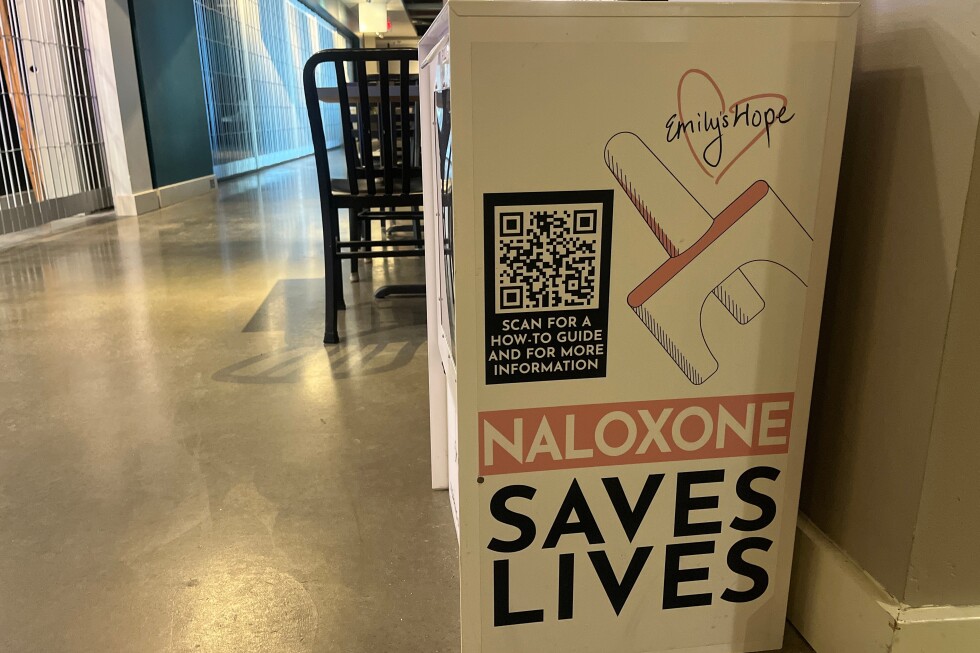
The contrast between state and local spending is striking. While lawmakers previously expressed concerns about the state’s spending pace, DSS Secretary Matt Althoff and Governor Larry Rhoden recently announced $7.82 million in grants, leaving just $2.9 million of the state’s $23 million unspent. State initiatives include nearly $500,000 for naloxone access statewide and $797,000 for a prescription drug monitoring program.
Meanwhile, eleven counties haven’t reported any spending, and many others have used only small fractions of their allocations. Potter County, with a population of 2,400, has received nearly $18,000 since 2022 but hasn’t begun allocating these funds.
“What do you do? Do you wait and sit on what you can accumulate or do you try to spend $200 here, $200 there on stuff?” said Potter County Auditor Tye Vander Vorst. “You don’t want to be the guy who spends it all on something and then it’s like, ‘No, that was wrong.'”
The sporadic nature of settlement disbursements, often arriving unpredictably and in small amounts, makes it difficult for rural counties to implement sustainable programming.
Megan Colwell, CEO of Face It Together, a nonprofit providing addiction recovery services that received $750,000 from the state grants, emphasized the crucial need for addiction services in rural areas. Her organization provides peer-to-peer coaching in prisons in Pierre, Springfield, and Yankton, as well as remote coaching for those outside urban centers.
“Some of these counties don’t have resources, even with the localized funding,” Colwell said. “You want it to make a difference. This is the one time we have funding that is specifically for this issue.”
Even neighboring local governments have taken dramatically different approaches. Codington County, which has received $87,329 of a projected $255,816, hasn’t reported any spending yet. County officials cited existing grants for recidivism and a recent $50,000 state grant for an opioid awareness campaign as reasons for conserving their settlement funds while determining the best spending strategy.
Meanwhile, Watertown, Codington County’s largest city, has spent its entire $161,544 allocation on the police department, hiring a part-time social worker to assist the department’s mental health officer on overdose and drug-related calls, along with funding for education and drug disposal boxes.
“We work really closely with the sheriff’s office, but with something like this, we really never met with each other,” said Watertown Police Chief Tim Toomey. “We probably could have pooled our funds, but we had some needs at the time.”
Experts from the Foundation for Opioid Response Efforts (FORE) say South Dakota’s pattern reflects nationwide trends. Karen Scott, FORE’s president, noted that local governments across the country struggle with effective spending programs, especially when funding amounts are low or substance abuse issues aren’t highly visible.
“There’s always work that can be done on the upstream, really prevention-oriented in terms of creating stronger and more resilient environments for kids, for families and the community,” Scott said.
States have taken varied approaches to distributing settlement funds. Louisiana directs 80% of its projected $600 million directly to local governments and 20% to county sheriff’s departments. Montana allocates just 15% of its expected $75 million to counties and cities.
In South Dakota, most local spending has gone to law enforcement, correctional facilities, and emergency services. Ziebach County has directed all its settlement money to the sheriff’s office for drug tests and prevention initiatives. Sanborn County, which has spent nearly all of its $13,000 allocation, has funded law enforcement and first responder drug training.
FORE’s Ken Shatzkes recommends that local officials engage those with expertise in substance abuse when making spending decisions, citing a North Carolina county that hired its local EMS responder as the county’s opioid settlement coordinator.
“I think having outside expertise, away from government, to help make these decisions is probably the right way to go about it,” Shatzkes said.
For smaller counties receiving lower settlement amounts, collaboration with neighboring communities or statewide networks like Face It Together and Emily’s Hope could maximize impact.
“What’s out there? What can be brought in? What’s an easy lift? What’s low hanging fruit?” Colwell asked. “We’re getting better at being less siloed in South Dakota, but the silos are still there.”
Fact Checker
Verify the accuracy of this article using The Disinformation Commission analysis and real-time sources.

16 Comments
It’s good to see that South Dakota is receiving a significant portion of the national opioid settlement funds. The challenge now is to ensure these resources are deployed strategically to address the root causes of the crisis and provide comprehensive support to those affected.
Balancing the need for immediate action with the desire for careful planning will be crucial. I hope the local governments can find ways to expedite the process without compromising the long-term effectiveness of their initiatives.
While it’s understandable that local governments want to be cautious with the opioid settlement funds, the rising overdose numbers suggest the need for urgent action. Hopefully, they can find the right balance between prudent planning and timely implementation.
Coordinating the state and local efforts to address the opioid crisis will be crucial. I hope they can leverage these resources to make a real difference in people’s lives.
The slow pace of spending the opioid settlement funds in South Dakota is concerning, given the ongoing public health crisis. I hope the local governments can find ways to expedite the process and get these critical resources to the communities that need them most.
Effective utilization of these funds will require close collaboration between state and local authorities, as well as input from healthcare providers and community stakeholders.
The rise in opioid overdose deaths in South Dakota is concerning. Hopefully, these settlement funds can be leveraged to improve access to treatment, prevention, and harm reduction programs.
It’s good that the state has a plan to distribute the funds, but the local governments need to act quickly to get these resources to the people who need them most.
Allocating and spending the opioid settlement funds effectively is a complex challenge that requires careful planning and coordination. However, with the continued rise in overdose deaths in South Dakota, I hope the local governments can find ways to expedite the process and get these critical resources to where they’re needed most.
Engaging with the affected communities, healthcare providers, and other stakeholders will be crucial for developing a holistic and impactful strategy to address the opioid crisis in South Dakota.
The opioid crisis has had a devastating impact on communities across the country, including in South Dakota. While it’s understandable that local governments want to be prudent with the settlement funds, the rising overdose numbers suggest the need for a more urgent response.
I hope the state and local authorities can work together to develop a comprehensive strategy that combines evidence-based treatment, prevention, and harm reduction programs to address this public health emergency.
It’s interesting to see how local governments in South Dakota are handling the influx of opioid settlement funds. While the need to address the opioid crisis is urgent, it’s understandable that they want to ensure the money is spent effectively.
I hope they’re able to put those funds to good use and make a real impact in their communities. Careful planning and oversight will be crucial.
Spending millions on opioid crisis response is a complex challenge. I’m curious to see how South Dakota’s local governments will prioritize and allocate these funds to have the greatest impact.
Transparent and accountable use of the settlement money will be key. Engaging with affected communities and healthcare providers will be critical for an effective strategy.