


Listen to the article
California Billionaire Tax Initiative Secures Spot on November Ballot
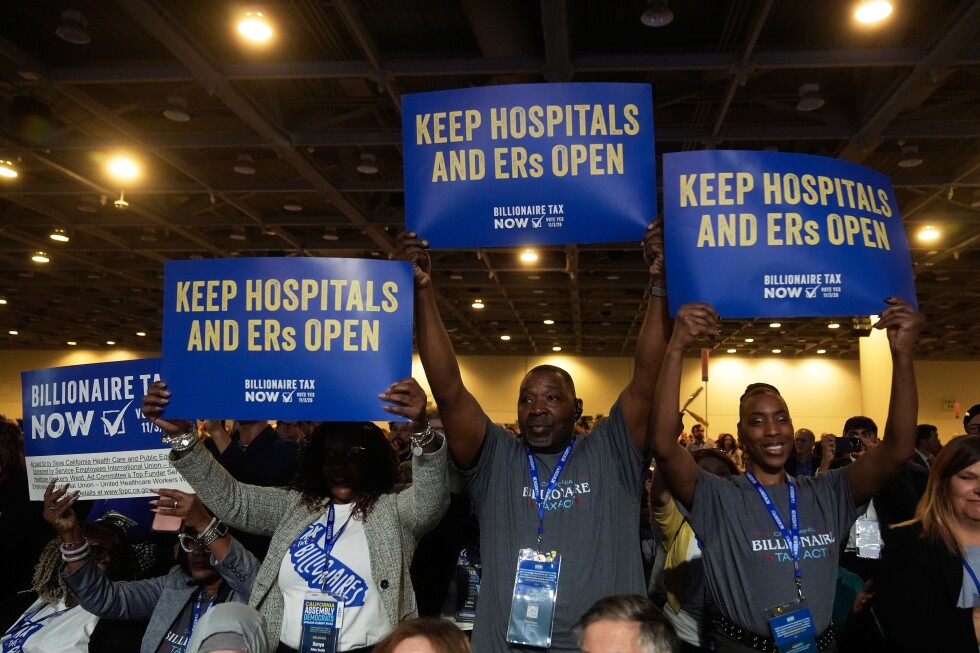
A contentious proposal that would impose a one-time 5% tax on California billionaires has gathered enough signatures to appear on the November ballot, according to the Service Employees International Union Healthcare Workers West, which backs the measure.
Campaign organizers announced Monday they collected more than 1.5 million signatures, far exceeding the approximately 875,000 required to qualify for the ballot. The California Secretary of State still needs to verify these signatures before officially placing the measure before voters.
The proposed tax would target individuals with net worth exceeding $1 billion who are California residents as of January 1, 2026. Proponents estimate the tax could generate around $100 billion in revenue, primarily intended to offset anticipated federal funding cuts to healthcare programs serving low-income residents.
“California’s health is at stake,” said Liz Perlman, executive director of a chapter of the American Federation of State, County and Municipal Employees. “Hospitals are closing and people will die. Why? So billionaires can get another tax cut that they don’t need.”
The initiative comes in response to concerns about the impact of federal spending cuts. The tax and spending cuts law signed by President Donald Trump last year is expected to reduce Medicaid and federal food assistance by more than $1 trillion nationwide over the next decade.
If approved for the November ballot, the measure is likely to spark one of the most expensive ballot initiative campaigns in California history. It has already drawn national attention, with Vermont Senator Bernie Sanders publicly supporting the proposal.
Opposition to the tax has been swift and well-funded. Google co-founder Sergey Brin has contributed $57 million to a political committee called “Building a Better California,” which aims to counter the billionaire tax. In total, this committee has raised over $90 million from fewer than a dozen donors.
California Governor Gavin Newsom and numerous Silicon Valley executives have voiced strong opposition to the measure, arguing it would prompt wealthy residents to flee the state. This exodus could significantly impact California’s budget, as nearly half of the state’s personal income tax revenue comes from the top 1% of earners.
“After playing with matches since October, the SEIU has succeeded in lighting a ‘Tax the Rich’ wildfire by getting enough signatures,” said David Lesperance, a tax consultant who has advised wealthy clients who have already left California in anticipation of the tax. “The many billionaire targets of their efforts have already responded by executing fire escape plans by relocating to other states.”
Some billionaires have reportedly purchased properties outside California as a precautionary measure should the initiative pass. An Associated Press review found at least 25 billionaires listed among Forbes magazine’s 2025 rankings of the world’s 500 wealthiest people either lived in California or had significant ties to the state. However, determining their full-time residency status could become contentious, as many own properties elsewhere.
Brian Brokaw, a longtime Newsom adviser leading a political committee against the tax, criticized the measure’s construction and potential impact. “Enacting a so-called wealth tax in just one state wouldn’t target a small group — it would impact all 40 million Californians,” he said in a statement. “This proposal trades a short-term revenue bump for long-term losses.”
The ballot initiative process in California allows campaigns to pay collectors per signature gathered, with costs typically around $15 per signature. This system has enabled both sides of contentious issues to mobilize significant resources to influence ballot qualification.
The November vote could serve as a litmus test for public sentiment regarding taxation of extreme wealth, a topic that has gained prominence in national political discourse. As wealth inequality continues to widen across the country, California’s initiative could set a precedent for other states considering similar measures to address budget shortfalls and fund social programs.
Fact Checker
Verify the accuracy of this article using The Disinformation Commission analysis and real-time sources.

7 Comments
Interesting proposal to tax billionaires in California. It’s a controversial idea, but could provide much-needed funding for healthcare programs. I’m curious to see how this plays out and what the public thinks.
This is a bold move by California to address income inequality and fund critical healthcare programs. However, the impact on the state’s business climate and ability to attract investment will be an important factor to weigh.
A one-time 5% tax on California billionaires could generate substantial revenue, but I wonder if it would set a precedent for future wealth taxes. The legal and economic implications will be intensely debated, I’m sure.
As a resident of California, I’ll be closely following this proposal. Ensuring access to quality healthcare is crucial, but the details around implementation and potential unintended consequences will be key. I hope there is a robust public discourse on this complex issue.
This is a bold and controversial move by California. Taxing the ultra-wealthy to fund social programs is a divisive topic. I’m curious to see how the public responds and whether the proposed tax withstands potential legal challenges.
I can see both sides of this issue. On one hand, the proposed tax could generate significant revenue to support vital public services. On the other, some may view it as unfairly targeting the wealthy. It will be fascinating to see the public debate around this measure.
You raise a good point. There are valid arguments on both sides that will need to be carefully considered.