


Listen to the article
King Charles III’s Visit to U.S. Takes on Diplomatic Significance Amid Policy Tensions
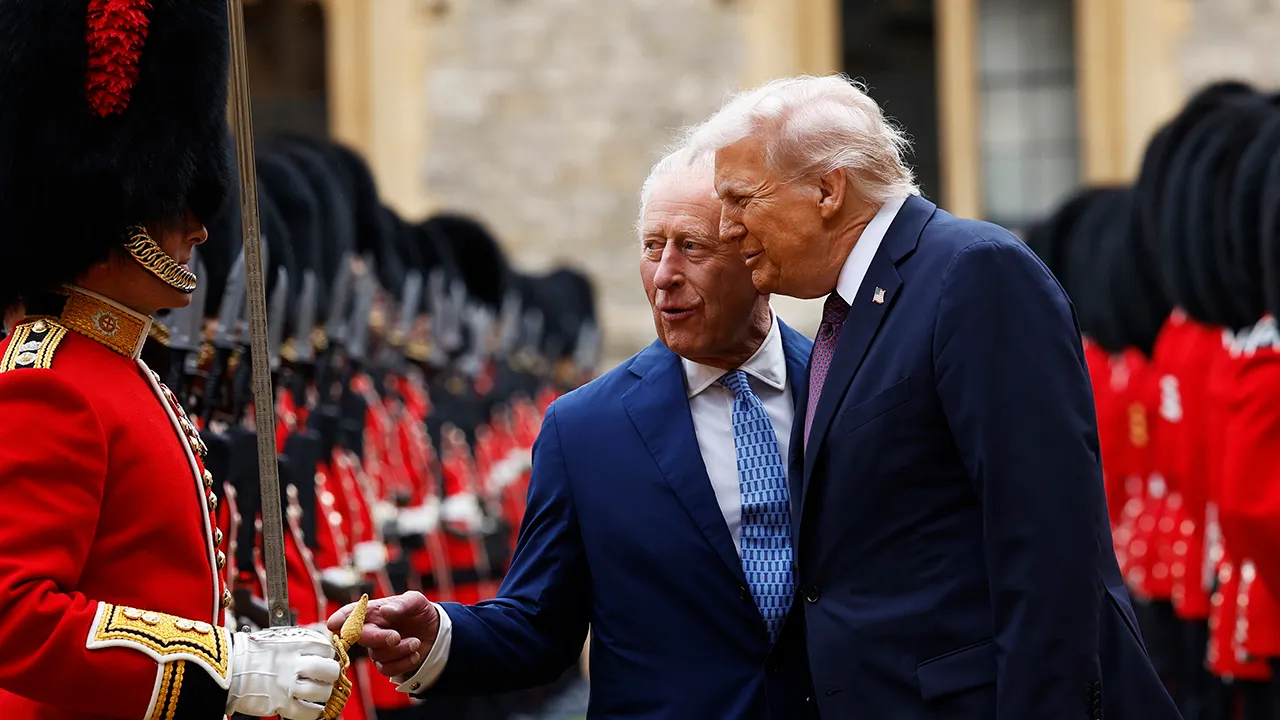
As Britain publicly distances itself from President Donald Trump’s Iran pressure campaign, King Charles III’s current visit to the United States is evolving beyond ceremonial pageantry into a critical diplomatic mission. Royal analysts suggest the monarch may serve as Britain’s most important tool for preventing growing policy fractures between London and Washington from deepening into a more serious rift.
“The British monarch has historically had huge importance in terms of creating personal diplomacy to smooth over ruffled feathers,” explains Alan Mendoza, executive director of the Henry Jackson Society, a London-based think tank. He argues that the Crown has long functioned as Britain’s strategic stabilizer during periods of political tension.
The timing is particularly significant as Prime Minister Keir Starmer’s government and the Trump administration appear increasingly divided over several key issues, including Iran policy, defense strategy, and the future shape of the transatlantic alliance.
This diplomatic balancing act became evident on Monday when Deputy Minister Stephen Doughty publicly rejected U.S. blockade tactics against Iran, while still expressing support for Washington’s broader efforts to secure maritime traffic through the Strait of Hormuz.
“While the U.K. doesn’t support the U.S. blockade, it supports working with the United States and others to reopen the Strait of Hormuz,” Doughty stated ahead of a UN Security Council meeting, warning that Tehran cannot be allowed to hold “the rest of the world to ransom.”
The statement underscores London’s attempt to support U.S. security objectives without fully endorsing Trump’s “economic fury” strategy, which aims to strangle Iran’s economic lifelines through aggressive maritime pressure.
The king’s visit began in Washington, D.C., where he and Queen Camilla were greeted by President Trump and First Lady Melania Trump for a private tea at the White House. A White House spokesperson emphasized the event as evidence of enduring personal rapport between the president and monarch, noting, “President Trump has always had great respect for King Charles, and their relationship was further strengthened by the president’s historic trip to the United Kingdom last year.”
Mendoza points to Queen Elizabeth II’s past diplomatic interventions as evidence that the monarchy can sometimes succeed where elected leaders cannot. He cited Elizabeth’s historic role in easing tensions with Ireland, describing royal diplomacy as uniquely positioned to create trust at the personal level.
“People often wonder why the British monarchy still exists in the 21st century,” Mendoza said. “This is why.”
However, experts caution against overstating the king’s influence. Charles is unlikely to directly shape specific policies on Iran, NATO, or military cooperation. Instead, his value lies in influencing what Mendoza called the “general mood music” around Trump’s willingness to engage with Britain.
“It’s more a question of general mood music, which could make the president more receptive to interesting solutions,” Mendoza explained. Rather than forcing policy alignment, Charles could help preserve the broader strategic atmosphere needed for Washington and London to continue functioning as close allies despite disagreements between their governments.
This diplomatic role takes on greater urgency as some analysts warn the “special relationship” faces mounting structural challenges. In an analysis published Monday, Council on Foreign Relations senior fellow Matthias Matthijs argued that while the royal visit offers “spectacle and ritual,” it may not reverse what he described as a deeper unraveling of U.S.–U.K. ties.
Matthijs highlighted Trump’s repeated criticisms of Starmer regarding immigration, energy policy, and Britain’s posture toward the U.S.-Israeli confrontation with Iran. He suggested Charles may now be handling much of the diplomatic “heavy lifting” required to preserve British access to Trump’s administration.
British constitutional scholars have also raised concerns about the monarchy’s diplomatic role. Writing for the UK Constitutional Law Association earlier in April, Francesca Jackson warned that using the monarch as a diplomatic instrument during periods of political volatility could expose the Crown to potential backlash, especially if Charles is perceived as caught between Trump and Starmer.
The stakes are considerable. If Trump embraces Charles while continuing to criticize Starmer, the visit could preserve royal rapport while highlighting political tensions, effectively creating a parallel diplomatic channel between Washington and the British Crown.
For now, Mendoza argues, the monarchy’s purpose is not governance but maintaining access and relationships that might prevent the special relationship from fracturing beyond repair. As the king continues his historic visit, which includes an address to Congress, many will be watching closely to see if royal diplomacy can indeed bridge the growing policy divide between these longtime allies.
Fact Checker
Verify the accuracy of this article using The Disinformation Commission analysis and real-time sources.

12 Comments
Interesting to see how King Charles is leveraging his diplomatic role to help preserve the UK-US relationship amid policy tensions. His experience and royal connections could be invaluable for smoothing over differences.
Agreed, the monarch can play an important behind-the-scenes role in maintaining close ties between allies, especially during times of political change or disagreement.
This highlights the continued relevance of the monarchy in modern British statecraft. Even as the political landscape shifts, the Crown retains an important stabilizing influence on international relations.
Absolutely, the soft power of the monarchy shouldn’t be underestimated, especially when it comes to preserving longstanding alliances.
The transatlantic alliance is vital for global stability, so it’s good to see the UK monarch working to prevent a serious rift from opening up. King Charles’s efforts deserve praise.
Agreed, the UK-US relationship is too important to allow political disagreements to undermine it. Diplomatic initiatives like this are essential for maintaining unity.
I’m curious to see how King Charles navigates these delicate diplomatic waters. His personal rapport with US leaders could be a real asset in bridging gaps on issues like Iran policy.
Yes, the ability to engage in discreet, high-level diplomacy is one of the unique strengths the British monarchy brings to the table.
While policy differences between London and Washington are concerning, I’m encouraged to see King Charles taking an active role in trying to mediate the tensions. His personal diplomacy could be crucial.
It’s a delicate balancing act, but the King’s experience and credibility on the world stage make him well-suited to play peacemaker in these circumstances.
While policy differences between the UK and US are concerning, I’m hopeful King Charles can use his influence to help bridge the gaps. His royal status gives him unique access and credibility.
Absolutely, the monarch’s neutral position and established connections give them an advantage in navigating delicate geopolitical situations like this.