


Listen to the article
Cross-Border Strikes Shatter Fragile Peace Between Afghanistan and Pakistan
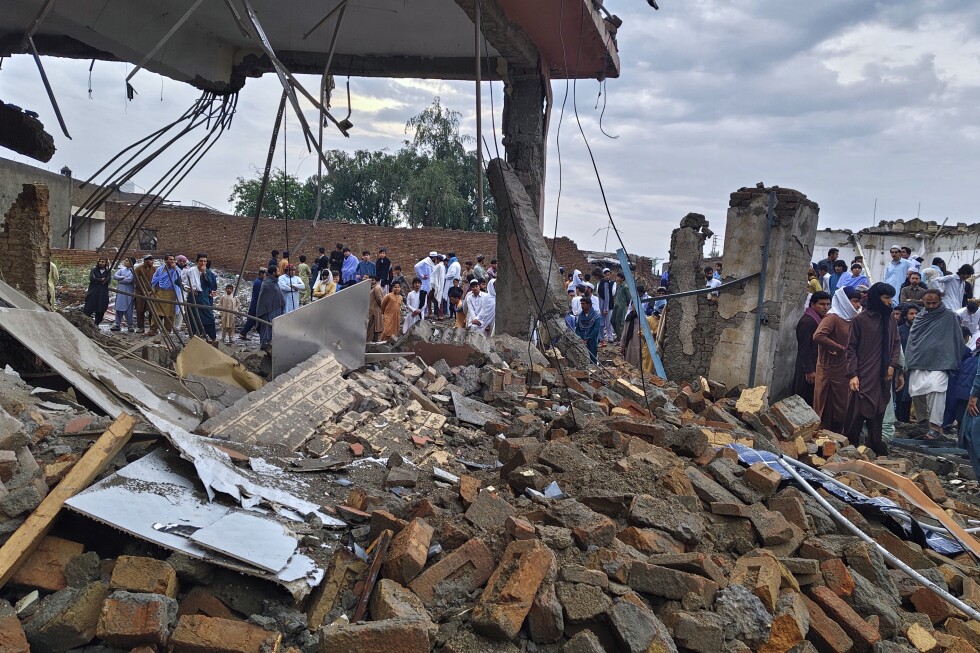
Pakistani mortar and missile fire struck a university and civilian homes in northeastern Afghanistan on Monday, killing seven people and wounding at least 85, according to Afghan officials. The attack on Asadabad, the capital of Kunar Province, marks the first major violent incident since Chinese-mediated peace talks between the two neighboring countries earlier this month.
Among the injured were approximately 30 students and professors at Sayed Jamaluddin Afghani University, where the Afghan Ministry of Higher Education reported extensive damage to buildings and grounds. Afghan deputy government spokesman Hamdullah Fitrat condemned the strikes as “an unforgivable war crime, barbarity, and provocative act.”
Pakistan’s Ministry of Information and Broadcasting swiftly denied targeting the university, calling Afghan reports “a blatant lie” and insisting that “Pakistan’s targeting is precise and intelligence based.” This contradictory narrative highlights the deep mistrust that continues to plague relations between the two countries.
The incident threatens to unravel recent diplomatic progress. Earlier this month, officials from both nations met in Urumqi, western China, where they had agreed not to escalate their conflict and to “explore a comprehensive solution,” according to Chinese mediators. Just two days before the strikes, Afghan Foreign Minister Amir Khan Mutaqi had described these negotiations as “positive” during a speech at the foreign ministry’s Diplomacy Institute.
The border tensions between Afghanistan and Pakistan have intensified significantly since late February, when Afghanistan launched a cross-border attack on Pakistan in retaliation for Pakistani airstrikes inside Afghanistan. The situation deteriorated to such an extent that Islamabad declared it was in “open war” with Afghanistan, alarming the international community.
The conflict reached a particularly deadly point on March 17, when Pakistan conducted an airstrike on what it claimed was a militant hideout in Kabul. Afghan authorities countered that the target was actually a drug treatment facility, reporting that more than 400 civilians were killed. Pakistan disputed both the characterization of the target and the casualty figures.
At the core of this prolonged conflict is Pakistan’s accusation that Afghanistan harbors militants who carry out deadly attacks inside Pakistan, particularly the Pakistani Taliban, known as Tehrik-e-Taliban Pakistan or TTP. This group, while separate from the Afghan Taliban that took control of Afghanistan in 2021 following the U.S. withdrawal, maintains alliances with them. The Afghan government has consistently denied these allegations.
Following the March 17 airstrike, the two sides declared a temporary truce for Eid al-Fitr, the Muslim holiday marking the end of Ramadan. However, sporadic cross-border fighting continued even as delegations attended peace talks in China.
The humanitarian cost of this conflict continues to mount. The United Nations’ Office for the Coordination of Humanitarian Affairs recently reported that the border clashes have displaced approximately 94,000 people in total.
Several nations have attempted to mediate between the two countries at various points, including China, Turkey, Qatar, the United Arab Emirates, and Saudi Arabia. However, Monday’s attack demonstrates the fragility of these peace efforts.
The timing of the attack is particularly significant as it occurs just as diplomatic channels appeared to be making progress. Afghan Foreign Minister Mutaqi had cautioned that the issues between the two countries “are very sensitive between neighbors and between two Islamic neighboring countries and should not be treated irresponsibly.”
As tensions escalate once again along the Afghanistan-Pakistan border, the international community watches closely to see whether recent diplomatic initiatives can withstand this latest challenge, or if the region will spiral back into the deadly cross-border exchanges that have characterized much of 2023.
Fact Checker
Verify the accuracy of this article using The Disinformation Commission analysis and real-time sources.

19 Comments
Interesting update on Afghanistan says 7 killed in Pakistani strikes on university, homes. Curious how the grades will trend next quarter.
Good point. Watching costs and grades closely.
Nice to see insider buying—usually a good signal in this space.
I like the balance sheet here—less leverage than peers.
Good point. Watching costs and grades closely.
I like the balance sheet here—less leverage than peers.
If AISC keeps dropping, this becomes investable for me.
Good point. Watching costs and grades closely.
Silver leverage is strong here; beta cuts both ways though.
Good point. Watching costs and grades closely.
Production mix shifting toward World might help margins if metals stay firm.
Exploration results look promising, but permitting will be the key risk.
Good point. Watching costs and grades closely.
Good point. Watching costs and grades closely.
Exploration results look promising, but permitting will be the key risk.
Good point. Watching costs and grades closely.
Nice to see insider buying—usually a good signal in this space.
Good point. Watching costs and grades closely.
Production mix shifting toward World might help margins if metals stay firm.