


Listen to the article
Airport Security Delays Create Unpredictable Travel Landscape During Spring Break Season
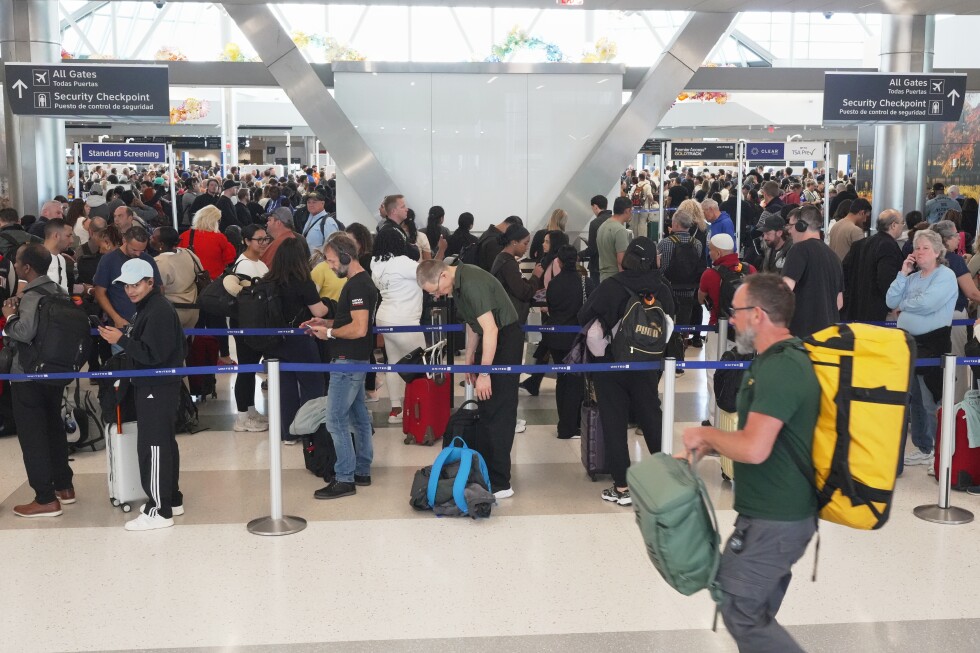
Travelers facing the busy spring break season are encountering an additional layer of stress as airport security lines spill out of terminals at various locations across the United States.
Wait times at security checkpoints have become increasingly unpredictable, with some passengers reporting delays of up to two hours at Atlanta’s Hartsfield-Jackson International Airport, one of the nation’s busiest air travel hubs. Officials in New Orleans and Austin, Texas have advised travelers to arrive as much as three hours before departure, a significant increase from typical recommendations.
The situation varies widely across the country, with many airports still reporting normal wait times. This inconsistency creates a challenging environment for travelers trying to plan their airport arrival times, particularly impacting those accustomed to cutting it close or travelers with tight schedules.
Behind these delays is a perfect storm of factors, most notably the partial government shutdown affecting the Department of Homeland Security, which began on February 14. Approximately 50,000 Transportation Security Administration (TSA) agents are currently working without pay – the third such funding lapse in the past year. This financial strain has led to increased employee absences and at least 366 TSA agents quitting their positions during the shutdown.
“It’s so hard to predict where these bottlenecks are going to pop up,” explained Eric Rosen, director of travel content for The Points Guy, a travel and finance advice website. “One airport might have 30% of its TSA agents calling out on a certain day and 10% the next day. There’s just no way to know that in advance.”
The political deadlock continues as Democrats in Congress have stated that Homeland Security won’t receive funding until new restrictions are placed on federal immigration operations, following the fatal shootings of Alex Pretti and Renee Good in Minneapolis earlier this year.
For travelers navigating this uncertain landscape, accessing reliable wait time information has become crucial. The TSA’s own resources, including the MyTSA mobile app, may not be providing accurate data during the shutdown. Experts recommend checking airport websites and social media accounts directly for the most current information, though they caution that conditions can change rapidly.
“Luckily, major airports tend to list those checkpoint times, terminal by terminal. I can’t think of a major one that doesn’t,” Rosen noted. Many airports have been posting timely updates on their social media platforms, particularly X (formerly Twitter), providing crucial guidance to travelers.
Security experts emphasize the importance of building in extra time and contingency plans. Tyler Hosford, a security director at global risk management firm International SOS, recommends booking flights earlier in the day when possible, giving passengers more flexibility to adjust if problems arise.
“I always say you should have a Plan B under the best of circumstances,” Hosford advised. “But I think we’re to a point where you need to start having Plan C, D and maybe even E.” These backup plans might include rebooking on another flight, departing from a different airport, or arranging alternative transportation.
Even when faced with long lines upon arrival at the airport, travelers still have options. Hosford suggests speaking directly with security checkpoint staff to inquire about estimated wait times and potential assistance. “Always talk to people. It can never hurt to ask,” he said. “The worst they can say is, ‘No, we can’t help you.'”
If checkpoint staff can’t provide assistance, contacting the airline through phone, mobile app, or social media to explore rebooking options is the next step. “Never stay stagnant. You want to be moving forward trying to find your options,” Hosford emphasized. “It can feel exhausting, but the alternate is you potentially get stuck and miss your flight.”
As the spring break travel season continues and the government shutdown persists, industry analysts expect the situation to remain fluid. Travelers are advised to remain vigilant, check airport conditions frequently, and build significant buffer time into their travel plans to account for the current unpredictability at security checkpoints nationwide.
Fact Checker
Verify the accuracy of this article using The Disinformation Commission analysis and real-time sources.

19 Comments
Uranium names keep pushing higher—supply still tight into 2026.
Nice to see insider buying—usually a good signal in this space.
Uranium names keep pushing higher—supply still tight into 2026.
The cost guidance is better than expected. If they deliver, the stock could rerate.
Exploration results look promising, but permitting will be the key risk.
Uranium names keep pushing higher—supply still tight into 2026.
The cost guidance is better than expected. If they deliver, the stock could rerate.
Good point. Watching costs and grades closely.
Good point. Watching costs and grades closely.
The cost guidance is better than expected. If they deliver, the stock could rerate.
Good point. Watching costs and grades closely.
Uranium names keep pushing higher—supply still tight into 2026.
If AISC keeps dropping, this becomes investable for me.
Good point. Watching costs and grades closely.
The cost guidance is better than expected. If they deliver, the stock could rerate.
Good point. Watching costs and grades closely.
Silver leverage is strong here; beta cuts both ways though.
Interesting update on How to monitor airport security lines at US airports while TSA officers go without pay. Curious how the grades will trend next quarter.
If AISC keeps dropping, this becomes investable for me.