


Listen to the article
The Environmental Protection Agency announced Monday a significant redefinition of the Clean Water Act’s scope, substantially limiting the wetlands covered under federal protection. The new rule builds upon a 2023 Supreme Court decision that had already removed protections for extensive wetland areas across the country.
The revised “Waters of the United States” rule will narrow federal jurisdiction to focus primarily on relatively permanent bodies of water, including streams, oceans, rivers, and lakes, along with wetlands directly connected to these water bodies, according to the EPA.
This regulatory change is part of a broader push by the Trump administration to roll back dozens of environmental regulations. EPA Administrator Lee Zeldin characterized these efforts as accelerating economic prosperity while putting “a dagger through the heart of climate change religion,” a framing that critics view as dismissing legitimate environmental concerns in favor of industry interests.
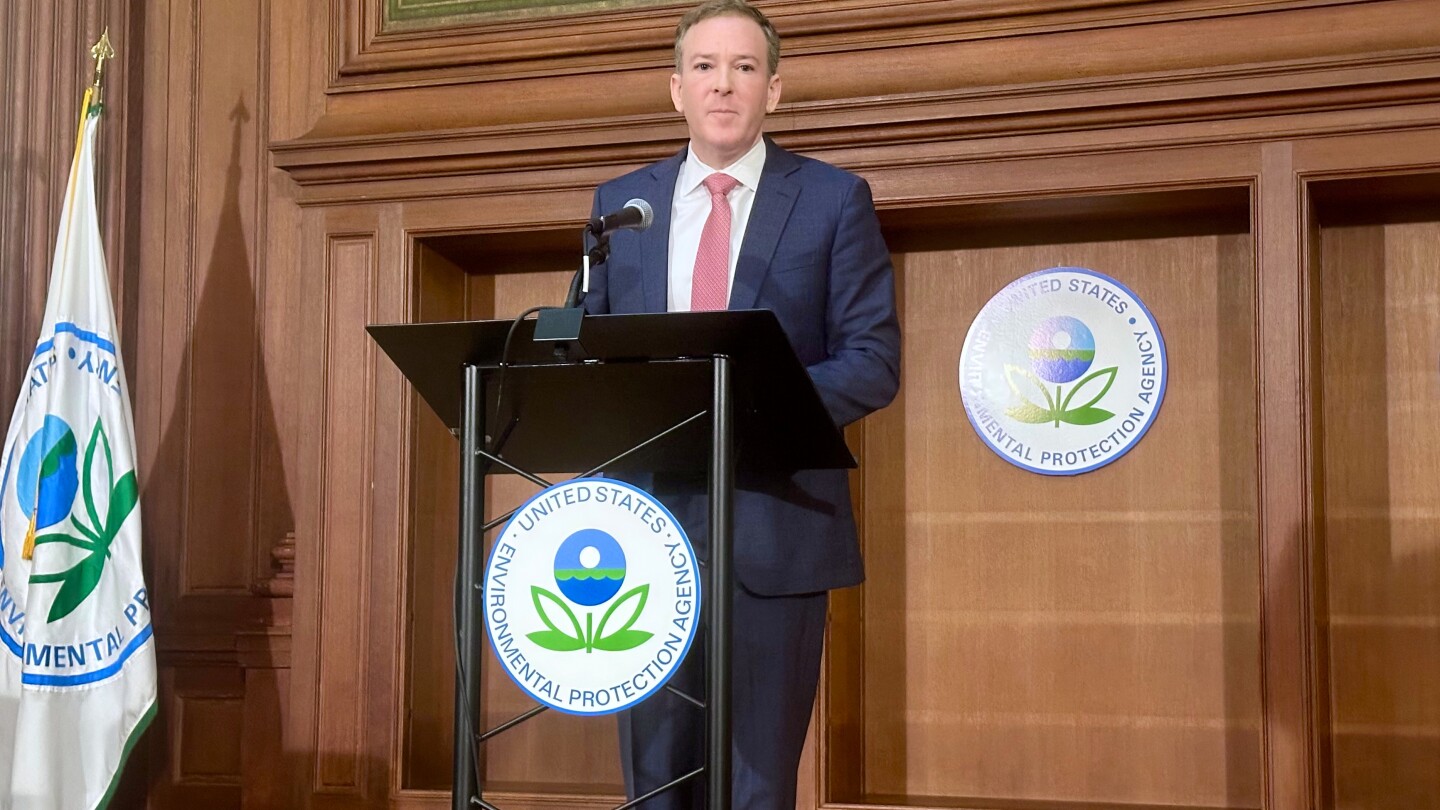
Speaking at EPA headquarters, Zeldin explained that the new rule implements directives from the Supreme Court’s 2023 Sackett v. EPA ruling. That decision significantly restricted the federal government’s authority to regulate water pollution in certain wetlands while strengthening property rights. The case centered around Michael and Chantell Sackett, an Idaho couple who sought to build a home near a lake but faced regulatory hurdles.
“Democratic administrations had long weaponized the definition of navigable waters to seize more power from American farmers, landowners, and families,” claimed Zeldin, a former Republican congressman who has spearheaded efforts to eliminate regulations perceived as climate-friendly. Despite this partisan framing, Zeldin insisted the rule change wasn’t motivated by ideology but rather aimed at creating a “clear, simple, prescriptive rule that will stand the test of time.”
When questioned about the durability of the rule after decades of regulatory back-and-forth between administrations, Zeldin pointed to the Supreme Court’s Sackett decision as the difference-maker. “We’re following Sackett very closely,” he said. “We’re treating it with respect. The words are being interpreted strictly.”
The proposal, which will undergo at least 45 days of public comment, aims to reduce bureaucratic processes for farmers, ranchers, industry, and other private landowners, according to Zeldin. He contended that the rule strikes a balance between federal and state authority while maintaining water quality protections, noting that states and tribes would still regulate lands removed from federal jurisdiction.
Environmental organizations strongly criticized the proposal as a concession to industry interests. J.W. Glass from the Center for Biological Diversity warned that the change “will destroy thousands of miles of waterways critical to wildlife across the United States” and eliminate natural areas that protect communities from increasingly severe storm surges linked to climate change.
Andrew Wetzler of the Natural Resources Defense Council added that “by gutting protections for wetlands and streams, EPA is trying to disown its legal obligation to protect our drinking water and our communities.” He emphasized that wetlands serve as natural flood protection, and removing their protections endangers millions of people.
Zeldin defended the rule change by noting that complaints about overly intrusive water regulations have emerged in every state he has visited since taking office. He described being particularly moved by the plight of small farmers struggling to determine whether water on their property falls under federal jurisdiction.
The Clean Water Act’s scope has swung dramatically with changing administrations. While Trump sought to narrow the law’s reach during his first term, Democratic administrations have typically expanded federal regulatory power over the nation’s waterways. The Sackett ruling largely validated Trump’s limited approach, forcing the Biden administration to revise protections to comply with the decision.
Some conservative groups had previously argued that even Biden’s revised rules protected too many wetlands and excessively restricted private property rights. Damien Schiff, the senior attorney who represented the Sacketts in their Supreme Court case, praised the latest proposal as “a meaningful step toward relief for property owners still burdened by unjustified and illegal Clean Water Act regulations.”
Fact Checker
Verify the accuracy of this article using The Disinformation Commission analysis and real-time sources.

18 Comments
The EPA’s move to redefine the scope of the Clean Water Act is a controversial one, with valid concerns on both sides. I hope the final policy can strike a reasonable balance between environmental protection and economic growth.
This decision could have significant ramifications for wetlands and watersheds across the country. While reducing regulatory burdens may benefit some industries, the broader ecological implications need to be thoroughly evaluated.
Agreed. The EPA should carefully assess the potential long-term impacts on water resources, habitats, and biodiversity before finalizing this rule change.
This is a complex issue with valid arguments on both sides. While reducing regulatory burdens may benefit certain industries, the long-term environmental consequences must be thoroughly evaluated. I’m curious to see how this unfolds and what the ultimate impact will be.
As an investor, I’ll be closely monitoring how this new EPA rule affects the mining, energy, and related industries. Streamlining regulations could unlock new opportunities, but the long-term environmental impacts need to be rigorously assessed.
As an investor in mining and energy companies, I’m curious to see how this new rule affects project planning and permitting processes. Reduced federal oversight could expedite some developments, but the long-term environmental impacts must be carefully considered.
That’s a fair perspective. Streamlining regulations can boost productivity, but the sustainability of resource extraction projects is also vital for long-term viability.
The EPA’s decision to limit the scope of the Clean Water Act is a controversial one that will likely face significant pushback from environmental advocates. I hope the final policy can strike a reasonable balance between economic and ecological concerns.
As someone who follows the mining and energy sectors, I’m curious to see how this new EPA rule affects project planning and permitting processes. Streamlining regulations could unlock new opportunities, but the environmental tradeoffs must be rigorously assessed.
That’s a fair point. Balancing economic and environmental considerations is always a delicate task for policymakers. Transparent and inclusive decision-making will be crucial in this case.
The EPA’s move to redefine the scope of the Clean Water Act is a significant development that could have far-reaching implications for wetlands, water quality, and wildlife habitats. I hope the final policy is based on robust scientific analysis and public input.
The EPA’s move to redefine the scope of the Clean Water Act is a significant development that could have far-reaching implications. While reducing regulatory burdens may benefit certain sectors, the environmental consequences must be thoroughly evaluated to ensure sustainable resource management.
This is a complex issue with valid arguments on both sides. Protecting the environment is crucial, but overly broad regulations can also hinder economic development. Hopefully a balanced approach can be found that meets both needs.
You raise a good point. Finding the right balance between environmental safeguards and reasonable economic activity is always a challenge for policymakers.
This is an important issue that touches on the delicate balance between environmental protection and economic development. I’m curious to see how the EPA’s new rule will be implemented and what the long-term impacts will be on wetlands, water resources, and affected industries.
As an investor, I’ll be closely monitoring how this new EPA rule affects the mining, energy, and related sectors. Streamlining the permitting process could unlock new opportunities, but the environmental trade-offs need to be carefully considered.
Interesting to see the EPA redefining the scope of the Clean Water Act. Reducing federal oversight of wetlands could impact wildlife habitats and water quality. I wonder how the new rule will balance environmental concerns with economic interests.
The Supreme Court decision that prompted this change seems to have significantly limited federal jurisdiction over wetlands. It will be important to monitor how this plays out in practice.