


Listen to the article
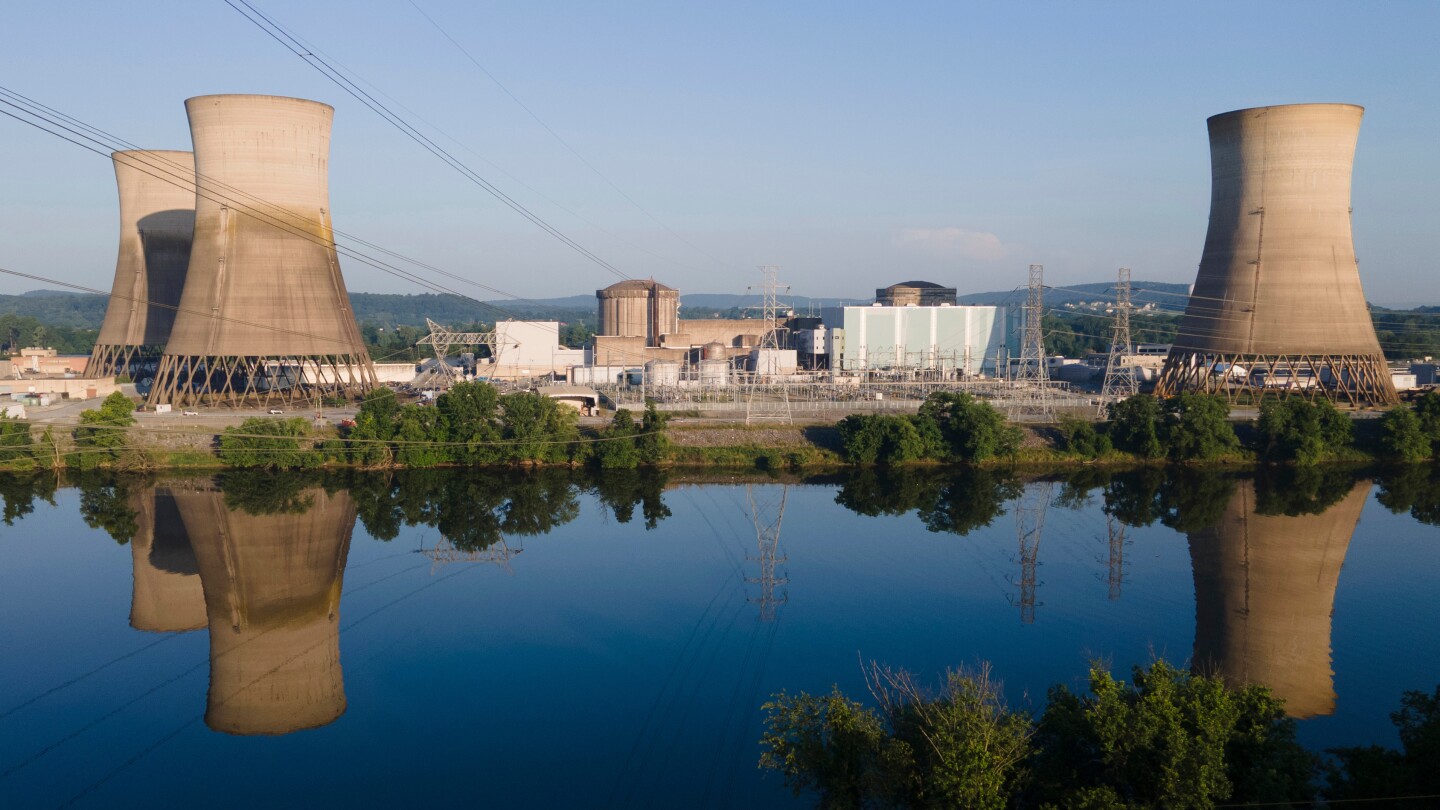
The U.S. Department of Energy announced Tuesday it will provide a $1 billion loan to finance the restart of Pennsylvania’s Three Mile Island nuclear power plant, which is under contract to supply electricity to Microsoft’s data centers.
The federal funding aligns with the Trump administration’s priorities of strengthening nuclear power infrastructure and supporting artificial intelligence development through reliable energy sources for data centers.
For Constellation Energy, owner of the site’s lone functioning reactor, the loan will substantially reduce financing costs needed to revive the mothballed facility. When operational, the 835-megawatt reactor can generate enough electricity to power approximately 800,000 homes, according to Department of Energy estimates.
The reactor, now renamed the Crane Clean Energy Center, has been inactive for five years. Constellation Energy announced plans last year to invest $1.6 billion into restarting the facility under a 20-year power purchase agreement with Microsoft, which will use the electricity to power its growing data center operations.
The restoration project involves significant refurbishment of critical components, including the turbine, generator, main power transformer, and various cooling and control systems. Constellation Energy expects to bring the facility back online by 2027.
The funding comes through an existing $250 billion energy infrastructure program that Congress authorized in 2022. Neither the Energy Department nor Constellation has disclosed specific terms of the loan agreement.
The Three Mile Island facility has a complicated history in America’s nuclear energy landscape. Located on an island in the Susquehanna River near Harrisburg, it was the site of the nation’s worst commercial nuclear disaster in 1979. That accident destroyed Unit 2, leaving only Unit 1 operational.
In 2019, Constellation Energy’s then-parent company Exelon shut down the remaining functioning reactor, citing financial losses after Pennsylvania lawmakers declined to provide subsidies to maintain its operation. The shutdown highlighted broader economic challenges facing the nuclear industry at the time, as operators struggled to compete with cheaper natural gas and renewable energy sources.
The plan to resurrect the dormant reactor reflects a significant shift in the energy landscape and represents part of a broader nuclear power renaissance in the United States. Policymakers are increasingly viewing nuclear energy as essential to achieving several critical objectives: bolstering the nation’s power supply resilience, meeting climate change targets through carbon-free electricity generation, and satisfying the rapidly growing electricity demands driven by energy-intensive data centers.
This revival of interest in nuclear power marks a notable reversal from the industry’s prospects just a few years ago. The combination of concerns about climate change, energy security, and the explosive growth of AI and cloud computing has created new economic opportunities for previously struggling nuclear facilities.
The Three Mile Island restart is particularly significant as it represents one of the first instances of a decommissioned nuclear plant being brought back into service in the United States—a process that involves extensive regulatory approvals, safety assessments, and infrastructure investments.
For Microsoft, the agreement demonstrates the tech giant’s commitment to securing reliable, carbon-free power sources for its expanding data center operations, which form the backbone of its cloud computing and AI services. The company has been aggressively pursuing clean energy procurement strategies to meet its climate goals while addressing the enormous electricity demands of modern computing infrastructure.
Industry analysts suggest that similar partnerships between technology companies and nuclear operators could become increasingly common as the AI revolution drives unprecedented demand for stable, round-the-clock electricity generation that doesn’t produce carbon emissions.
The Energy Department’s financial backing for this project signals federal commitment to preserving and expanding nuclear capacity as a key component of America’s clean energy portfolio and technological competitiveness strategy.
Fact Checker
Verify the accuracy of this article using The Disinformation Commission analysis and real-time sources.

13 Comments
Interesting to see the Department of Energy backing the restart of the Three Mile Island reactor. Nuclear power has a complex history, but it could play an important role in meeting future energy needs while reducing emissions. The reliability factor for data centers is a key consideration.
Agreed, the reliability of nuclear power for energy-intensive facilities like data centers is a major advantage. Careful oversight and modernization will be critical as these plants are brought back online.
The potential benefits of reliable, carbon-free power for data centers are clear, but the history of Three Mile Island casts a long shadow. I’ll be watching closely to see how Constellation Energy addresses public concerns as they move forward with this restart project.
Reviving nuclear power capacity is a complex issue with pros and cons to weigh. On one hand, the reliability and carbon-free benefits could support the growing energy demands of the digital economy. But the history of incidents like Three Mile Island understandably raises public alarm. I’ll be following this story closely.
The $1 billion loan seems like a significant government investment to revive this nuclear facility. While it’s controversial due to the 1979 incident, the potential benefits for energy security and AI infrastructure are worth considering. I’m curious to see how the public responds.
You raise a good point. The public perception of nuclear power will be key, especially given the history of Three Mile Island. Clear communication about safety measures and environmental impacts will be important as this project moves forward.
From a business perspective, the loan helps reduce financial barriers for Constellation Energy to restart this plant. Providing reliable, carbon-free power to data centers is an interesting angle. I wonder how this fits into broader energy policy objectives around renewables and emissions reduction.
That’s a thoughtful question. Nuclear power may have a role to play alongside renewables in transitioning to a lower-carbon energy mix, but the tradeoffs need to be carefully weighed. It will be interesting to see how policymakers balance these priorities.
Restarting the Three Mile Island reactor is a bold move, given the history. But if the safety and environmental concerns can be adequately addressed, the potential benefits in terms of energy security and supporting the AI industry seem worth exploring. I’ll be curious to see how this plays out.
While I understand the desire to leverage nuclear power to support growing energy needs and data infrastructure, the legacy of Three Mile Island gives me pause. I hope the Department of Energy and Constellation Energy have thoroughly evaluated the risks and put robust safety measures in place.
That’s a fair concern. The safety and environmental track record will be critical as this facility is brought back online. Transparent communication with the public about risk mitigation efforts will be essential.
This is an intriguing development in the nuclear power landscape. Providing government financing to revive a facility with such a fraught history is a risky but potentially strategic move. I wonder how it will impact the ongoing debate around the role of nuclear in the clean energy transition.
You raise a good point. The politics and public perception around nuclear power will be a major factor in how this project is received. Clear communication about safety and environmental safeguards will be crucial.