


Listen to the article
Ted Turner, Media Visionary and CNN Founder, Dies at 87
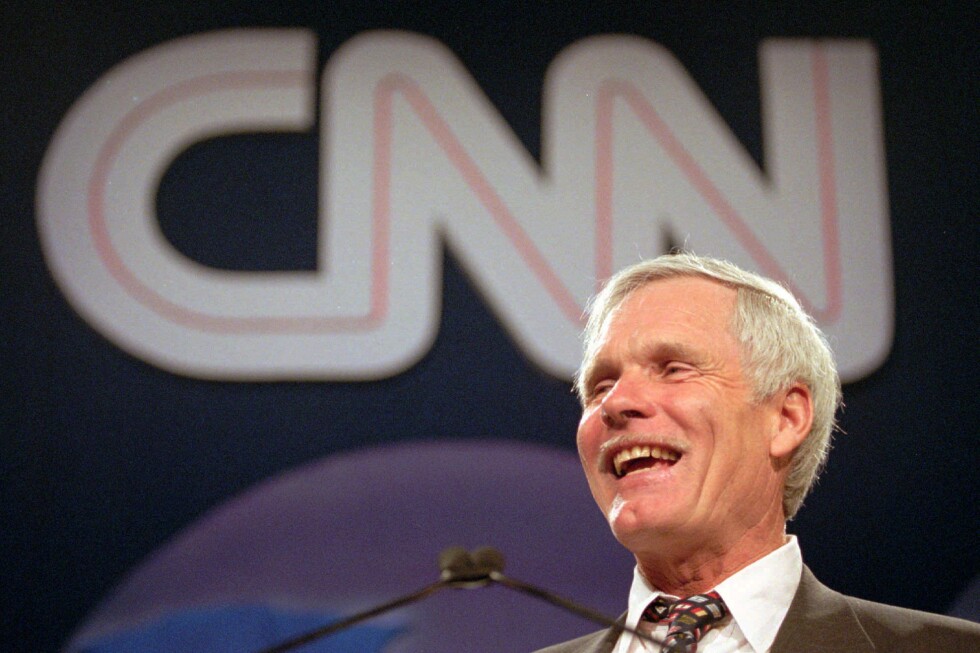
Ted Turner, the brash television pioneer who revolutionized the news industry with the creation of CNN, died Wednesday at age 87. Turner, who was surrounded by family at the time of his passing, had been diagnosed with Lewy body dementia in 2018, according to Turner Enterprises, which manages his vast business empire.
Turner’s legacy spans far beyond his media accomplishments. He was a media mogul, philanthropist, conservationist, championship yachtsman, and the owner of the Atlanta Braves during their 1995 World Series victory. But his most enduring achievement was launching CNN nearly half a century ago, forever changing how news is delivered and consumed.
The Cable News Network, which debuted in 1980, introduced the world to 24-hour news coverage. The concept was born from Turner’s frustration with the limited broadcast hours of traditional network news. Working late into the night, he would miss evening newscasts and be asleep by the time local stations aired their reports.
“I was going to have to hit hard and move incredibly fast and that’s what we did,” Turner recalled in a 2016 interview with The American Academy of Achievement. “The networks didn’t have the imagination” to create an all-news channel.
Turner’s bold move was initially met with skepticism, with some mockingly dubbing his creation the “chicken noodle network.” However, CNN gained international prominence during the 1991 Gulf War when its reporters remained in Baghdad while most journalists fled. The network’s dramatic live coverage of anti-aircraft tracers illuminating the night sky and correspondents ducking from bomb concussions captivated viewers worldwide.
“His first love was family and he had five children. But very close behind, he’s always told me that his greatest achievement was CNN,” said Tom Johnson, CNN’s president from 1990 to 2001.
Born in Cincinnati on November 19, 1938, Robert Edward Turner III moved with his family to Savannah, Georgia when he was nine. After being expelled from Brown University for sneaking a female student into his room, he joined his father’s billboard company in Atlanta. Following his father’s suicide in 1963, the 24-year-old Turner took control of the business.
His media empire began in 1970 when he purchased a struggling UHF station with a signal barely strong enough to cover Atlanta. By 1976, he was transmitting that station via satellite to cable systems nationwide, creating TBS Superstation. The channel’s mix of old movies and reruns like “The Andy Griffith Show” was soon complemented by broadcasts of Atlanta Braves games, which Turner purchased to bolster programming.
Turner’s business acumen led to the acquisition of MGM in the 1980s, a heavily leveraged deal that gave his company access to a vast library of classic films. This content ultimately fueled the creation of TNT and Turner Classic Movies networks. His company also acquired the Hanna-Barbera animation library, leading to the launch of the Cartoon Network.
“He sees the obvious before most people do,” Bob Wright, former president and CEO of NBC, told The New Yorker in 2001. “We all look at the same picture, but Ted sees what you don’t see. And after he sees it, it becomes obvious to everybody.”
By 1996, Turner Broadcasting System included seven major cable networks and three professional sports teams. That year, Turner sold his company to Time Warner for $7.3 billion in stock, a decision he later regretted as he gradually lost influence over CNN.
“I made a mistake,” he later admitted. “The mistake I made was losing control of the company.”
Turner’s personal life often garnered as much attention as his business ventures. Known for his outspoken nature and colorful personality, he earned nicknames like “Captain Outrageous” and “The Mouth of the South.” He once quipped, “If only I had a little humility, I’d be perfect.”
His nine-year marriage to actress Jane Fonda brought him additional celebrity status. Fonda, reflecting on their relationship after his death, wrote on Instagram: “He swept into my life, a gloriously handsome, deeply romantic, swashbuckling pirate and I’ve never been the same.”
In his later years, Turner devoted his energy to philanthropy and environmental causes. His stunning $1 billion pledge to United Nations charities in 1997 established him as one of America’s leading philanthropists. He honored this commitment even as his fortune diminished following the AOL-Time Warner merger.
UN Secretary-General Antonio Guterres praised Turner as “a visionary whose conviction, generosity and audacious spirit left a lasting imprint on the United Nations and our world.”
Turner also acquired over 2 million acres of ranches, becoming one of America’s largest landowners. He championed conservation efforts, including restoring the American bison population, and co-founded the Nuclear Threat Initiative with former U.S. Senator Sam Nunn to reduce global threats from nuclear, biological and chemical weapons.
Despite his illness slowing him in recent years, Turner’s impact on media, philanthropy, and conservation remains profound. His entrepreneurial vision transformed not just how we consume news, but established an enduring model for wealthy individuals to address global challenges through strategic philanthropy.
As Turner himself succinctly described his approach to life: “Early to bed, early to rise, work like hell and advertise.”
Fact Checker
Verify the accuracy of this article using The Disinformation Commission analysis and real-time sources.

6 Comments
It’s sad to hear about Turner’s passing. He was not only a successful businessman, but also a dedicated philanthropist and conservationist. His legacy will continue to shape the media landscape for years to come.
Ted Turner was a true pioneer in the world of news media. His vision for 24/7 cable news coverage was revolutionary and has had a lasting impact on how we consume information today.
Turner’s entrepreneurial spirit and willingness to take risks paved the way for the rise of 24-hour cable news. His vision and leadership transformed the industry and set the stage for the global media landscape we have today.
CNN’s creation by Turner was a game-changer in the news industry. While the network has evolved over the years, his original concept of providing continuous news coverage remains an integral part of our modern media ecosystem.
Turner’s passing is a significant loss for the media and business community. His contributions to the news industry and his philanthropic work have left an indelible mark on the world. He will be remembered as a true visionary and trailblazer.
I agree, Turner’s impact on the media landscape is undeniable. He was a true pioneer who changed the way we consume news.