


Listen to the article
Shipping Industry Grapples with Hormuz Strait Uncertainty Amid Iran Conflict
With hundreds of vessels still trapped in the Persian Gulf and financial losses mounting, shipping companies face unprecedented challenges as the Strait of Hormuz remains effectively closed more than two months into the Iran war.
The situation took a dramatic turn on Sunday when President Donald Trump announced “Project Freedom,” an initiative designed to guide ships safely out of the strait. While two vessels successfully transited under this program, Trump abruptly suspended the effort by Tuesday to create space for potential ceasefire negotiations.
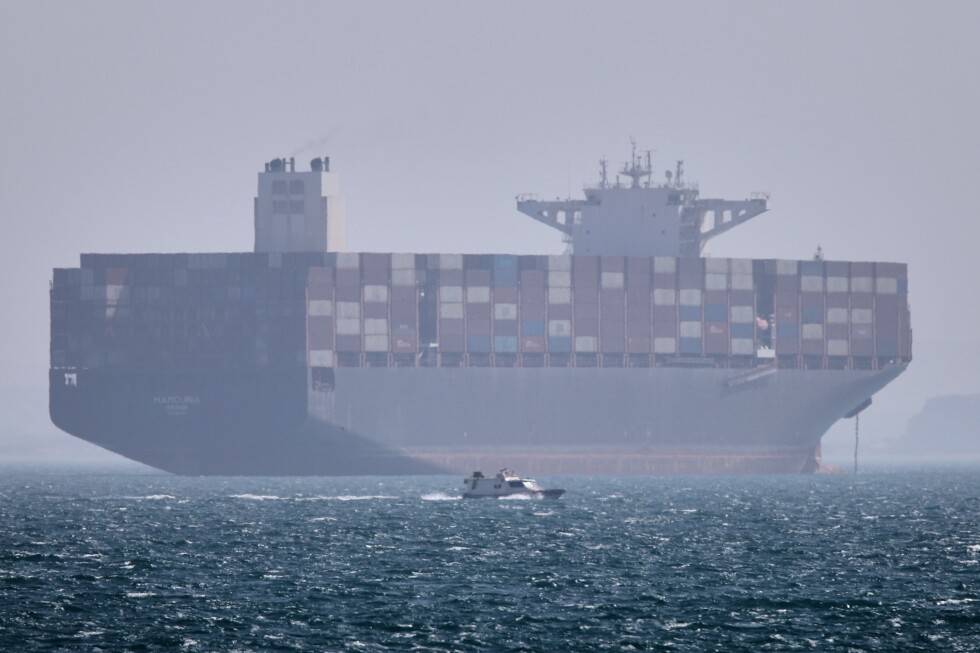
The dangers for maritime traffic remain acute. On Wednesday, French shipping giant CMA CGM Group reported that one of its cargo container ships sustained damage during an attempted transit through the strait. Major shipping operators continue to view the passage as too dangerous, citing persistent threats from Iranian speedboats and drones.
“Ultimately, it’s still going to come back to the primary issues of risk and safety,” said Sean Pribyl, a maritime attorney at Holland & Knight in Washington, D.C. “It seems as though we’re not anywhere near to returning to a free flow of traffic and navigation through the strait.”
Before the conflict, the Strait of Hormuz served as a vital maritime corridor with 100 to 135 vessels passing through daily, according to research firm Lloyd’s List Intelligence. This traffic has dwindled dramatically as Iran implemented a controversial vetting process managed by the Islamic Revolutionary Guard Corps (IRGC) as a condition for safe passage.
The Iranian requirements create a significant dilemma for shipping companies. Vessels must follow a route near Iran’s coast, submit detailed information about crew and cargo, and reportedly pay fees in some instances. However, complying with these demands risks violating sanctions imposed by the United States and European Union, which have designated the IRGC as a terrorist organization.
The blockage has stranded essential goods, including oil, fertilizer, and other commodities. Air Force Gen. Dan Caine, chairman of the Joint Chiefs of Staff, reported that more than 1,550 vessels with approximately 22,500 mariners remain trapped inside the Persian Gulf. Meanwhile, the U.S. Navy maintains a blockade of Iran’s ports from positions in the Gulf of Oman and Arabian Sea.
Insurance costs have skyrocketed for vessels attempting to operate in the region. Premiums have surged from less than 1% of cargo value to between 3% and 10% during the conflict, according to Ed Anderson, a professor of supply chain and operations management at the University of Texas. Despite these increased protections, most shipping companies still consider the crossing too hazardous.
“Ferrying out a couple of ships has not really affected the shipping industry in any way whatsoever,” Anderson noted.
The financial impact on shipping companies has been severe. Hapag-Lloyd AG, one of the world’s largest container shipping companies, reports that the Hormuz situation is costing it $60 million weekly, primarily due to escalating fuel and insurance expenses. The company has four ships stranded in the Persian Gulf from its fleet of 301 vessels. While Hapag-Lloyd has explored alternative routes and land transportation options, the company acknowledged these alternatives “are limited in capacity and cannot completely replace the regular maritime routes through the region.”
There have been rare success stories. Maersk reported that its U.S.-flagged Alliance Fairfax vehicle carrier successfully exited the Persian Gulf through the Strait of Hormuz on Monday “accompanied by U.S. military assets.” The company confirmed that “the transit was completed without incident, and all crew members are safe and unharmed.”
Industry experts caution that oil prices and shipping operations are unlikely to normalize until security risks in the strait significantly diminish. Kaho Yu, head of energy and resources at risk intelligence company Verisk Maplecroft, warned that “even with diplomatic engagement continuing, energy markets are unlikely to return quickly to precrisis assumptions.”
A meeting between Iranian and Chinese diplomats on Wednesday emphasized de-escalation, but Yu stressed that “Hormuz remains the real metric that will be watched. Tanker traffic and energy flows over the coming weeks and months are likely to matter more than diplomatic language in assessing whether Beijing can translate influence with Tehran into practical stability.”
Even if a ceasefire holds and maritime traffic gradually resumes, shipping won’t “snap back overnight,” according to Razat Gaurav, CEO of supply chain management company Kinaxis. “Even when conditions improve, carriers, insurers, and shippers need confidence that stability will hold before capacity and routes fully normalize,” he explained.
Gaurav predicted that air cargo could recover relatively quickly, but ocean shipping typically requires weeks or months due to longer lead times and contractual constraints. Shipments of certain commodities like liquid natural gas and sulfur, where Middle Eastern suppliers play a major role, may move more rapidly as backlogs clear, but “most shippers will remain cautious until stability proves durable.”
Fact Checker
Verify the accuracy of this article using The Disinformation Commission analysis and real-time sources.

12 Comments
The situation in the Strait of Hormuz is a real headache for the global shipping industry. Vessels being trapped and damaged, combined with the policy whiplash, is crippling for companies. Decisive action is required to guarantee the safe passage of commercial traffic through this vital chokepoint.
It’s deeply concerning to see the Strait of Hormuz become such a dangerous flashpoint for global shipping. Shippers are being whipsawed by rapidly shifting policies, putting their vessels and crews at grave risk. A diplomatic solution that ensures safe passage is urgently needed.
This crisis in the Strait of Hormuz underscores the fragility of international maritime trade. Shippers are being forced to weigh the risks of sailing through a war zone against the financial toll of delays and disruptions. A lasting security solution for this critical waterway is long overdue.
The Strait of Hormuz has long been a vital maritime chokepoint, and the current instability is hugely disruptive for the shipping industry. Shippers face mounting losses as they struggle to safely navigate the area. Resolving this crisis should be a top priority for world leaders.
The volatility in the Strait of Hormuz is creating huge headaches for the global shipping industry. Vessels stuck in limbo and damaged ships are costing companies dearly. Permanent solutions to protect maritime traffic in this strategic waterway need to be found quickly.
The escalating conflict in the Strait of Hormuz is a major setback for the global shipping industry. Trapped vessels, damaged ships, and unpredictable policies are compounding the losses. This volatile situation must be stabilized to protect critical maritime trade routes.
Agreed. The safety and security of commercial shipping is paramount. Shippers need clear protocols and guarantees to navigate this treacherous chokepoint.
Shippers are in a very difficult position, caught between the geopolitical tensions in the Strait of Hormuz and the need to keep their operations running. Damaged ships and unpredictable policies are wreaking havoc on supply chains. A comprehensive security framework for the strait is desperately needed.
Changing stances from the Trump administration on navigating the Strait of Hormuz are understandably frustrating for shippers. With vessels still at risk, the uncertainty is wreaking havoc on supply chains and profit margins. Decisive leadership is required to untangle this complex geopolitical knot.
The uncertainty surrounding navigation in the Strait of Hormuz is creating huge problems for the shipping industry. Trapped vessels, damaged ships, and rapidly shifting policies are wreaking havoc on global supply chains. Resolving this crisis should be a top priority for world leaders.
The escalating tensions in the Strait of Hormuz are putting immense pressure on the shipping industry. Trapped vessels, damaged ships, and unpredictable policies are compounding losses for companies. A diplomatic solution that ensures the safe passage of commercial traffic is urgently needed.
This situation in the Strait of Hormuz is incredibly tense and unpredictable. Shippers must weigh the risks of sailing through this critical chokepoint versus the financial losses of delays. Clear and consistent policy from world leaders is desperately needed to ensure safe passage of vessels.