


Listen to the article
U.S. Military Fires on Iranian Tanker as Trump Pushes for End to Conflict
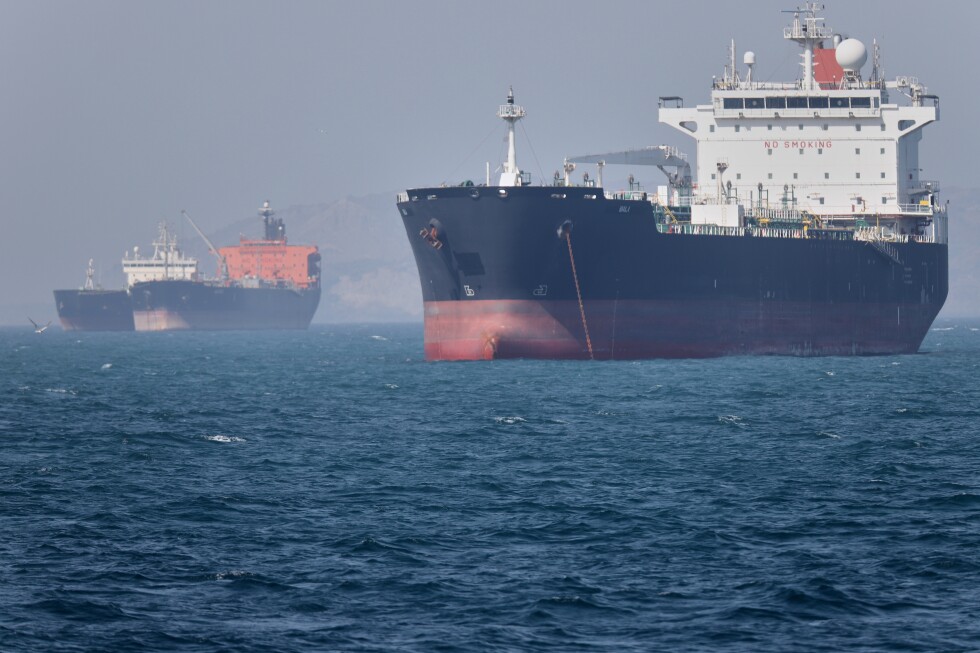
The U.S. military fired on an Iranian oil tanker Wednesday, disabling its rudder as the vessel attempted to breach an American naval blockade of Iran’s ports. The action came as President Donald Trump stepped up pressure on Tehran to reach a deal ending the two-month conflict that has severely disrupted global energy markets.
“We’re dealing with people that want to make a deal very much, and we’ll see whether or not they can make a deal that’s satisfactory to us,” Trump said, while simultaneously issuing a stark warning on social media: “If they don’t agree, the bombing starts, and it will be, sadly, at a much higher level and intensity than it was before.”
The attack on the tanker occurred despite a technical ceasefire between the two nations that has largely held since April 8. U.S. Central Command confirmed the strike in a social media post, noting that a fighter jet targeted the vessel’s rudder in the Gulf of Oman as it attempted to violate the blockade.
The White House reportedly believes it is nearing an agreement with Iran on a one-page memorandum that could end the war, according to reporting by Axios. While no deal has been finalized, proposed provisions include a moratorium on Iranian uranium enrichment, lifting of U.S. sanctions, distribution of frozen Iranian funds, and reopening the Strait of Hormuz to international shipping.
Esmaeil Baghaei, a spokesman for Iran’s Foreign Ministry, told state television that Tehran had “strongly rejected” earlier U.S. proposals but was still reviewing the latest American offer.
The conflict has had far-reaching economic consequences, particularly on global energy markets. Trump’s suspension Tuesday of a short-lived U.S. effort to force open a safe passage for commercial ships through the Strait of Hormuz highlighted the ongoing tensions. Only two American-flagged merchant vessels are known to have passed through the U.S.-guarded route after it opened Monday, during which time the U.S. military reported sinking six Iranian small boats threatening civilian ships.
Iran’s effective closure of the strait, a critical chokepoint for approximately 20% of the world’s oil supply, has sent fuel prices soaring. Brent crude prices, which stood around $70 per barrel before the conflict began, surged to well over $100, though they eased slightly to around $100 on Wednesday as hopes for a resolution grew.
Hapag-Lloyd, one of the world’s largest shipping companies, reported that the strait’s shutdown is costing it approximately $60 million weekly, with rising fuel and insurance costs causing particular hardship. The company noted that alternative routes to other harbors or over land are limited.
“Refiners, shippers and commodity traders will remain cautious until there is clearer evidence that Hormuz disruptions will not re-escalate,” said Kaho Yu, head of energy and resources at risk intelligence company Verisk Maplecroft.
The conflict is also affecting third-party vessels. A cargo container ship operated by the CMA CGM Group was damaged, and multiple crew members were wounded when it came under attack while transiting the strait Tuesday, the French shipping company reported. The injured crew members were evacuated and received medical treatment.
Meanwhile, Israel struck Beirut’s southern suburbs Wednesday for the first time since a ceasefire between Israel and the Iranian-backed Hezbollah militant group was announced on April 17. The Israeli Prime Minister’s office stated the strike, which came without warning, targeted a commander in Hezbollah’s Radwan Force. The last strikes in Beirut occurred on April 8, when a series of massive Israeli attacks killed more than 350 people. Over 2,500 have died in Lebanon since fighting began March 2, two days after Israel and the U.S. launched the war on Iran.
China has emerged as a potential mediator in the conflict. Chinese Foreign Minister Wang Yi called for a comprehensive ceasefire Wednesday after meeting in Beijing with Iran’s top envoy, Foreign Minister Abbas Araghchi. Wang said China was “deeply distressed” by the conflict, which “has not only caused serious losses to the Iranian people, but also had a severe impact on regional and global peace.”
China’s close economic and political ties to Tehran give it a unique position of influence. The Trump administration is pressing Beijing to leverage that relationship to urge Iran to reopen the strait. Araghchi told Iranian state TV that his visit included discussions about the Strait of Hormuz, Iran’s nuclear program, and sanctions imposed on Tehran.
The timing of the diplomatic maneuvers is significant, as Trump is scheduled to visit Beijing for a high-profile summit with Chinese President Xi Jinping on May 14-15, his first visit to China since 2017.
A statement published on the Chinese Foreign Ministry’s website said China values Iran’s pledge not to pursue nuclear weapons while affirming its “legitimate right to the peaceful use of nuclear energy.” Trump has demanded a major rollback of Tehran’s disputed nuclear program as part of any deal.
As international diplomatic efforts continue, hundreds of merchant ships remain bottled up in the Persian Gulf, unable to reach the open sea without passing through the contested strait, underscoring the conflict’s continuing impact on global commerce and energy security.
Fact Checker
Verify the accuracy of this article using The Disinformation Commission analysis and real-time sources.

13 Comments
Firing on an Iranian tanker is a very provocative move. I hope this doesn’t derail the potential for a diplomatic solution to the conflict. Cooler heads need to prevail.
This situation is a stark reminder of the fragility of the global oil supply. A deal to end the US-Iran conflict would be welcome news for commodity markets.
Absolutely. Stabilizing the Middle East energy situation is crucial for the whole world economy. Let’s see if Trump can pull off a breakthrough deal.
This conflict has huge implications for commodity prices and supply chains. A deal to end the US-Iran war would be a welcome development for the mining and energy sectors.
Disabling an Iranian tanker’s rudder seems like a risky military action that could further escalate tensions. I hope the diplomats can make progress on a peaceful settlement.
Disabling an Iranian tanker is an escalation that could backfire. The US and Iran need to find a way to de-escalate tensions and reach a diplomatic solution.
Absolutely. Cooler heads must prevail to prevent this conflict from spiraling out of control. A negotiated settlement is crucial for global energy security.
The energy markets must be extremely volatile with this ongoing conflict. A deal to end the war could help restore stability, but the US and Iran have a lot of baggage to work through.
Agreed. Resolving this conflict is crucial for global energy security. Let’s hope cooler heads can prevail and find a compromise.
The US and Iran seem to be playing a dangerous game of brinkmanship. A negotiated settlement would be the best outcome for everyone, but the two sides have a lot of baggage to overcome.
Agreed. With so much at stake in the global energy markets, a diplomatic resolution is crucial. Let’s hope the leaders can find a face-saving compromise.
Tense situation in the Gulf as the US fires on an Iranian tanker. Looks like Trump is really pressuring Iran to make a deal to end the conflict. I wonder what the terms of a potential agreement could be.
It’s a high-stakes game of geopolitical chess. Both sides seem eager to reach some kind of resolution, but the details will be critical.