


Listen to the article
Argentine Authorities Detain Russian Intelligence Agent Operating Disinformation Network
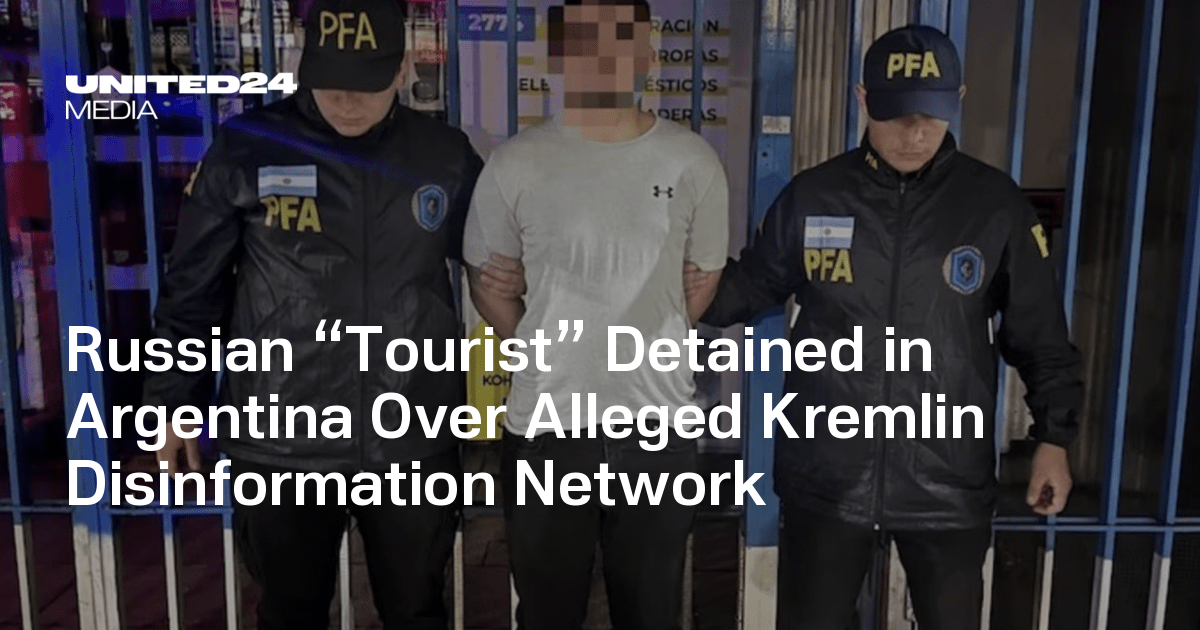
Argentine authorities have detained Dmitry Novikov, a 26-year-old Russian citizen identified as the leader of a Russian intelligence-controlled disinformation network operating across Latin America, according to reports from the Agentstvo investigative outlet and Ukraine’s Center for Countering Disinformation.
Argentina’s State Intelligence Secretariat (SIDE) confirmed the detention after Novikov was found to have submitted false information upon entry to the country. He was apprehended in the suburbs of Buenos Aires, having last entered Argentina on April 12 on a flight from Istanbul. Authorities are currently reviewing his appeal while considering deportation to Russia.
Security Minister Alejandra Monteoliva told reporters that while Novikov entered Argentina as a tourist, his actual purpose was more sinister. “He arrived to destabilize and infringe on our institutions,” Monteoliva stated, highlighting the growing concern about foreign interference in the region.
The Netherlands Military Intelligence and Security Service has linked Novikov’s network, known as “La Compañía” or “Lakhta,” to Russian intelligence services and the Wagner Private Military Company. According to the Forbidden Stories investigative project, the operation was originally created by the late Yevgeny Prigozhin before being transferred to direct control of Russia’s Foreign Intelligence Service.
Novikov’s detention marks a significant development in regional security efforts. Born in Petropavlovsk-Kamchatsky, he received both his Russian passports in the Moscow region in 2019 and 2022. Over the past two years, he has maintained an active travel schedule throughout Latin America, including visits to Chile, the Dominican Republic, Colombia, Panama, and Brazil.
His activities had already raised suspicions elsewhere in the region. The Dominican Republic deported Novikov in September over his involvement in disinformation activities linked to interference operations targeting multiple countries.
This case represents the second major Argentine action against Russian covert operations in less than a year. In June 2023, Buenos Aires exposed a Kremlin-linked network built around the same “La Compañía” structure and tied to Project Lakhta, Prigozhin’s umbrella disinformation operation previously sanctioned by the U.S. Treasury Department for foreign election interference.
Intelligence experts note that the Lakhta operation has undergone a strategic shift in recent months. According to Agentstvo, the network previously operated primarily in Africa before expanding into Latin America in 2024, with Argentina among the primary targets. This expansion reflects Russia’s growing interest in establishing influence operations in the Western Hemisphere, particularly in countries with strategic economic and political significance.
The Center for Countering Disinformation has framed the case as further evidence that Moscow treats the information environment as an active battlefield, stating that “the Kremlin spares no resources to fund shadow structures.”
International security analysts point out that Russia’s disinformation efforts in Latin America aim to exploit existing political polarization, undermine trust in democratic institutions, and create favorable conditions for Russian economic and political interests. These operations typically combine legitimate media outlets, social media campaigns, and covert influence operations to shape public opinion and policy decisions.
Argentina’s actions against Novikov come amid increasing awareness throughout Latin America about the threat of foreign influence operations. Several countries in the region have strengthened their counter-intelligence capabilities in response to evidence of Russian, Chinese, and other foreign actors attempting to influence domestic politics and public discourse.
The detention also highlights the increasingly global nature of information warfare, with countries far from the immediate theater of the Russia-Ukraine conflict becoming battlegrounds for influence and narrative control. For countries like Argentina, maintaining sovereignty now includes defending their information space from sophisticated foreign interference operations.
As the case proceeds through Argentine legal channels, regional security experts are watching closely for additional revelations about the scope and tactics of the network Novikov allegedly operated, which could provide valuable insights into Russia’s broader disinformation strategy in the Western Hemisphere.
Fact Checker
Verify the accuracy of this article using The Disinformation Commission analysis and real-time sources.

9 Comments
This news underscores the importance of maintaining strong intelligence capabilities and cross-border cooperation to identify and disrupt transnational disinformation networks. Continued vigilance will be essential going forward.
I appreciate the Argentine government’s transparency in publicly addressing this case. Shining a light on these types of clandestine operations is an important step in countering foreign interference and protecting national sovereignty.
I’m curious to learn more about the specific tactics and reach of this purported Kremlin-linked disinformation network. What kinds of narratives were they pushing, and how successful were their efforts in Argentina and across Latin America?
The detention of this alleged Russian intelligence agent highlights the growing threat of foreign actors exploiting social media and other platforms to spread misinformation. Rigorous investigation and transparency around these cases are essential.
Agreed. Exposing and countering disinformation networks is vital to protecting the integrity of information and public discourse.
This is a concerning development that speaks to the need for robust media literacy and fact-checking initiatives, both in Argentina and across the region. Empowering citizens to critically evaluate online information is crucial to defending democracy.
Absolutely. Building resilience against disinformation through public education is a vital long-term strategy.
While I’m glad Argentine authorities were able to identify and apprehend this suspected Russian operative, this case underscores the broader challenge of combating foreign interference in domestic affairs. Ongoing vigilance and international cooperation will be key.
This is concerning news about alleged Kremlin interference in Latin America. It’s critical that countries in the region remain vigilant against foreign disinformation campaigns that seek to undermine democratic institutions and stability.