


Listen to the article
Ukrainian President Volodymyr Zelenskyy reshuffled his security leadership on Monday, replacing the head of Ukraine’s security service as he prepares for crucial security talks in Paris. The move comes as Ukraine seeks to formalize agreements with allies on preventing future Russian aggression should a peace deal ever materialize.
Lt. Gen. Vasyl Maliuk, who led the Security Service of Ukraine (SBU), announced his resignation via the agency’s website. Zelenskyy promptly appointed Ievhen Khmara, former head of the SBU’s “A” Special Operations Center, as acting chief. Maliuk’s tenure saw significant successes against Russian forces, most notably “Operation Spiderweb,” which reportedly damaged or destroyed 41 Russian military aircraft in coordinated strikes on four air bases.
This leadership change follows Friday’s appointment of Lt. Gen. Kyrylo Budanov, previously head of military intelligence, as Zelenskyy’s new chief of staff. The reshuffle reflects Ukraine’s sharpened focus on security matters as the war with Russia approaches its fourth anniversary next month.
In another significant development, Zelenskyy announced that Canada’s former Deputy Prime Minister Chrystia Freeland would serve as an economic development adviser to Ukraine. Freeland, who is of Ukrainian heritage, brings substantial diplomatic experience as a former minister of international trade, foreign affairs, and finance. She played a key role in negotiating the U.S.-Mexico-Canada Trade Agreement and has been a vocal critic of Russian President Vladimir Putin.
Her appointment may face complications due to her sometimes contentious relationship with former U.S. President Donald Trump, who once described her as “terrible” and “toxic” during trade negotiations. Additionally, some Canadian opposition lawmakers have questioned whether Freeland can simultaneously serve as a member of Canada’s parliament while advising a foreign government.
The Paris talks, expected to include leaders from approximately 30 countries dubbed the “coalition of the willing,” aim to establish security guarantees for Ukraine’s future. Critical issues on the agenda include whether countries would deploy troops within or near Ukrainian territory and the scope of any potential ceasefire monitoring force. Russia has already stated its opposition to NATO troops on Ukrainian soil.
In his New Year’s address, Zelenskyy claimed that a U.S.-brokered peace deal was “90% ready” but warned that the remaining details—likely including disputed territorial issues—would determine the ultimate outcome. Moscow has been largely silent on negotiation details, while continuing to restate its demands and insisting that any ceasefire must follow a comprehensive settlement.
Meanwhile, fighting continues along the 1,000-kilometer front line through southern and eastern Ukraine. Zelenskyy acknowledged Russia’s numerical advantage in a Monday meeting with Budanov, stating: “Russia has one significant advantage in this war, namely the ability to put pressure on Ukraine with the scale of strikes, the scale of assaults.” He emphasized Ukraine’s need to counter this advantage through technology, new weapons development, and innovative tactics.
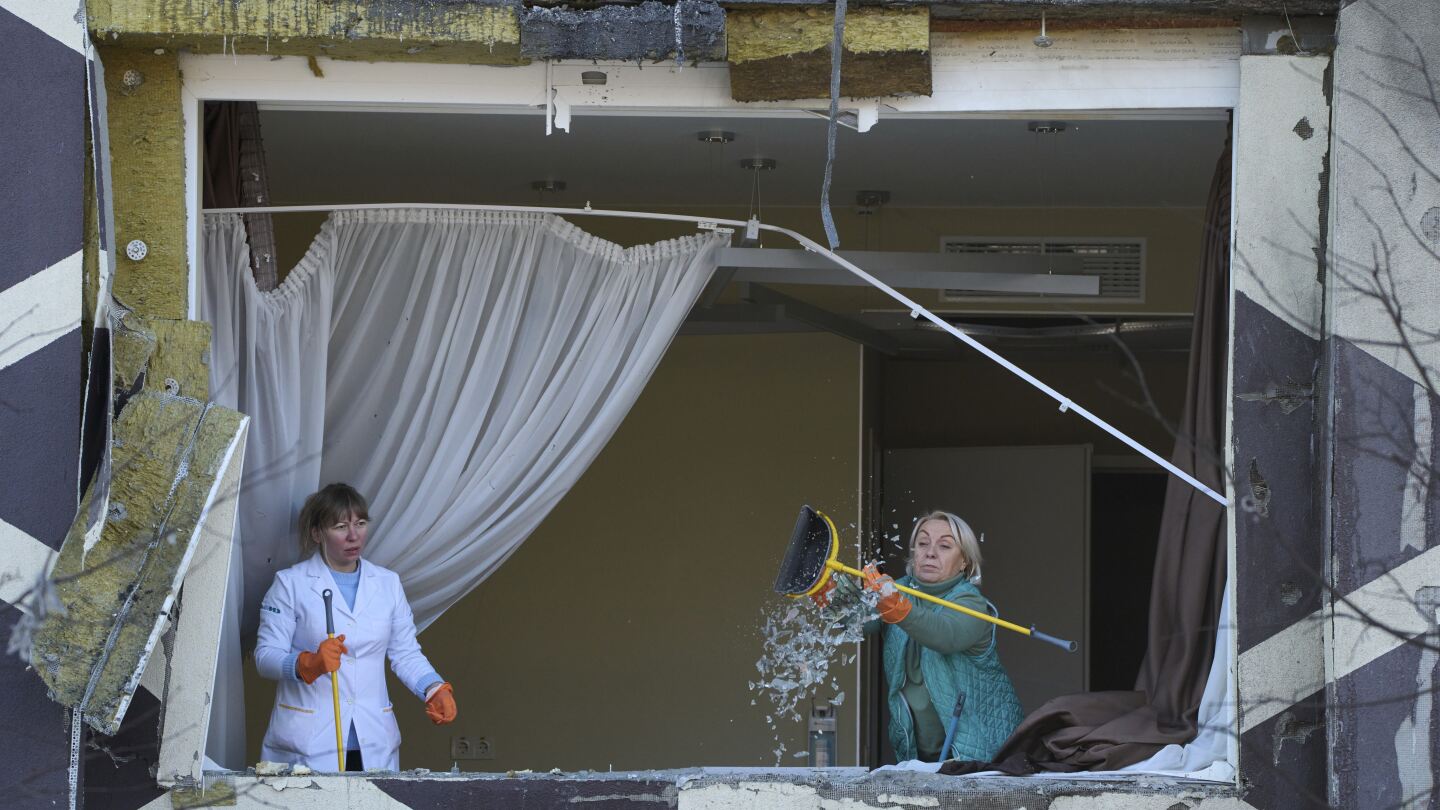
The ongoing conflict was underscored by an overnight Russian drone strike on a private clinic in Kyiv’s Obolon district, which killed a 30-year-old patient and injured three others. Energy workers across Ukraine worked to repair infrastructure damaged by Russian drones, as civilians face power disruptions during the harsh winter. The Ukrainian air force reported that Russia launched nine ballistic missiles and 165 long-range drones in overnight attacks.
In retaliation, Ukrainian forces targeted Russian territory. A Ukrainian drone sparked a fire at an industrial facility in Yelets, located in Russia’s western Lipetsk region, though no casualties were reported. Russian airports in Ivanovo, Nizhny Novgorod, and Yaroslavl temporarily suspended operations due to Ukrainian drone attacks. The Russian Defense Ministry later claimed to have downed 50 additional Ukrainian drones over the Belgorod, Kursk, and Lipetsk regions.
As Ukraine approaches four years of war, Zelenskyy’s administration restructuring reflects both an attempt to maintain battlefield momentum and to prepare for potential peace negotiations, all while seeking to strengthen Ukraine’s war-battered economy through international partnerships.
Fact Checker
Verify the accuracy of this article using The Disinformation Commission analysis and real-time sources.

9 Comments
Interesting leadership changes in Ukraine as Zelenskyy continues to reshape his security team. The replacements suggest a focus on security and intelligence as the war with Russia drags on. I’m curious to see how Freeland’s appointment as an economic adviser will impact Ukraine’s economic policies and relations with the West.
The hiring of a Canadian economic adviser like Chrystia Freeland is an interesting choice by Zelenskyy. Her experience in global finance and diplomacy could provide valuable insights as Ukraine navigates the economic challenges posed by the war. I’m curious to see what policy recommendations she offers to support Ukraine’s economic recovery.
The security chief replacement is a significant development as Ukraine continues to reshape its leadership to address the ongoing conflict with Russia. Maliuk’s successes suggest the SBU has been effective, and Khmara’s appointment could build on that momentum. It will be interesting to see how the new leadership approaches the security challenges ahead.
Freeland’s appointment as an economic adviser to Zelenskyy is a strategic move that could pay dividends for Ukraine. Her background in global finance and diplomacy could provide much-needed expertise as the country navigates the economic fallout of the war. I’m curious to see what policy recommendations she offers to support Ukraine’s economic recovery and relations with the West.
The security chief shuffle reflects the importance Ukraine places on intelligence and counterintelligence as the conflict continues. Maliuk’s successes against Russian forces are noteworthy, and it will be interesting to see if Khmara can build on that momentum. Zelenskyy is clearly working to strengthen his team.
The security chief reshuffle reflects the importance Zelenskyy places on intelligence and counterintelligence as the conflict with Russia continues. Khmara’s appointment suggests a desire for continuity and building on the successes of the previous leadership. It will be interesting to see how he approaches the role and the impact he has on Ukraine’s security efforts.
Zelenskyy’s decision to bring in Chrystia Freeland as an economic adviser is an interesting move. Her background in finance and diplomacy could provide Ukraine with much-needed expertise as it works to shore up its economy amidst the ongoing war. I’m curious to see what policy recommendations she offers.
The replacement of Ukraine’s security chief is a significant change that suggests Zelenskyy is focused on strengthening his country’s intelligence and counterintelligence capabilities. Given the ongoing conflict with Russia, this is a prudent move. I’m curious to see how the new leadership will impact Ukraine’s security efforts.
The appointment of a Canadian economic advisor is an intriguing move by Zelenskyy. Freeland has extensive experience in global affairs and finance, which could provide valuable expertise to Ukraine as it navigates the economic challenges of the war. I wonder what specific areas she will focus on.