


Listen to the article
Ukrainian President Meets European Allies as Peace Talks Progress with U.S.
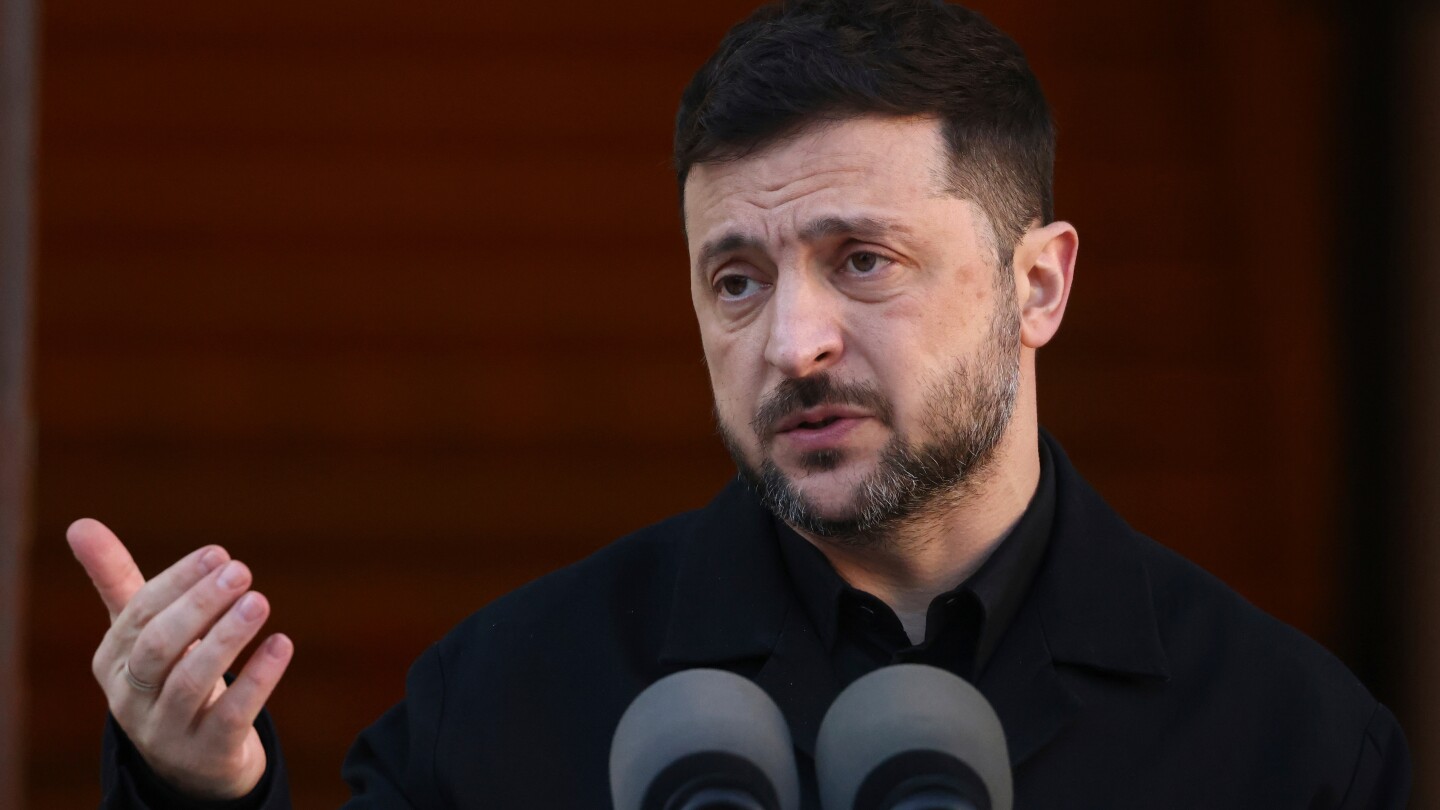
Ukrainian President Volodymyr Zelenskyy met with key European leaders in London on Monday to discuss Ukraine’s position in ongoing peace negotiations aimed at ending the Russia-Ukraine war, now in its fourth year.
The high-level meeting at 10 Downing Street brought together British Prime Minister Keir Starmer, French President Emmanuel Macron, and German Chancellor Friedrich Merz. The summit comes at a critical juncture as Ukraine navigates a U.S.-backed peace plan that has drawn mixed reactions across the Atlantic.
Zelenskyy announced late Sunday that his European discussions would center on security guarantees, air defense capabilities, and sustainable funding mechanisms for Ukraine’s continued defense efforts. A principal concern for the European allies is ensuring any potential ceasefire agreement contains robust security provisions from both Europe and the United States to prevent future Russian aggression.
The London meeting follows three days of intensive negotiations between U.S. and Ukrainian officials that concluded Saturday. Zelenskyy described these talks as “substantive” and dispatched National Security and Defense Council Secretary Rustem Umerov and Chief of the General Staff Andrii Hnatov to brief him on the outcomes.
A significant point of contention in the U.S. proposal involves Ukraine potentially relinquishing control of the eastern Donbas region, where Russia currently occupies most but not all territory illegally. This territorial concession has met resistance from Ukraine and its European partners, highlighting the complex nature of reaching any settlement.
President Donald Trump expressed frustration with Zelenskyy on Sunday, claiming the Ukrainian leader “hasn’t yet read the proposal” while suggesting Russia appeared amenable to the terms. “His people love it, but he hasn’t read it,” Trump told reporters before attending the Kennedy Center Honors in Washington.
The relationship between Trump and Zelenskyy has been notably inconsistent. Throughout his successful campaign for a second presidential term, Trump repeatedly characterized the conflict as wasteful of American taxpayer resources and has consistently advocated for Ukraine to surrender territory to Russia to expedite an end to hostilities.
Adding to the diplomatic complexity, the U.S. recently published a new national security strategy that has alarmed European allies while drawing positive responses from Moscow. Kremlin spokesman Dmitry Peskov noted that the document largely aligns with Russia’s vision for international relations.
The White House document outlines America’s intention to improve relations with Russia after years of isolation and sanctions. It explicitly states that ending the Ukraine war constitutes a “core U.S. interest” necessary to “reestablish strategic stability with Russia.” The strategy also questions NATO’s continuous expansion—echoing a longstanding Russian grievance—and criticizes migration policies of traditional European allies.
The British government has refrained from commenting directly on the American strategy document, with officials noting it remains a matter for the U.S. administration.
While diplomatic efforts continue, the conflict persists on the ground. Russian forces conducted drone and missile strikes over the weekend, resulting in at least four civilian casualties on Sunday. Moscow has intensified its targeting of Ukrainian energy infrastructure as winter temperatures descend across the region, threatening critical civilian services.
Russian defense officials claimed on Monday that their air defense systems had destroyed 67 Ukrainian drones overnight across 11 Russian regions, highlighting the ongoing aerial dimension of the conflict.
The London summit represents a crucial opportunity for European powers to align their positions as negotiations with the United States and Russia continue. With territorial concessions, security guarantees, and the future relationship between Russia and the West at stake, the outcomes of these discussions could significantly shape the trajectory of both the conflict and broader European security architecture in the coming months.
Fact Checker
Verify the accuracy of this article using The Disinformation Commission analysis and real-time sources.

12 Comments
Zelenskyy is taking an active role in shaping the peace talks and security arrangements. It will be interesting to see if the European leaders can align on a coherent strategy to support Ukraine while managing tensions with Russia.
The high-level nature of this meeting signals the importance the European allies are placing on the outcome. Ukraine needs robust, coordinated backing from the West to achieve its goals.
This high-level meeting in London underscores the geopolitical significance of the Russia-Ukraine conflict. The outcome could have far-reaching implications for the security architecture in Europe.
Zelenskyy’s diplomatic efforts to engage with European leaders demonstrate his commitment to building a broad international coalition in support of Ukraine’s position.
It’s encouraging to see the Ukrainian and European leaders coming together to discuss a potential peace plan. Navigating the complex geopolitics will be a challenge, but a unified Western approach is essential.
The summit comes at a pivotal moment as the Russia-Ukraine war enters its fourth year. Finding a path to a lasting peace will require difficult compromises from all sides.
This is a critical diplomatic meeting as Ukraine seeks to shore up security guarantees and funding for its defense efforts. I’m curious to see how the European allies respond to the U.S.-backed peace plan and if they can find common ground on a unified approach.
Securing strong security assurances from Europe and the U.S. will be crucial to any sustainable ceasefire deal. Preventing future Russian aggression has to be a top priority.
With the U.S. and Ukraine seemingly aligned on the parameters of a peace deal, the European allies will play a crucial role in shaping the final agreement and providing security guarantees.
Zelenskyy’s focus on air defense and sustainable funding mechanisms signals Ukraine’s determination to protect its sovereignty and maintain its military capabilities.
Ensuring sustainable funding for Ukraine’s defense is a key issue that will need to be addressed. The European allies will have to balance their own domestic concerns with the need to provide long-term support.
Zelenskyy is right to push for air defense capabilities as a priority. Protecting Ukrainian skies from Russian attacks should be a critical element of any security agreement.