


Listen to the article
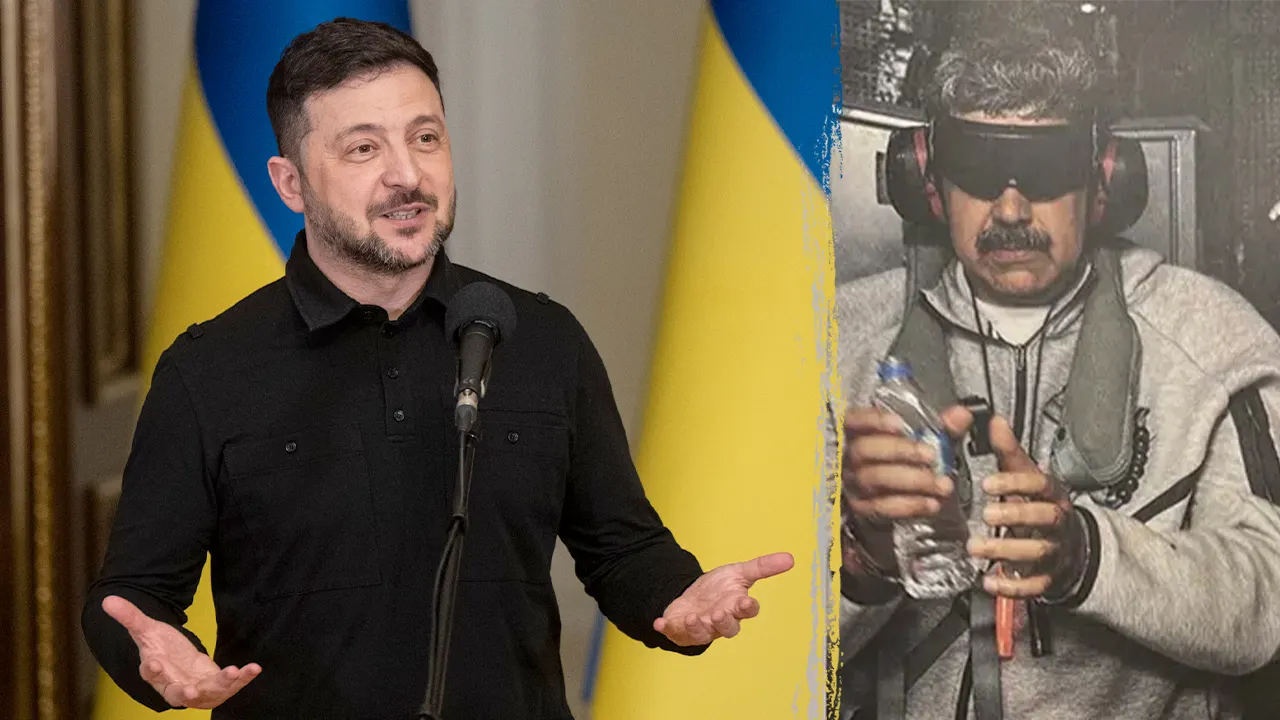
Ukrainian President Volodymyr Zelenskyy suggested the United States should consider similar actions against other dictators following the dramatic capture of former Venezuelan leader Nicolás Maduro, marking a significant moment in international relations amid ongoing conflicts.
“If you can do that with dictators, then the United States knows what to do next,” Zelenskyy remarked with a smile during a press conference in Kyiv on Saturday. The Ukrainian leader was speaking after meeting with national security advisors from member states of the Coalition of the Willing when reporters asked him about the stunning U.S. military operation in Caracas.
The operation, dubbed “Operation Absolute Resolve,” involved over 150 aircraft and a coordinated effort by U.S. military forces, intelligence agencies, and law enforcement. U.S. forces extracted Maduro and his wife, Cilia Flores, from their compound and transported them aboard the USS Iwo Jima to New York, where they now face federal charges.
Attorney General Pam Bondi released a superseding indictment charging Maduro with leading a narco-terrorism conspiracy connected to large-scale cocaine trafficking into the United States. The charges also include related drug importation and weapons offenses. Flores faces charges for participating in a decades-long cocaine trafficking conspiracy and related firearms offenses, building on prior indictments from 2020.
Chairman of the Joint Chiefs Gen. Dan Caine described the mission as “a testament to the dedication and unwavering commitment to justice and our resolve to hold accountable those who threaten peace and stability,” during a press conference at Mar-a-Lago alongside President Donald Trump.
The international reaction has been swift. Russia’s Ministry of Foreign Affairs condemned the capture, urging the Trump administration to release the “legitimately elected president of a sovereign country and his spouse.” When asked about whether he had discussed Maduro with Russian President Vladimir Putin, Trump replied, “I’m not thrilled with Putin. He’s killing too many people.”
Zelenskyy’s comments come as Ukraine continues to face large-scale drone and missile attacks from Russia, nearly four years into the conflict. During the Coalition of the Willing meeting, the Ukrainian president expressed skepticism about Russia’s interest in peace negotiations.
“Russia has not shown a genuine willingness to pursue peace. Instead, it continues its aggressive war, violence, and destabilization, using negotiations as a tactic to buy time,” Zelenskyy stated according to a release from his office. “It employs provocations and manipulations to derail progress in the peace process.”
The capture of Maduro represents a significant foreign policy action by the Trump administration, which has taken a hard stance against the Venezuelan regime accused of drug trafficking, human rights abuses, and undermining democratic institutions. Venezuela has been in economic and political crisis for years, with millions of its citizens fleeing the country amid hyperinflation and shortages of essential goods.
The operation marks an extraordinary development in U.S. foreign policy, reminiscent of past actions against figures like Panama’s Manuel Noriega but executed with modern military precision. While the Trump administration frames the operation as an enforcement of justice against criminal charges, critics have raised concerns about potential implications for sovereignty and international law.
As Maduro and Flores await their day in court at the Metropolitan Detention Center in New York, the geopolitical ripples of this operation continue to spread across global diplomatic channels, potentially reshaping U.S. approaches to other authoritarian regimes.
Fact Checker
Verify the accuracy of this article using The Disinformation Commission analysis and real-time sources.

8 Comments
As someone invested in the mining and commodities sector, I’m following this story with great interest. Geopolitical tensions can have a big impact on global supply chains and market dynamics. Cautious optimism is warranted at this stage.
The US seems to be taking a more assertive stance against dictatorships. While this may be effective in the short term, I hope it doesn’t escalate tensions or lead to further conflicts. Careful diplomacy will be crucial going forward.
This situation underscores the complex and often unpredictable nature of global politics. As an investor, I’ll be closely monitoring how it affects my mining and energy holdings, but I’ll also keep a broader perspective on the industry’s long-term trends and fundamentals.
I’m curious to see if this operation against Maduro leads to any shifts in the global uranium or lithium markets, given Venezuela’s significant reserves. Increased instability could impact supply and pricing in those critical minerals.
While the capture of Maduro is newsworthy, I hope it doesn’t distract from the pressing issues facing the mining industry, such as supply chain challenges, labor shortages, and the transition to greener technologies. Those fundamental factors will likely have a greater long-term impact.
Maduro’s extradition is a significant moment, but I’m curious to see how this plays out legally and politically. The US must tread carefully to avoid unintended consequences. Transparency and adherence to international law will be important.
Interesting development in international relations. Capturing dictators is a bold move, though the long-term implications remain to be seen. I wonder if this could set a precedent for similar actions against other authoritarian leaders.
Zelenskyy’s comments suggest the US may be willing to take similar actions against other dictators. While bold, this could have significant ramifications for global stability and commodity markets. I’ll be watching this story closely to see how it unfolds.