


Listen to the article
Yemen’s Separatist Movement Declares Southern Independence Amid Growing Gulf Tensions
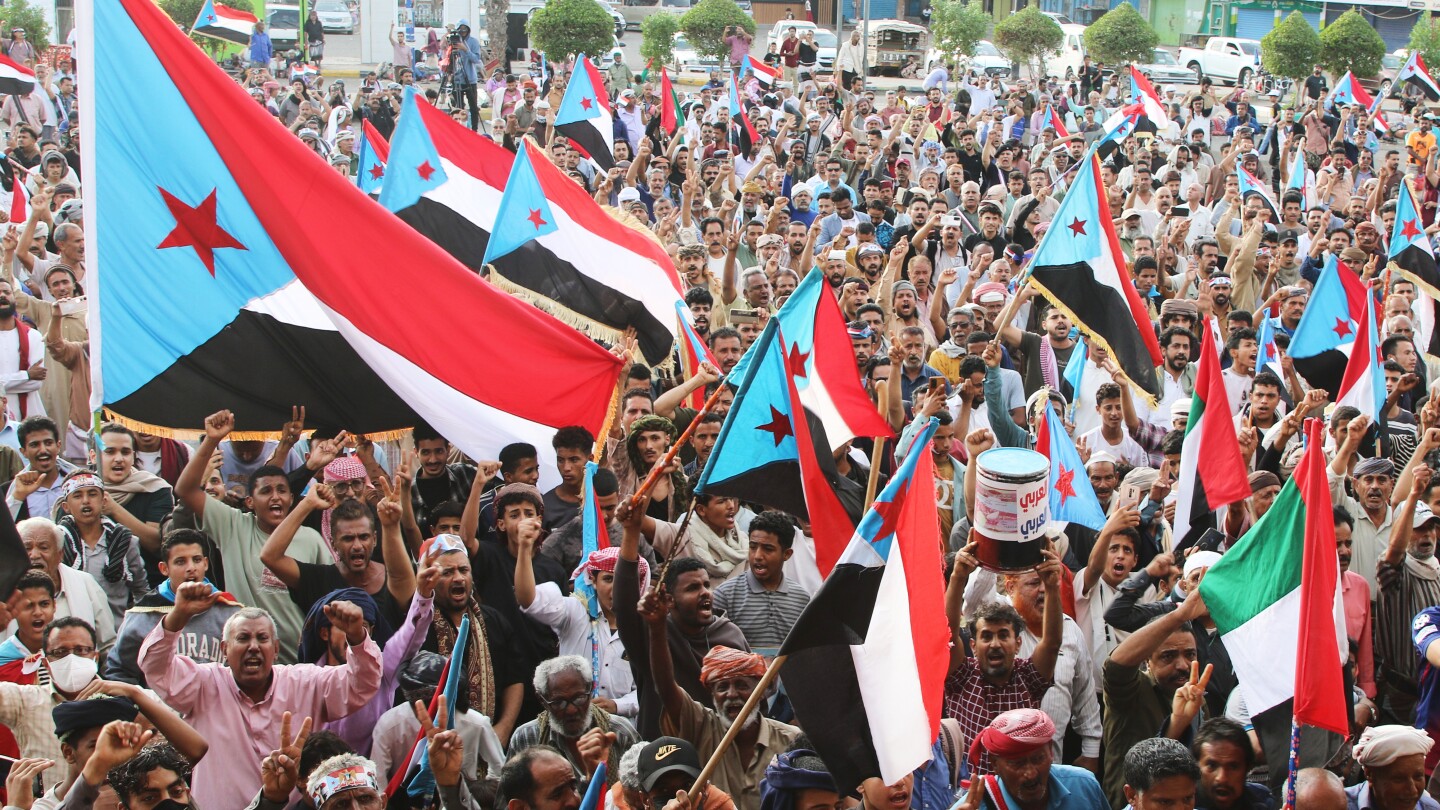
Yemen’s UAE-backed Southern Transitional Council (STC) has formally announced a constitution for an independent southern nation, significantly escalating tensions in the war-torn country and deepening the rift between Saudi Arabia and the United Arab Emirates.
The announcement on Friday marks the most explicit move yet toward the STC’s long-held goal of southern independence. The group’s leader, Aidarous al-Zubaid, declared in a video statement that the constitution would remain in effect for two years, after which a referendum would determine self-determination for southern Yemen.
“All options remain open,” al-Zubaid warned if other factions refuse dialogue or resort to military action against the separatists.
The 30-article constitution proclaimed the creation of “the State of South Arabia,” encompassing the same territory as the former People’s Democratic Republic of Yemen, which existed as an independent southern state from 1967 to 1990.
This development follows the STC’s seizure last month of two southern provinces—Hadramout and Mahra—from Saudi-backed forces. The separatists also took control of the Presidential Palace in Aden, the south’s main city, forcing members of Yemen’s internationally recognized government to flee to Riyadh.
In response to the separatist advances, Saudi Arabia has intensified military action against STC positions. On Friday, Saudi warplanes bombed STC camps and military positions in Hadramout province as Saudi-backed fighters, known as the National Shield Forces, attempted to seize the facilities.
Mohamed al-Nakib, spokesperson for the STC-backed forces, reported “intense clashes” across several areas of Hadramout and claimed the airstrikes had caused fatalities, though this could not be independently verified.
The UAE, which has backed the separatists, announced early Saturday that it had completely withdrawn all its troops from Yemen, fulfilling a pledge made after the recent confrontation with Saudi Arabia. The Emirati Defense Ministry stated that the withdrawal concluded “the remaining missions of counterterrorism units” and was conducted in coordination with relevant partners.
“The UAE forces follow the implementation of a previously announced decision to conclude the remaining missions of counterterrorism units,” a Defense Ministry statement said, without providing details on the number of soldiers or equipment moved.
The rapidly deteriorating situation threatens to unravel the Saudi-led coalition that has been fighting Iranian-backed Houthi rebels who control northern Yemen. For the past decade, Saudi Arabia, the UAE, and their local allies have ostensibly been united in their effort to restore Yemen’s internationally recognized government, which was ousted from the north by the Houthis.
But growing tensions between coalition members now risk plunging Yemen into yet another dimension of conflict, further devastating the Arab world’s poorest country.
Saudi Ambassador to Yemen Mohammed al-Jaber expressed frustration with the STC, claiming that the kingdom had exhausted “all efforts” over weeks to “stop the escalation” and urge separatists to withdraw from Hadramout and Mahra, only to face “continued intransigence and rejection” from al-Zubaidi.
Al-Jaber added that the STC had refused to allow a Saudi delegation’s aircraft to land in Aden, despite previous agreements with some STC leaders to find a solution serving “everyone and the public interest.”
Meanwhile, Yemen’s Transportation Ministry, which is aligned with the STC, claimed that Saudi Arabia had imposed requirements mandating flights to and from Aden International Airport undergo inspection in Jeddah. The ministry denounced the decision and announced that all flights between Yemen and the UAE would be suspended until these measures are reversed.
The UAE’s Foreign Ministry released a statement Friday saying the country was handling the situation “with restraint, coordination, and a deliberate commitment to de-escalation, guided by a foreign policy that consistently prioritizes regional stability over impulsive action.”
Salem al-Khanbashi, the recently appointed governor of Hadramout chosen by Yemen’s internationally recognized government to command Saudi-led forces in the region, insisted that efforts to reclaim the camps were “not a declaration of war” but rather a “pre-emptive measure to remove weapons.”
As the situation continues to unfold, the STC’s declaration of southern independence threatens to further fragment Yemen, potentially creating a new political reality that could complicate international diplomatic efforts to resolve the country’s decade-long civil war and humanitarian crisis.
Fact Checker
Verify the accuracy of this article using The Disinformation Commission analysis and real-time sources.

8 Comments
The separatists’ declaration of an independent South Yemen is a significant escalation. It will be crucial for the international community to engage with all sides and encourage a negotiated settlement that respects the interests of the Yemeni people.
Absolutely. Lasting peace in Yemen will require a comprehensive political solution that addresses the root causes of the conflict and the grievances of the various factions.
This move by the Southern Transitional Council is a bold attempt to assert their vision for Yemen’s future. However, it risks further destabilizing the country and deepening the rift between the parties involved.
The announcement of a constitution for an independent South Yemen is a bold move by the separatists. However, it remains to be seen if this will lead to a negotiated settlement or further conflict.
Agreed. The path forward is uncertain, but dialogue and diplomacy will be essential to finding a sustainable solution that addresses the concerns of all parties.
This development highlights the fragility of the situation in Yemen and the deep divisions between different factions. It will be important to monitor how this plays out and its implications for the wider region.
Interesting development in Yemen. This will likely escalate tensions in the region even further as the UAE-backed separatists push for independence. It will be crucial to see how Saudi Arabia and other factions respond to this move.
You’re right, the situation is very complex. The competing interests of the various parties involved make a peaceful resolution difficult.