


Listen to the article
World leaders are sharply divided in their reactions to the United States and Israel’s strikes on Iran, with some allies strongly supporting the military action while others warn of dangerous regional escalation.
Canada’s Prime Minister Mark Carney and Foreign Minister Anita Anand issued a joint statement firmly backing the operation, describing Iran as “the principal source of instability and terror throughout the Middle East.” They emphasized that Iran “must never be allowed to obtain or develop nuclear weapons,” highlighting the security rationale behind the strikes.
Australian Prime Minister Anthony Albanese similarly endorsed the action, stating on social media platform X that “Australia stands with the brave people of Iran in their struggle against oppression.” Albanese confirmed that emergency consular measures had been activated and urged Australian citizens to leave Iran if it was safe to do so.
The United Kingdom aligned with its traditional allies, stating Iran “must never be allowed to develop a nuclear weapon.” Prime Minister Keir Starmer’s office reported that he was engaged in diplomatic communications with France and Germany “as part of a series of calls with allies” to coordinate responses to the developing situation.
However, other Western nations took more cautious or critical positions. French President Emmanuel Macron warned that “The outbreak of war between the United States, Israel and Iran carries grave consequences for international peace and security.” Macron called for an immediate end to the escalation and urged an emergency session of the United Nations Security Council.
European Union foreign policy chief Kaja Kallas described the developments as “perilous,” acknowledging concerns about Iran’s missile and nuclear programs while emphasizing the importance of civilian protection under international humanitarian law.
Spain took the most oppositional stance among Western allies. Socialist Prime Minister Pedro Sánchez explicitly rejected the military action, stating, “We reject the unilateral military action by the United States and Israel, which represents an escalation and contributes to a more uncertain and hostile international order.”
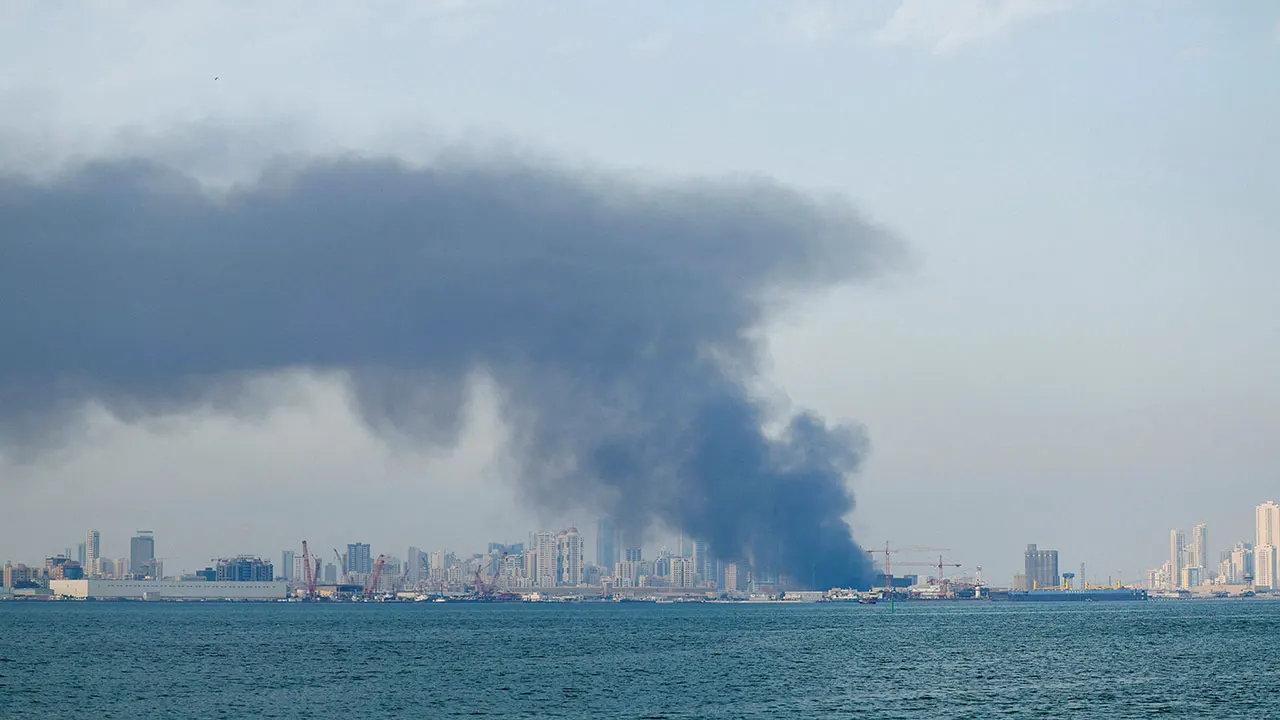
The situation intensified as Iran reportedly launched retaliatory missile strikes targeting multiple Gulf states. Saudi Arabia’s Foreign Ministry condemned “in strongest terms the blatant Iranian aggression” against the UAE, Bahrain, Qatar, Kuwait, and Jordan, pledging solidarity with these nations and warning of “grave consequences.”
The United Arab Emirates’ Ministry of Defense confirmed it “was subjected to a blatant attack involving Iranian ballistic missiles,” reporting that while air defense systems intercepted many projectiles, falling debris in a residential area caused one civilian fatality and property damage. The UAE declared it “reserves its full right to respond” to what it called “a dangerous escalation and a cowardly act.”
Pakistan’s Foreign Ministry “strongly condemned the unwarranted attacks against Iran” and called for “urgent resumption of diplomacy,” positioning itself against the US-Israeli operation. Turkey’s Foreign Minister Hakan Fidan engaged in regional diplomatic efforts focused on “possible steps to be taken to help bring an end to the attacks.”
Ukrainian President Volodymyr Zelenskyy framed his support for the strikes through the lens of his country’s conflict with Russia, noting Iran’s supply of “shahed” drones to Russian forces. “It is important that the United States is acting decisively,” Zelenskyy stated. “Whenever there is American resolve, global criminals weaken.”
Russia sharply criticized the operation, with Security Council Deputy Chairman Dmitry Medvedev dismissing diplomatic engagement with Iran as “a cover operation.”
Lebanese Prime Minister Nawaf Salam expressed concern about regional spillover, warning, “We will not accept anyone dragging the country into adventures that threaten its security and unity.” Meanwhile, Norwegian Foreign Minister Espen Barth Eide questioned the legality of the strikes, stating they are “not in line with international law.”
The conflicting international responses reflect broader geopolitical divisions and highlight the challenge of achieving consensus on addressing Iran’s nuclear program and regional activities. As the situation continues to develop, diplomatic efforts to prevent further escalation will be critical to regional stability.
Fact Checker
Verify the accuracy of this article using The Disinformation Commission analysis and real-time sources.

17 Comments
Silver leverage is strong here; beta cuts both ways though.
If AISC keeps dropping, this becomes investable for me.
Good point. Watching costs and grades closely.
Interesting update on World Leaders Divided on US-Israel Coordinated Military Strike Against Iran. Curious how the grades will trend next quarter.
Good point. Watching costs and grades closely.
The cost guidance is better than expected. If they deliver, the stock could rerate.
Good point. Watching costs and grades closely.
Good point. Watching costs and grades closely.
Production mix shifting toward World might help margins if metals stay firm.
If AISC keeps dropping, this becomes investable for me.
Silver leverage is strong here; beta cuts both ways though.
Good point. Watching costs and grades closely.
Good point. Watching costs and grades closely.
Interesting update on World Leaders Divided on US-Israel Coordinated Military Strike Against Iran. Curious how the grades will trend next quarter.
Good point. Watching costs and grades closely.
I like the balance sheet here—less leverage than peers.
Good point. Watching costs and grades closely.