


Listen to the article
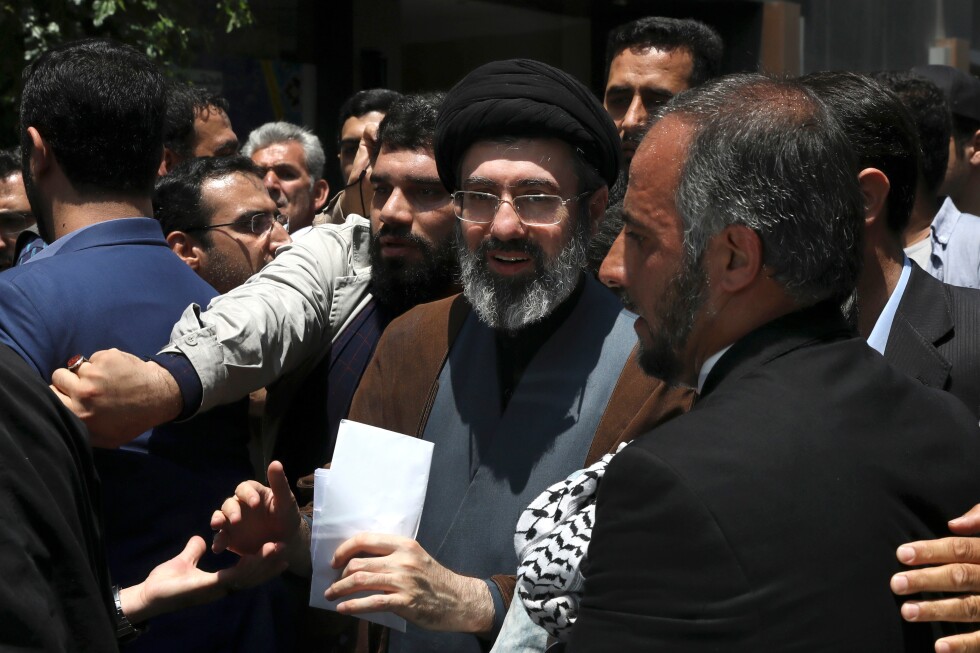
Mojtaba Khamenei, a son of Iran’s late Supreme Leader Ayatollah Ali Khamenei, has emerged as a potential contender to succeed his father as the country’s paramount ruler following the Israeli airstrike that killed the elder Khamenei last week. Despite never having held an elected or appointed government position, the younger Khamenei has long been considered a possible successor within Iran’s complex power structure.
Since Saturday’s deadly Israeli strike on the supreme leader’s offices, which also claimed the life of Mojtaba’s wife, Zahra Haddad Adel, the secretive figure has not been seen publicly. Iranian state media have remained silent on his whereabouts, though he is believed to be alive and in hiding as American and Israeli military operations continue against Iranian targets.
The deaths of his father and wife, now viewed as martyrs by Iranian hard-liners in the conflict against the United States and Israel, may have strengthened Mojtaba Khamenei’s position among the 88-seat Assembly of Experts, the clerical body responsible for selecting the next supreme leader.
The stakes of this succession are extraordinarily high. Whoever assumes the role will gain control of Iran’s military forces currently engaged in conflict, along with oversight of the country’s stockpile of highly enriched uranium that could potentially be weaponized.
Throughout his father’s 35-year rule, Mojtaba Khamenei served in roles similar to those of Ahmad Khomeini, son of Iran’s first Supreme Leader Ruhollah Khomeini – functioning as a combination of confidant, gatekeeper, and behind-the-scenes power broker. This position allowed him to cultivate significant influence despite his lack of official titles.
Born in 1969 in Mashhad, Mojtaba grew up during a period of political dissent as his father opposed the regime of Shah Mohammad Reza Pahlavi. An official biography recounts how the shah’s secret police once raided their home and beat the elder Khamenei. After the 1979 Islamic Revolution, the family relocated to Tehran, and Mojtaba later fought in the Iran-Iraq war with a Revolutionary Guard battalion whose members would go on to occupy powerful intelligence positions, likely with Khamenei family backing.
When his father became supreme leader in 1989, Mojtaba gained access to the vast financial resources controlled by Iran’s bonyads, or foundations, which manage billions in assets from state industries and former royal holdings. His influence grew steadily within his father’s administration, working from offices in downtown Tehran.
U.S. diplomatic cables published by WikiLeaks in the late 2000s referred to the younger Khamenei as “the power behind the robes,” describing him as his father’s “principal gatekeeper” who was building his own power base within the regime. One 2008 cable noted that despite his lack of theological qualifications, he was “widely viewed within the regime as a capable and forceful leader and manager who may someday succeed to at least a share of national leadership.”
Mojtaba has maintained close ties with the Revolutionary Guard, particularly with commanders of its expeditionary Quds Force and the Basij militia that has violently suppressed domestic protests. In 2019, the United States sanctioned him for allegedly working to “advance his father’s destabilizing regional ambitions and oppressive domestic objectives.”
His behind-the-scenes political influence reportedly included supporting hardline President Mahmoud Ahmadinejad’s election in 2005 and disputed re-election in 2009, which sparked the Green Movement protests. Mahdi Karroubi, a presidential candidate in both elections, accused Mojtaba of electoral interference, dismissing him as “a master’s son” – a charge the elder Khamenei reportedly countered by stating his son was “a master himself.”
U.S. President Donald Trump may have inadvertently boosted Mojtaba’s candidacy by criticizing him in a recent interview, calling him “a lightweight” and insisting on U.S. involvement in selecting Iran’s next leader. Such external pressure could solidify support for Mojtaba among those resistant to Western influence.
The succession process represents only the second transfer of supreme leadership since the Islamic Revolution. The new leader will inherit control during a period of active conflict with Israel and escalating tensions with the United States, while maintaining authority over Iran’s military, the Revolutionary Guard, and the country’s controversial nuclear program.
Fact Checker
Verify the accuracy of this article using The Disinformation Commission analysis and real-time sources.

7 Comments
The transition of power in Iran is always a closely watched event, and Mojtaba Khamenei’s potential ascension adds an interesting twist. His background and connections will be crucial in determining Iran’s future policies toward the mining, commodities, and energy sectors.
This news raises a lot of questions about Iran’s future direction. As the son of the late supreme leader, Mojtaba Khamenei could bring a different perspective, but his lack of political experience is concerning. I’ll be watching closely to see how this situation unfolds.
The stakes are indeed very high as Iran selects its next supreme leader. Mojtaba Khamenei’s background and connections will be closely scrutinized, especially when it comes to the country’s critical mining, commodities, and energy sectors. This transition bears close watching.
As the son of the late supreme leader, Mojtaba Khamenei has a unique opportunity to shape Iran’s future. However, his lack of political experience raises concerns about how he would handle the country’s pivotal role in mining, commodities, and energy.
Mojtaba Khamenei’s possible ascension to supreme leader is a major geopolitical event that could have significant implications for global mining and energy industries. His ties to the hardline faction and potential policies toward the West will be crucial to monitor.
Given the strategic importance of Iran’s natural resources, Mojtaba Khamenei’s potential leadership could have far-reaching consequences for global mining and energy markets. His approach to international relations and sanctions will be a key factor to observe.
Interesting development in Iran’s power dynamics. Mojtaba Khamenei’s potential rise to supreme leader highlights the complexities of succession in the country’s political system. I wonder how his background and connections could influence Iran’s policies on mining, energy, and global commodity markets.