


Listen to the article
In a significant diplomatic breakthrough, international allies have outlined a framework for Ukraine’s security guarantees that would activate after a ceasefire with Russia. The agreement, reached during high-level talks in Paris, represents the most concrete step yet toward establishing a sustainable security architecture for Ukraine once fighting stops.
Leaders from across Europe and Canada, joined by U.S. representatives and senior officials from the European Union and NATO, endorsed a multilayered security approach that could include continued military backing and potential multinational force deployments to deter future Russian aggression.
“We stand ready to commit to a system of politically and legally binding guarantees that will be activated once a ceasefire enters into force,” stated the joint communiqué issued following the meeting.
French President Emmanuel Macron characterized the agreement as a “significant step” toward ending Russia’s invasion, which has now stretched into its fourth year with no immediate end in sight. The Kremlin has not yet commented on the Paris discussions.
The security framework recognizes Ukraine’s armed forces as “the first line of defense and deterrence,” while committing partners to provide long-term military assistance and armaments even after hostilities conclude. Allies pledged to supply equipment and training to Ukraine’s forces and support them with air, land, and sea military capabilities specifically designed to prevent renewed Russian attacks.
Macron indicated France’s readiness to deploy “several thousand” troops as part of a multinational force, though he emphasized these would be stationed “far away from the contact zone” rather than on the front lines. The French president mentioned that at least 20 nations have pledged to deploy troops on land, at sea, or in the air to support the guarantees.
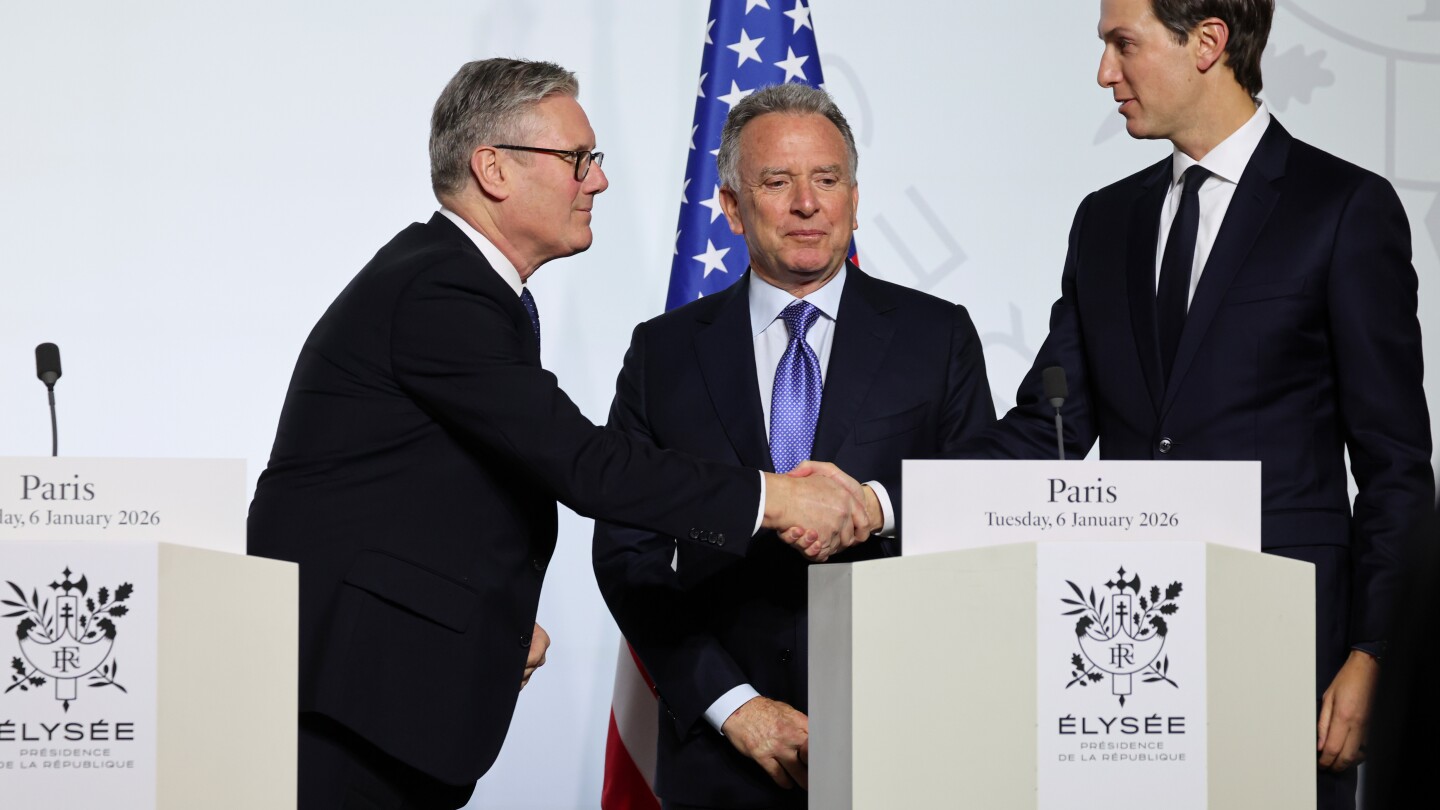
British Prime Minister Keir Starmer outlined that the United Kingdom and France would “establish military hubs across Ukraine and build protected facilities for weapons and military equipment to support Ukraine’s defensive needs” in the event of a ceasefire. Meanwhile, German Chancellor Friedrich Merz stated that Germany is prepared to participate in the security guarantees, potentially by stationing troops in countries bordering Ukraine.
U.S. envoy Steve Witkoff affirmed that the United States “strongly stands behind” the security guarantees, though he did not detail specific American military commitments. The security framework also includes provisions for U.S.-led monitoring and verification of any ceasefire agreement.
Despite the progress, Ukrainian President Volodymyr Zelenskyy expressed some reservations. “So far, I have not received a clear, unambiguous answer” on whether Western European allies would come to Ukraine’s defense if Russia attacked again after any peace deal, he noted the day after the talks.
Zelenskyy acknowledged advances made during the discussions but emphasized that individual countries must still ratify these commitments before implementation. “We determined what countries are ready to take leadership in the elements of security guarantees on the ground, in the air, and at sea, and in restoration,” the Ukrainian leader said. “We determined what forces are needed.”
The Paris framework represents the most comprehensive international effort yet to plan for Ukraine’s post-war security, with 35 participants attending in person, including 27 heads of state or government. However, significant challenges remain. The agreement stops short of binding commitments, leaving Ukraine dependent on how quickly allies transform plans into enforceable guarantees.
Any European troop deployments would face political hurdles and require approval from lawmakers in many countries. Additionally, questions about force structures, financing, and command arrangements remain unresolved.
Prime Minister Starmer warned that “the hardest yards are still ahead,” noting ongoing Russian attacks. He added that peace would require compromise from Moscow, but “Putin is not showing that he is ready for peace.”
For Ukraine, the central concern is that these deterrence measures remain theoretical while the brutal conflict continues. Russia has insisted there can be no ceasefire without a comprehensive settlement and has rejected the idea of NATO troop deployments on Ukrainian soil. Ukrainian officials have repeatedly warned that any ceasefire lacking firm security guarantees could merely provide Moscow an opportunity to regroup and launch renewed attacks.
Fact Checker
Verify the accuracy of this article using The Disinformation Commission analysis and real-time sources.

18 Comments
Interesting to see the allies coming together to outline security guarantees for Ukraine. This could be a crucial step towards a sustainable ceasefire and peace process, though the Kremlin’s reaction will be key.
Agreed. Establishing a multilayered security approach with continued military backing and potential force deployments could help deter future Russian aggression.
The recognition of Ukraine’s armed forces as the ‘first line of defense’ is an important symbolic gesture, but sustained military, financial, and diplomatic support will be needed to make it a reality.
Absolutely. Continued capacity-building and equipment transfers will be crucial to bolstering Ukraine’s military readiness and deterrence capabilities.
This security framework seems like a measured and pragmatic approach, balancing Ukraine’s sovereignty with the need for external support. The details around ‘politically and legally binding guarantees’ will be interesting to follow.
Yes, the specifics of these guarantees will be crucial. Ensuring they have real teeth and commitment from the international community will be key.
After nearly 4 years of conflict, this diplomatic breakthrough is a glimmer of hope. But the path to a sustainable ceasefire and peace process remains fraught with challenges. Ukraine’s security must remain a top priority.
Well said. The road ahead will be long and difficult, but this agreement represents an important milestone. Consistent follow-through and commitment from the international community will be crucial.
The details around ‘politically and legally binding guarantees’ will be crucial. Ensuring they have real teeth and concrete commitments from the international community will be key to their effectiveness.
Exactly. The specifics of these guarantees, including potential force deployments and military backing, will need to be clearly defined and consistently implemented.
The recognition of Ukraine’s armed forces as the ‘first line of defense’ is an important acknowledgment of their role in the conflict. Continued support will be vital as the war nears its 4-year mark.
Absolutely. Strengthening Ukraine’s military capabilities will be crucial to maintaining stability and deterring future Russian aggression, even after a ceasefire.
The involvement of the EU, NATO, and U.S. representatives in these talks signals the broad international support for Ukraine’s security. Maintaining this unity will be vital as negotiations progress.
Absolutely. The Kremlin’s response will be telling – any signs of division or wavering in the international community’s stance could be exploited.
This security framework represents a potentially significant step, but much will depend on Russia’s response and the ability of the international community to maintain unity and resolve. Cautious optimism is warranted.
Well said. The Kremlin’s reaction will be a key variable, and any signs of wavering or division among Ukraine’s allies could be exploited. Steadfast commitment will be essential.
Curious to see how this security framework evolves and what specific commitments emerge from the allies. The devil will be in the details, but the overall intent seems positive.
Agreed. Maintaining transparency and accountability around these guarantees will be vital to ensuring they have real, tangible impact on the ground in Ukraine.