


Listen to the article
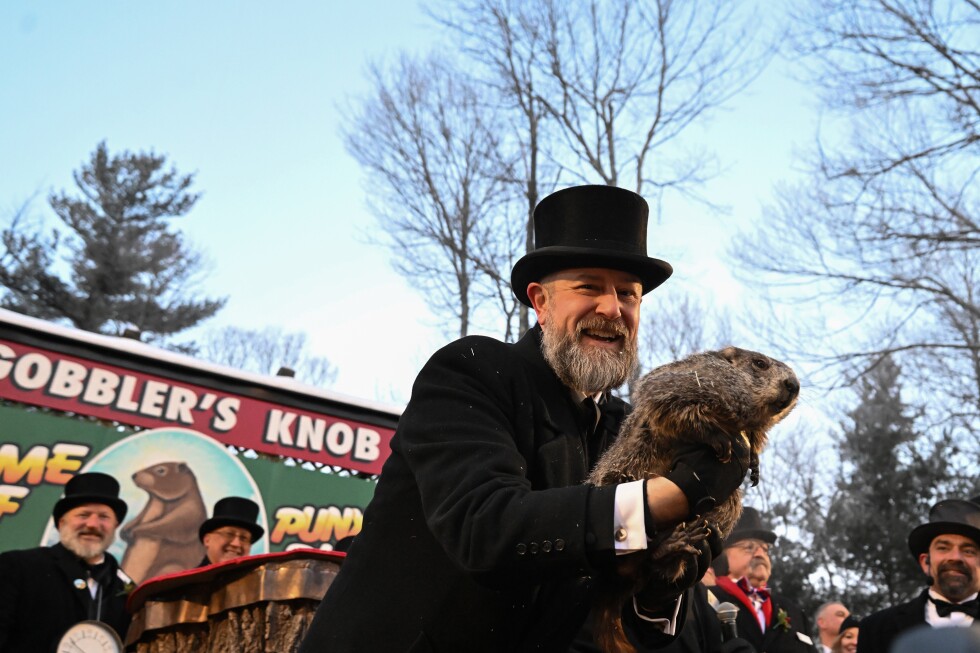
Thousands gathered Monday morning at Gobbler’s Knob in western Pennsylvania to witness the annual Groundhog Day tradition, as Punxsutawney Phil’s handlers announced that the famous groundhog saw his shadow, predicting six more weeks of winter.
The centuries-old ritual, which has exploded in popularity since the 1993 Bill Murray film “Groundhog Day,” draws visitors from across the country to this small Pennsylvania town. This year’s prediction disappointed those hoping for an early spring, though the event maintained its festive atmosphere despite the chilly forecast.
“We know this is silly; we know this is fun,” said Marcy Galando, executive director of the Punxsutawney Groundhog Club. “We want people to come here with a sense of humor.”
The tradition marks the midpoint between the winter solstice and spring equinox, a time historically significant for agricultural communities. Its roots trace back to European customs, particularly among Celtic peoples who observed the four mid-season days throughout the year. As German immigrants settled in Pennsylvania, they brought similar customs involving badgers or bears predicting weather patterns, eventually substituting the indigenous groundhog in North America.
Historical records confirm the practice’s longevity, with an 1841 diary referencing groundhog weather forecasts among German-descent families in Morgantown, Pennsylvania. According to research by the late University of Pennsylvania professor Don Yoder, the festival connects to “ancient, undoubtedly prehistoric, weather lore.”
Punxsutawney’s celebration began in the late 1880s when Pennsylvania Germans started commemorating the day with picnics, hunting expeditions, and groundhog feasts. However, the tradition transformed dramatically after “Groundhog Day” premiered, bringing such overwhelming crowds that event organizers had to address problems with overnight drinking and disorderly conduct. Alcohol is now prohibited at the Gobbler’s Knob grounds.
While Punxsutawney Phil may be the most famous weather-predicting groundhog, he faces competition across the region. In Quarryville, a farming community in southeastern Pennsylvania’s Lancaster County, the Slumbering Groundhog Lodge has maintained its own tradition since 1907 with Octoraro Orphie. The lodge’s board chair Charlie Hart boldly claims, “Octoraro Orphie has never been wrong,” suggesting a friendly rivalry with Phil.
The groundhog itself—also known as a woodchuck or “grundsau” in Pennsylvania Dutch—belongs to the squirrel family. These herbivores typically live two to three years in the wild and emerge from hibernation in mid-winter seeking mates. According to the Pennsylvania Game Commission, hunters harvest more than 200,000 groundhogs annually, and while not commonly consumed, their meat is edible and has been compared favorably to beef.
Beyond Punxsutawney and Quarryville, groundhog lodges proliferated across eastern Pennsylvania starting in the 1930s. These social clubs, similar to Freemasonry, aimed to preserve Pennsylvania German culture and traditions, sometimes fining members caught speaking anything other than Pennsylvania Dutch during meetings. About a dozen remain active today.
“I think it’s just one of these traditional rituals that people enjoy participating in, that maybe take them away from modern life for 15 minutes,” explained William W. Donner, an anthropology professor at Kutztown University who studies efforts to preserve German heritage.
As for Phil’s accuracy, the evidence suggests his forecasting abilities are questionable at best. The National Centers for Environmental Information has analyzed Phil’s predictions against actual temperature data and concluded he was correct only three times in the past decade. Phil has historically predicted extended winters far more often than early springs.
Despite the dubious science behind the tradition, the celebration continues to attract thousands, maintaining its place as a quirky midwinter ritual that brings communities together and offers a momentary distraction from the cold reality of February. Whether Phil’s shadow truly indicates six more weeks of winter remains debatable, but the tradition’s cultural significance endures regardless of its meteorological merit.
Fact Checker
Verify the accuracy of this article using The Disinformation Commission analysis and real-time sources.

7 Comments
Interesting how this German immigrant tradition has evolved and become such an iconic American celebration. I wonder if Punxsutawney Phil will be right about the six more weeks of winter this year.
Me too, it will be interesting to see if Phil’s prediction holds true. Either way, it’s a fun annual event that brings some levity to the dreary winter months.
I find this Groundhog Day tradition quite amusing and quaint. It’s a fun way for the local community to celebrate the changing of the seasons, even if Phil’s weather predictions are hardly scientific.
You’re right, it’s a lighthearted ritual that brings people together. Seeing the crowds gather to watch Phil emerge is part of the fun, regardless of the forecast.
As a mining enthusiast, I’m curious how Groundhog Day ties into the industry. Are there any connections between this folksy tradition and natural resource extraction or exploration?
The idea of a furry weather forecaster is pretty whimsical. I wonder if there are any similar animal-based traditions in the mining or commodities sectors that have stuck around over the years.
Groundhog Day may seem silly, but it’s a nice reminder that even the most serious industries can benefit from a bit of lighthearted fun and community spirit now and then.