


Listen to the article
European Union Leaders Make Historic Visit to Post-Assad Syria
Senior officials from the European Union made their first visit to Syria on Friday, meeting with interim President Ahmad al-Sharaa in a significant development that signals warming relations between Damascus and Western powers.
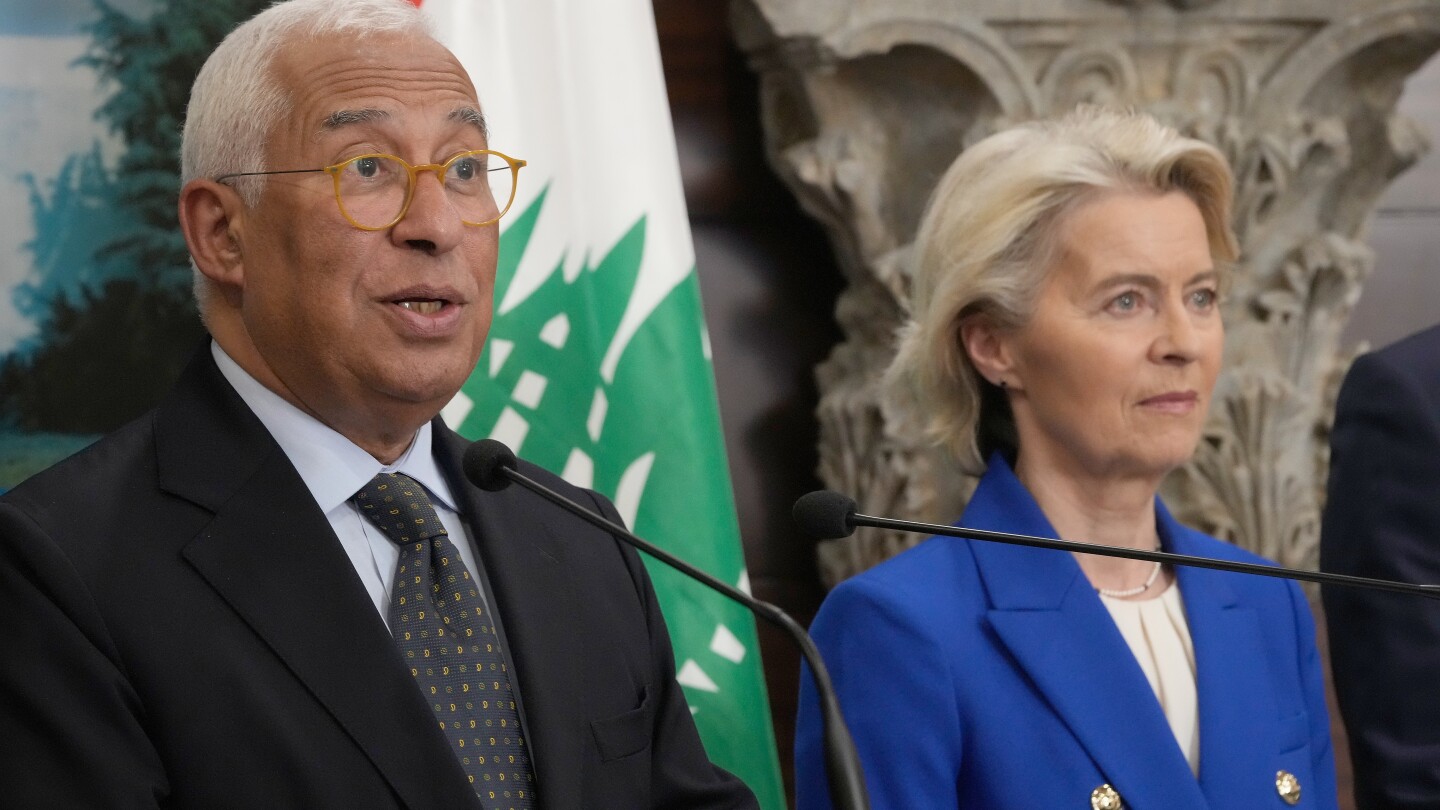
European Commission President Ursula von der Leyen and European Council President António Costa traveled to the war-torn nation as it begins the arduous process of rebuilding after nearly 14 years of devastating civil conflict. The war officially ended in December 2024 when former President Bashar Assad was ousted in a swift rebel offensive led by al-Sharaa, who previously headed an Islamist rebel group.
“After decades of fear and silence, Syrians began a long journey toward hope and renewal. Europe will do everything it can to support Syria’s recovery and reconstruction,” von der Leyen wrote on social media platform X during the visit.
The EU delegation announced substantial financial support, with Costa pledging 620 million euros ($723 million) for Syria in 2026 and 2027. This aid package includes humanitarian assistance and funds to initiate reconstruction efforts—support that had previously been blocked by international sanctions imposed on the Assad regime, which have now been lifted.
Al-Sharaa’s diplomatic initiatives have largely succeeded in restoring Syria’s relationships with Western and Arab countries that had previously isolated Assad’s government due to widespread human rights abuses documented before and during the conflict. This normalization represents a remarkable shift in Syria’s international standing within a relatively short timeframe.
However, Syria faces significant challenges despite these diplomatic breakthroughs. The country’s economy remains in tatters after years of war, sanctions, and corruption. Sporadic outbreaks of sectarian violence continue to threaten stability, and al-Sharaa’s government has struggled to establish complete control over Syrian territory.
Recent days have seen clashes between Syrian government forces and Kurdish fighters in the northern city of Aleppo. These confrontations occurred amid stalled negotiations for merging the new Syrian army with the Kurdish-led Syrian Democratic Forces (SDF), which controls much of northeastern Syria. Syria’s Defense Ministry announced a ceasefire on Friday, though the SDF had not publicly confirmed acceptance of the agreement at the time of reporting.
Costa acknowledged these tensions during the visit, saying, “The violent escalations of recent days are worrisome,” and called for “continued dialogue.” He added, “We know that the path to reconciliation and recovery remain difficult and long. Healing, rebuilding lives and creating trust in institutions takes time.”
After their Syria stop, the EU delegation continued their regional tour with a visit to neighboring Lebanon, where they discussed recent developments in that country’s security situation. The Lebanese army announced Thursday it had completed the first stage of a plan to remove weapons from non-state groups, including the powerful Hezbollah militia.
Von der Leyen welcomed this progress, particularly the implementation of the disarmament plan in areas south of the Litani River. She indicated the EU was “ready to step up our cooperation” to support Lebanon’s financially strained military forces.
The EU leaders also addressed the November 2024 ceasefire that ended the most recent Israel-Hezbollah conflict, with von der Leyen emphasizing it must be “fully respected by all parties.” She stressed, “Lebanon’s sovereignty and territorial integrity has to be upheld, and it is paramount to ensure that Hezbollah is fully disarmed.”
Despite the ceasefire agreement, Israel has continued near-daily airstrikes in Lebanon, which it claims target Hezbollah’s attempts to rebuild military capabilities. Israeli officials have threatened to intensify these operations if Hezbollah does not completely disarm.
The EU delegation’s historic visit to Syria represents a significant milestone in the country’s reintegration into the international community after years of isolation. However, the road to stability and prosperity remains fraught with challenges as Syria attempts to heal deep wounds left by one of the most devastating conflicts of the 21st century.
Fact Checker
Verify the accuracy of this article using The Disinformation Commission analysis and real-time sources.

17 Comments
Exploration results look promising, but permitting will be the key risk.
Exploration results look promising, but permitting will be the key risk.
Good point. Watching costs and grades closely.
Good point. Watching costs and grades closely.
Interesting update on Visiting EU leaders pledge to support Syria’s recovery after years of civil war. Curious how the grades will trend next quarter.
Good point. Watching costs and grades closely.
Good point. Watching costs and grades closely.
Interesting update on Visiting EU leaders pledge to support Syria’s recovery after years of civil war. Curious how the grades will trend next quarter.
Good point. Watching costs and grades closely.
Interesting update on Visiting EU leaders pledge to support Syria’s recovery after years of civil war. Curious how the grades will trend next quarter.
Good point. Watching costs and grades closely.
Interesting update on Visiting EU leaders pledge to support Syria’s recovery after years of civil war. Curious how the grades will trend next quarter.
Silver leverage is strong here; beta cuts both ways though.
Good point. Watching costs and grades closely.
Good point. Watching costs and grades closely.
The cost guidance is better than expected. If they deliver, the stock could rerate.
Good point. Watching costs and grades closely.