


Listen to the article
Vietnam and EU Elevate Relations to Highest Diplomatic Level Amid Global Trade Shifts
Vietnam and the European Union elevated their relationship to a comprehensive strategic partnership on Thursday, marking Vietnam’s highest diplomatic classification and placing the EU on equal footing with major powers like the United States, China, and Russia.
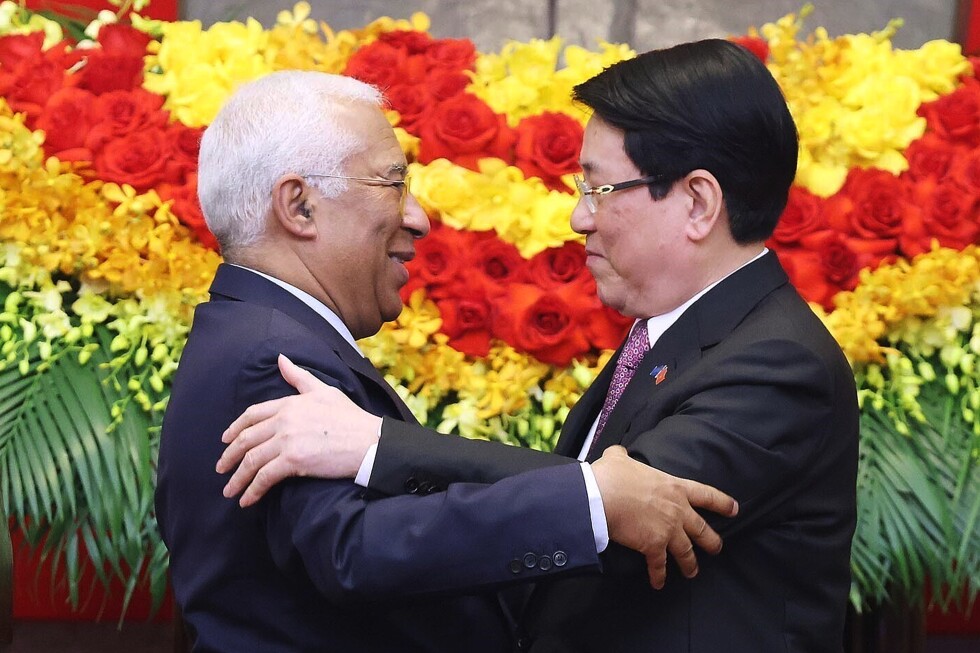
The diplomatic upgrade was announced during European Council President António Costa’s visit to Hanoi, highlighting growing economic and strategic ties between the two partners at a time of significant global trade realignment.
“At a moment when the international rules-based order is under threat from multiple sides, we need to stand side by side as reliable and predictable partners,” Costa said during the ceremony. He emphasized that the partnership focuses on “developing spheres of shared prosperity” between the regions.
Vietnam’s President Luong Cuong described the development as a “historic milestone” in bilateral relations, underscoring the significance both sides place on deepening cooperation.
The timing of this diplomatic elevation is particularly notable, coming just days after Vietnam reelected Communist Party General Secretary To Lam as the country’s top leader. Lam has advocated for continued economic growth through aggressive reforms, making the EU partnership alignment with his vision for Vietnam’s development trajectory.
This diplomatic achievement for Vietnam follows Costa’s visit to India, where the EU and India reached a free trade agreement after nearly two decades of negotiations, signaling Europe’s broader strategic pivot toward expanding economic ties across Asia.
Vietnam has emerged as one of globalization’s major beneficiaries over the past decade, transforming into a key export hub for electronics, garments, and consumer goods as multinational corporations diversified production away from China. This export-driven growth model has significantly raised living standards across Vietnam, but has also generated trade frictions with Western economies.
The country’s persistent trade surpluses have drawn increasing scrutiny, particularly from the United States and more recently from European officials concerned about market access imbalances and competitive conditions. The new partnership may provide a framework to address these tensions while expanding mutually beneficial trade.
For the EU, strengthening ties with Vietnam represents a strategic opportunity to secure better access to one of Asia’s fastest-growing manufacturing hubs while supporting European efforts to diversify supply chains in an era of increasing trade protectionism and geopolitical competition.
The economic relationship between the two partners has shown remarkable growth. Bilateral trade in the first eleven months of 2025 reached more than $66.8 billion, representing a 6.6% increase from the previous year. The EU currently stands as Vietnam’s fourth-largest trading partner, third-largest export market, and fifth-largest import source, while Vietnam has become the EU’s largest trading partner in Southeast Asia.
This partnership builds upon the EU-Vietnam Free Trade Agreement implemented in 2020, which has already contributed to expanding commercial ties. The agreement eliminated 99% of tariffs between the trading partners over a 10-year period, making Vietnam an increasingly attractive destination for European investment.
From Vietnam’s perspective, the elevated partnership supports its ambitious national development goals, including its vision to achieve high-income status by 2045. The country is actively pursuing market diversification to reduce its heavy economic dependence on the United States, which currently absorbs approximately 30% of Vietnam’s exports.
The comprehensive strategic partnership is expected to extend beyond trade to include cooperation on climate change, digital transformation, security matters, and sustainable development initiatives—reflecting the increasingly multifaceted nature of EU-Vietnam relations.
Analysts view this development as part of a broader trend of middle powers forming stronger economic and strategic alliances amid growing uncertainty in the international order and increasing competition between major powers like the United States and China.
Fact Checker
Verify the accuracy of this article using The Disinformation Commission analysis and real-time sources.

10 Comments
Interesting to see Vietnam and the EU strengthening ties as global trade dynamics shift. Diversifying trade and investment partnerships seems like a prudent move for Vietnam amid US-China tensions.
Yes, the comprehensive strategic partnership is a significant diplomatic upgrade. It reflects the growing economic and geopolitical importance of Vietnam’s relationship with the EU.
The timing is noteworthy, coming shortly after Vietnam’s leadership transition. This suggests the new administration sees strengthening EU ties as a key priority. It will be interesting to see how this evolves.
I’m curious how this will impact Vietnam’s trade and investment ties with other major powers like China. Navigating those geopolitical dynamics will be tricky, but diversification seems prudent.
Good point. Vietnam will need to carefully balance its relationships to avoid becoming overly dependent on any single partner. Maintaining strategic autonomy will be important.
From a mining and commodities perspective, Vietnam has significant reserves of minerals like bauxite, titanium, and rare earths. Closer EU cooperation could help develop these resources more sustainably.
Agreed. Responsible and transparent mining practices will be crucial, especially for strategic minerals. The EU’s emphasis on ESG standards could be beneficial in this regard.
This partnership could open up new opportunities for collaboration in areas like renewable energy, infrastructure, and sustainable mining/extraction of critical minerals. Aligning standards and regulations will be key.
Absolutely, the EU’s expertise in green tech and responsible sourcing could benefit Vietnam as it develops its mining and energy sectors. Synergies in these industries are worth exploring.
This partnership seems to reflect Vietnam’s geopolitical balancing act, maintaining strong ties with both the US and China while diversifying into new economic blocs. It’s a shrewd move amid global trade uncertainty.