


Listen to the article
In a dramatic turn of events, Venezuelans worldwide erupted in celebration following the capture of President Nicolás Maduro in a U.S. military operation, marking what many hope will be the end of an era characterized by economic collapse and mass migration from the once-prosperous oil-rich nation.
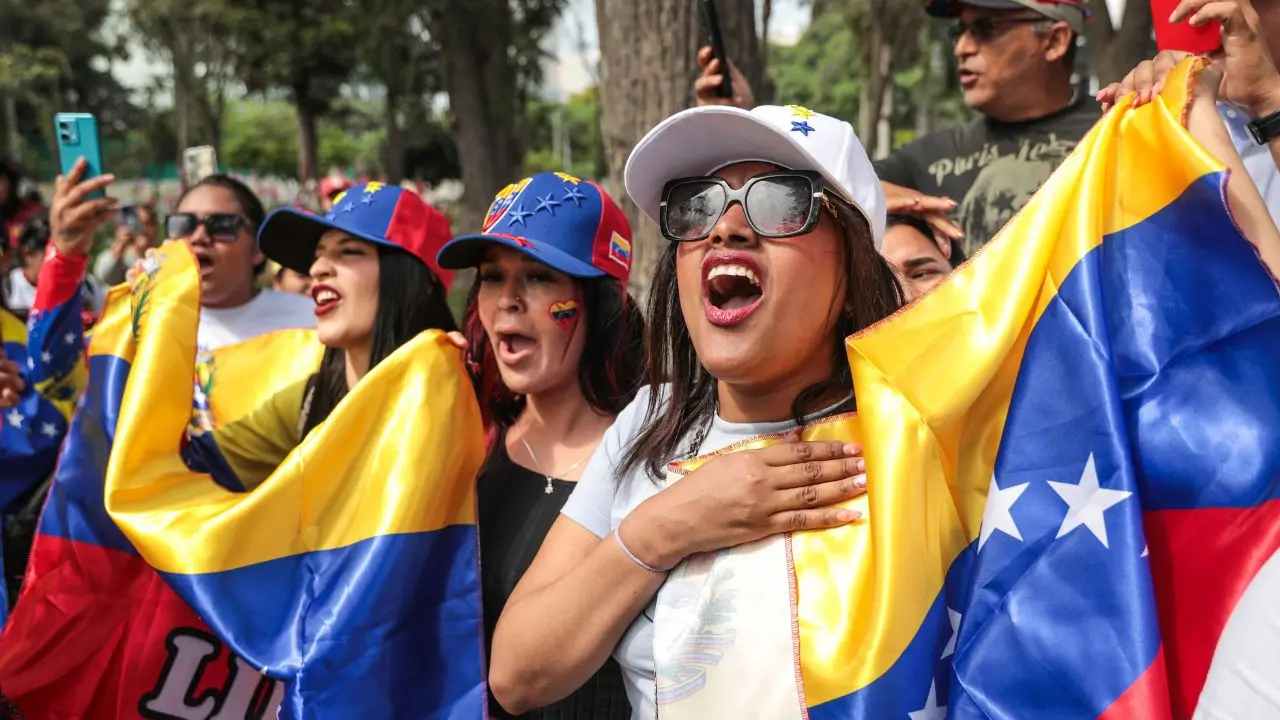
From Miami to Madrid, jubilant crowds draped in Venezuela’s national colors filled streets and public squares after President Donald Trump announced that Maduro and his wife had been flown out of Venezuela following an overnight military operation.
The scenes in Miami were particularly emotional, with Venezuelan expatriates dancing and cheering throughout the city’s Venezuelan enclaves. Outside the El Arepazo restaurant in Doral, a cultural hub for the Venezuelan community, people waved handmade signs reading “Libertad” while chanting “Liberty! Liberty! Liberty!” in a powerful display of long-awaited hope.
“We’re like everybody — it’s a combination of feelings, of course,” said Alejandra Arrieta, who immigrated to the United States in 1997. “There’s fears. There’s excitement. There’s so many years that we’ve been waiting for this. Something had to happen in Venezuela. We all need the freedom.”
Similar celebrations took place outside Trump’s Mar-a-Lago residence in Palm Beach, where Venezuelans gathered with U.S. and Venezuelan flags, symbolizing the alliance that led to Maduro’s capture.
The widespread celebrations reflected Venezuela’s massive diaspora, which has grown exponentially during Maduro’s decade in power. Since 2017, approximately 8 million Venezuelans have fled their homeland, creating one of the world’s largest displacement crises according to the U.N. Refugee Agency.
Nearly 7 million of these refugees and migrants have settled across Latin America and the Caribbean, while hundreds of thousands more have established communities in the United States and Europe. In each of these locations, the diaspora has remained politically active and deeply connected to events in Venezuela.
In Santiago, Chile, emotional crowds gathered with children holding signs declaring “Somos Libres” (“We Are Free”). Similar scenes played out in Peru, Ecuador, and Spain, where Venezuelan expatriates have formed significant communities after fleeing their homeland’s deteriorating conditions.
Maduro, who succeeded Hugo Chávez following his death in 2013, has presided over a devastating period in Venezuelan history. Once one of Latin America’s wealthiest nations due to its vast oil reserves, Venezuela under Maduro experienced hyperinflation, widespread food shortages, and the collapse of basic services. These conditions prompted millions to leave, creating what many analysts consider one of the worst humanitarian crises in the Western Hemisphere.
Critics of Maduro’s government have long accused him of dismantling democratic institutions and violating human rights. International organizations have documented political repression, arbitrary detentions, and the persecution of opposition figures during his rule.
However, not all reactions to the U.S. military operation have been positive. The intervention has sparked debate about sovereignty and American influence in Latin America. Protests both supporting and opposing the U.S. action have been scheduled across the region, including in Buenos Aires, highlighting deep divisions over Venezuela’s future and Washington’s role in resolving the crisis.
In Greece, members of the Greek Communist Party demonstrated against Maduro’s capture, reflecting ideological divisions in international perspectives on the situation.
The military operation represents a significant geopolitical development in the Western Hemisphere, with potential implications for regional stability, U.S.-Latin American relations, and the future of Venezuela’s vast oil reserves, which remain among the largest in the world despite years of mismanagement and declining production.
For the millions of Venezuelans living abroad, the capture of Maduro represents a potential turning point—the possibility of eventually returning to a homeland many were forced to abandon. Whether this moment marks the beginning of Venezuela’s recovery remains to be seen, as the country faces the enormous challenge of rebuilding its institutions and economy after years of decline.
Fact Checker
Verify the accuracy of this article using The Disinformation Commission analysis and real-time sources.

33 Comments
If AISC keeps dropping, this becomes investable for me.
Good point. Watching costs and grades closely.
Good point. Watching costs and grades closely.
Exploration results look promising, but permitting will be the key risk.
Good point. Watching costs and grades closely.
Good point. Watching costs and grades closely.
Nice to see insider buying—usually a good signal in this space.
Uranium names keep pushing higher—supply still tight into 2026.
Good point. Watching costs and grades closely.
Interesting update on Venezuelans Worldwide Celebrate as Opposition Claims Victory Over Maduro. Curious how the grades will trend next quarter.
Good point. Watching costs and grades closely.
Good point. Watching costs and grades closely.
The cost guidance is better than expected. If they deliver, the stock could rerate.
Good point. Watching costs and grades closely.
Good point. Watching costs and grades closely.
The cost guidance is better than expected. If they deliver, the stock could rerate.
Silver leverage is strong here; beta cuts both ways though.
Good point. Watching costs and grades closely.
Good point. Watching costs and grades closely.
If AISC keeps dropping, this becomes investable for me.
Good point. Watching costs and grades closely.
Good point. Watching costs and grades closely.
The cost guidance is better than expected. If they deliver, the stock could rerate.
Nice to see insider buying—usually a good signal in this space.
Production mix shifting toward World might help margins if metals stay firm.
Good point. Watching costs and grades closely.
Nice to see insider buying—usually a good signal in this space.
Good point. Watching costs and grades closely.
Good point. Watching costs and grades closely.
Interesting update on Venezuelans Worldwide Celebrate as Opposition Claims Victory Over Maduro. Curious how the grades will trend next quarter.
Good point. Watching costs and grades closely.
Good point. Watching costs and grades closely.
Production mix shifting toward World might help margins if metals stay firm.