


Listen to the article
Venezuelan Oil Tanker Evades U.S. Forces, Rebrands with Russian Flag Off Irish Coast
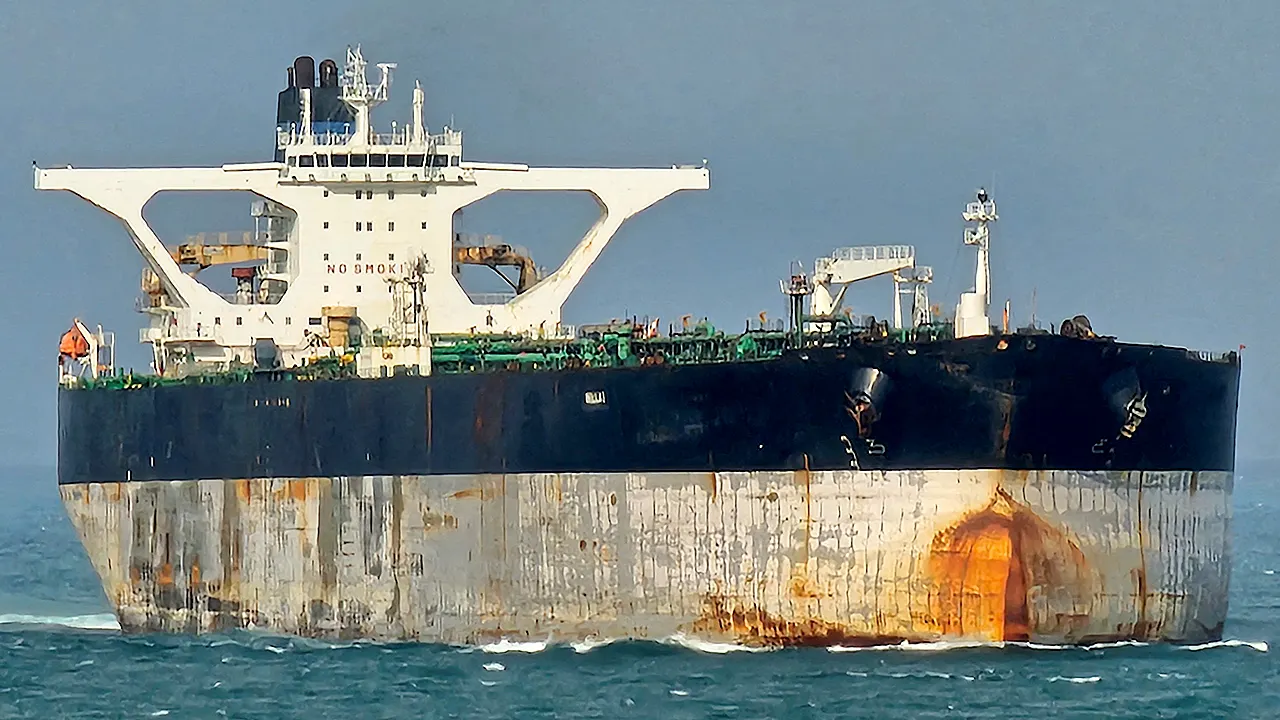
A Venezuela-linked oil tanker has successfully evaded U.S. military interception by painting a Russian flag on its hull, changing its name, and reflagging to Russia, according to maritime intelligence reports. The vessel, originally named Bella 1, now operates as the Marinera and is currently under multinational surveillance approximately 230 miles off the Irish coast.
“Runaway Venezuela-trading tanker Bella 1 painted a Russian flag on its hull, changed its name, and reflagged to Russia mid-voyage last week to avoid capture by the U.S. Coast Guard in the Atlantic Ocean,” reported AI maritime analytics firm Windward.
Intelligence sources indicate that the U.S., United Kingdom, France, and Ireland are conducting aerial surveillance of the vessel. U.S. P-8 surveillance aircraft have been tracking the tanker in recent days as part of an ongoing pursuit that began in December, when Washington intensified enforcement actions against Venezuelan oil shipments.
The vessel’s evasion tactics highlight growing tensions in international waters following the recent capture of Venezuelan President Nicolás Maduro, who appeared in a New York court on Monday where he pleaded not guilty to narco-terrorism charges and declared himself a “prisoner of war.”
The Bella 1 has been under U.S. Treasury sanctions since June 2024, accused of transporting illicit oil cargoes connected to a Hezbollah-affiliated company. Maritime tracking service TankerTrackers.com alleges the vessel previously transported millions of barrels of Iranian and Venezuelan crude oil to China between 2021 and 2025, operating as part of what industry experts call the “dark fleet” – vessels that deliberately obscure their activities to evade international sanctions.
On January 1, Russia formally asked the United States to cease pursuit of the vessel, according to Reuters, which cited two sources familiar with the matter. The diplomatic request came as Moscow sought to protect a growing number of sanctioned tankers now operating under its flag, and as the Trump administration simultaneously worked to broker a peace agreement between Russia and Ukraine.
The vessel’s reflagging to Russia represents a growing trend in maritime evasion tactics. “Over the past six months, a dozen or more of the darkest tankers operating globally have switched from open registries to Russia,” Windward noted in its report. “This trend accelerated in December as the flag state emerged as a critical shield against drone strikes and vessel seizures.”
Intelligence sources have suggested Venezuela had considered placing military personnel disguised as civilians aboard oil tankers to help vessels evade U.S. blockades. The cat-and-mouse pursuit occurring in international waters underscores the increasingly complex measures being employed to circumvent international sanctions.
Windward has identified two additional Western-sanctioned tankers currently in Venezuelan waters that have recently reflagged to Russia to prevent U.S. naval interception. The tanker Hyperion reportedly departed Venezuela on January 1 flying the Russian flag, while another vessel named Premier signaled via the Automatic Identification System (AIS) that it changed its flag from Gambia to Russia on December 22. “Premier remains at the José Terminal in Venezuela,” according to Windward’s report.
The maritime pursuit takes place against the backdrop of heightened U.S. enforcement actions targeting Venezuelan oil exports and following the January 3 capture of President Maduro and his wife, Cilia Flores. The ongoing situation highlights the complex interplay between international sanctions, maritime law enforcement, and geopolitical tensions involving the United States, Russia, and Venezuela.
As U.S. forces continue to monitor the Marinera’s movements, the incident illustrates the challenges facing international efforts to enforce sanctions against states like Venezuela and their allies in the global oil trade.
Fact Checker
Verify the accuracy of this article using The Disinformation Commission analysis and real-time sources.

6 Comments
The Venezuelan tanker’s actions underscore the creative ways sanctioned entities can try to evade enforcement. Reflagging under another country’s banner is a common tactic, but the US and allies will likely intensify surveillance to try and catch the vessel. A game of cat and mouse at sea.
This highlights the complexities of enforcing sanctions in international waters. The tanker’s ability to quickly rebrand and reflag demonstrates the challenges governments face in tracking and intercepting vessels that don’t want to be found. It will be interesting to see the diplomatic fallout from this incident.
The Venezuelan tanker’s rebranding maneuver is a clever tactic, but one that speaks to the broader complexities of enforcing sanctions on the high seas. It will be intriguing to see if the US and its allies are able to track down and intercept the vessel, or if it manages to successfully deliver its cargo.
This incident highlights the challenges of enforcing sanctions on the high seas. Vessels can exploit lax regulations and quickly change flags to avoid detection. It will be interesting to see if diplomatic pressure or enhanced surveillance can force the tanker to comply with US sanctions.
Interesting cat-and-mouse game between the US and Venezuelan tanker. Evading sanctions by reflagging as Russian is a bold move, but likely necessary for the tanker to keep operating. Curious to see how this plays out and if the US is able to intercept the vessel.
The Venezuelan tanker’s evasion tactics are quite brazen, but also indicative of the lengths some will go to skirt international sanctions. It will be fascinating to see if the US and allies are able to track down and intercept the vessel, or if it manages to successfully deliver its cargo to its intended destination.