


Listen to the article
Venezuela Opposition Leader’s Ally Placed Under House Arrest After Brief Release
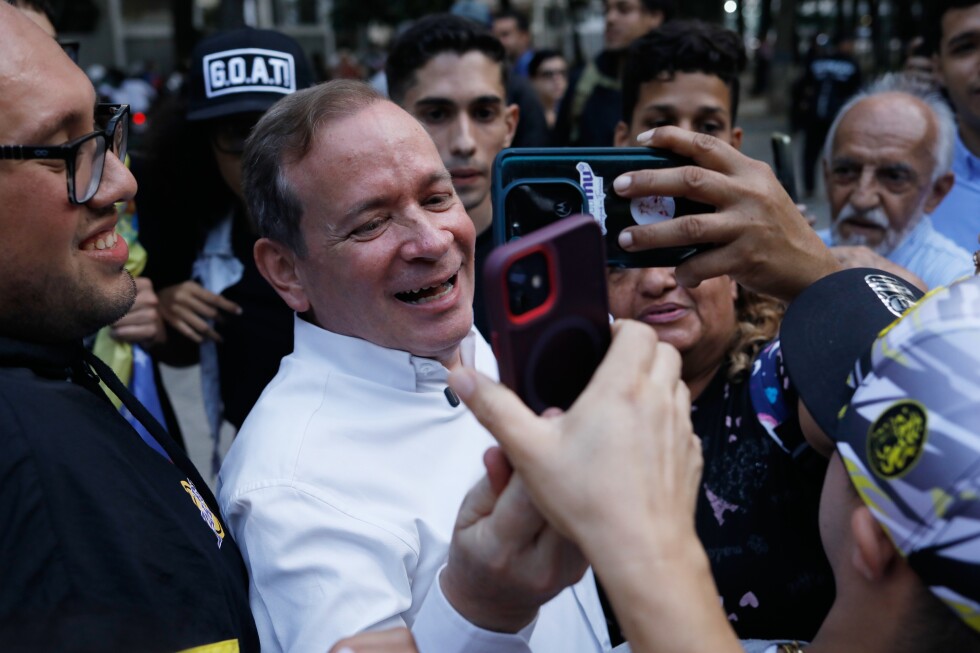
Juan Pablo Guanipa, a prominent ally of Venezuelan opposition leader María Corina Machado, has been placed under house arrest just two days after his initial release from prison, his family announced Tuesday.
The former opposition governor is now confined to his home in Maracaibo, a city in northwestern Venezuela. His son, Ramón Guanipa, confirmed the development on social media, emphasizing that house arrest still constitutes imprisonment.
“My father remains unjustly imprisoned — because house arrest is still imprisonment — and we demand his immediate and full freedom, as well as the freedom of all political prisoners,” the younger Guanipa wrote on X.
Guanipa was among several opposition figures released on Sunday following months of politically motivated detention. However, his freedom proved short-lived. According to his son, armed men in three vehicles intercepted Guanipa and others while they were traveling in Caracas just hours after his release.
The rearrest followed Guanipa’s participation in demonstrations outside detention centers where families were waiting for other political prisoners to be freed. During these gatherings, protesters chanted “We are not afraid!” and marched briefly through the streets.
Venezuela’s Attorney General Tarek William Saab quickly moved to justify the rearrest. His office stated on social media Monday that it had “requested the competent court to revoke the precautionary measure granted to Juan Pablo Guanipa, due to his non-compliance with the conditions imposed.” However, the statement failed to specify which conditions Guanipa allegedly violated during his roughly 12 hours of freedom.
Ramón Guanipa countered these claims, telling reporters that his father had adhered to the two conditions of his release — monthly court check-ins and no international travel — and displayed the court document listing these requirements to journalists.
The political situation in Venezuela has grown increasingly volatile following the U.S. military’s January 3 operation that seized President Nicolás Maduro and his wife, Cilia Flores, from a compound in Caracas. The couple were transported to New York to face federal drug trafficking charges, a development that sent shockwaves through the country’s political establishment.
Under acting President Delcy Rodríguez, who was sworn in after Maduro’s capture, the government began releasing prisoners in what appears to be a response to mounting international pressure. Venezuela-based prisoners’ rights group Foro Penal confirmed that at least 30 people were released on Sunday, coinciding with a visit from representatives of the UN High Commissioner for Human Rights.
Several of those freed were members of Machado’s political organization, including local organizer María Oropeza, who in 2024 livestreamed her own arrest as military intelligence officers broke into her home with a crowbar.
During his brief period of freedom, Guanipa had expressed optimism about Venezuela’s future. “I am convinced that our country has completely changed,” he told reporters following his release. “I am convinced that it is now up to all of us to focus on building a free and democratic country.” Before his rearrest, Guanipa had spent more than eight months detained in a Caracas facility.
Speaking from Washington on Monday, opposition leader Machado condemned the rearrest, saying, “They are terrified that Venezuelan society will mobilize and express its voice civically. But let me tell you something, there’s no going back… What will Juan Pablo become now? What will Perkins become as a prisoner in his own home? A reference in this fight.”
The back-and-forth releases and detentions reflect the ongoing political instability in Venezuela, where the government has long used imprisonment as a tool against opposition figures. Human rights organizations continue to document hundreds of political prisoners in the country, many detained for months or years without due process.
As international attention remains focused on Venezuela’s political crisis, the fate of Guanipa and other political prisoners remains uncertain amid the country’s volatile transition of power.
Fact Checker
Verify the accuracy of this article using The Disinformation Commission analysis and real-time sources.

16 Comments
It’s troubling to see the Venezuelan government continue to target opposition figures in this way. Placing them under house arrest is a clear violation of their rights.
The Venezuelan people deserve leaders who will respect democratic norms and the rule of law. This crackdown on dissent is unacceptable.
The Venezuelan government’s treatment of political opponents is deeply concerning. Putting them under house arrest after brief releases is a tactic to stifle dissent.
This is yet another example of the authoritarian tendencies of the Venezuelan regime. The international community must keep up the pressure for democratic reforms.
Venezuela’s government is clearly afraid of its political opponents. Putting them under house arrest after brief releases is a heavy-handed tactic to maintain power.
The international community should continue to pressure the Venezuelan authorities to respect human rights and allow for free and fair elections.
It’s disheartening to see the Venezuelan government continue to persecute its political opponents like this. Putting someone under house arrest after a brief release is incredibly unjust.
This is a blatant violation of democratic norms. The international community should condemn these actions and pressure the Venezuelan authorities to respect human rights.
This is a concerning development. Arresting opposition figures under house arrest is clearly an abuse of power by the Venezuelan government. They must respect human rights and due process.
Agreed, the lack of true freedom for political dissidents in Venezuela is deeply troubling. The government needs to end its crackdown on the opposition.
This is a disturbing pattern of behavior from the Venezuelan government. Detaining and rearresting opposition figures is an abuse of power that undermines democracy.
The Venezuelan people deserve leaders who will uphold their fundamental rights and liberties. This continued crackdown on dissent is unacceptable.
This move highlights the lack of rule of law in Venezuela. Placing opposition leaders under house arrest is a transparent attempt to silence dissent.
The Venezuelan government seems intent on crushing any meaningful political opposition. This is a worrying sign for the future of democracy in the country.
Rearrest after a brief release is a cruel tactic used to demoralize the opposition. The Venezuelan government must allow for free and fair political participation.
Sadly, this is part of a broader pattern of repression in Venezuela. The situation for democracy and human rights there continues to deteriorate.