


Listen to the article
In a dramatic turn of events that has sent shockwaves through international diplomatic circles, Delcy Rodríguez was sworn in as Venezuela’s interim president Monday following the unprecedented U.S. military capture of longtime authoritarian leader Nicolás Maduro.
Rodríguez, who previously served as Maduro’s vice president, took her oath of office in Venezuela’s parliament building, with her brother Jorge Rodríguez, the National Assembly leader, administering the ceremony.
“I come with sorrow for the suffering inflicted upon the Venezuelan people following an illegitimate military aggression against our homeland,” Rodríguez stated during her swearing-in. “I come with sorrow for the kidnapping of two heroes,” she added, referring to Maduro and his wife, Cilia Flores, who were seized by U.S. forces in a military operation Saturday at their home on a Venezuelan military base.
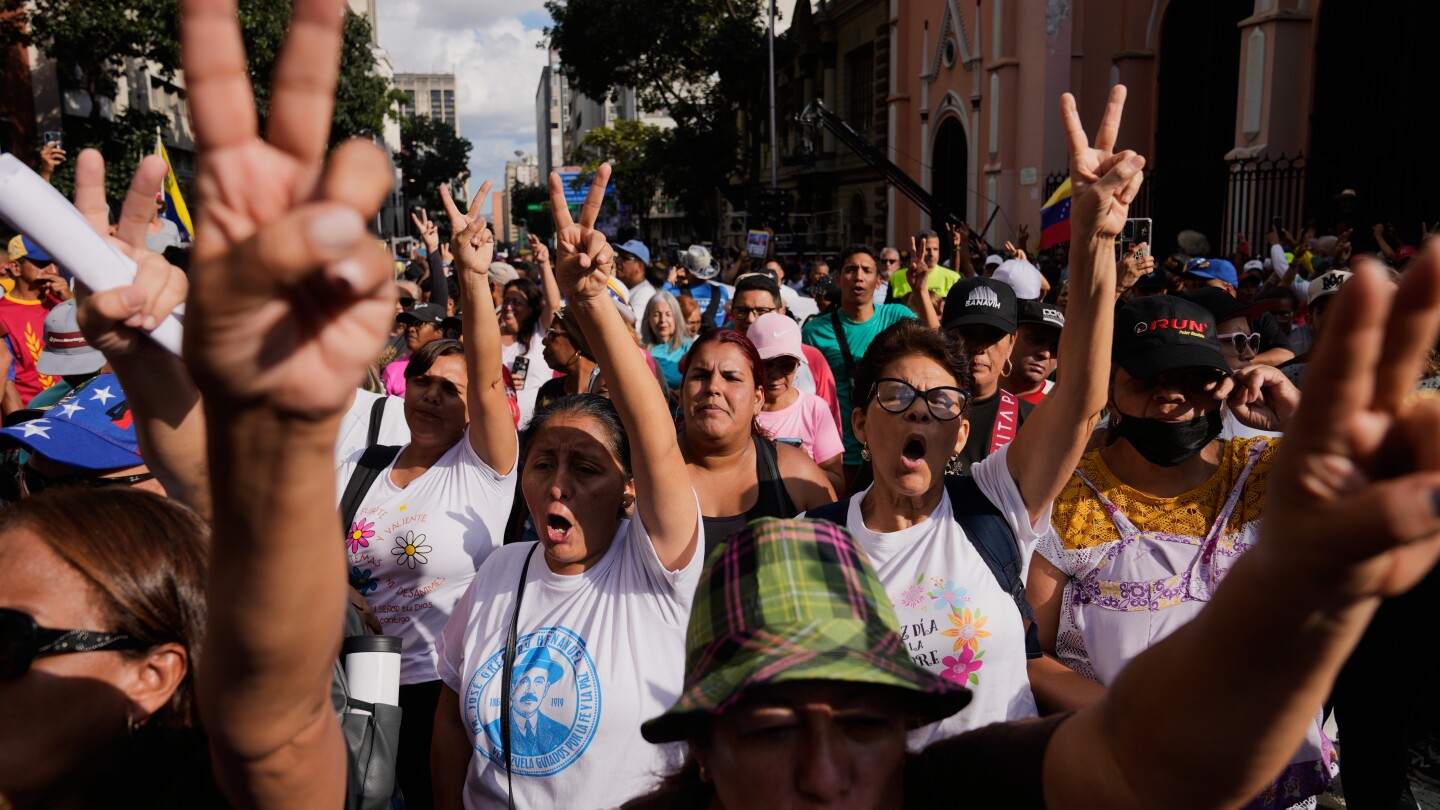
The Venezuelan government has quickly mobilized to project stability and sovereignty in the wake of Maduro’s capture. Earlier Monday, lawmakers aligned with the ruling party gathered in Caracas for a scheduled National Assembly session, reelecting Jorge Rodríguez as speaker for a term that extends until 2031.
During the parliamentary session, Nicolás Maduro Guerra, the deposed leader’s son, made his first public appearance since his father’s arrest. Known as “Nicolasito,” he delivered an impassioned speech condemning the U.S. action as a dangerous precedent.
“If we normalize the kidnapping of a head of state, no country is safe. Today, it’s Venezuela. Tomorrow, it could be any nation that refuses to submit,” he warned. “This is not a regional problem. It is a direct threat to global political stability.”
Maduro Guerra also expressed personal indignation at being named a co-conspirator in the federal indictment charging his father and stepmother, and demanded their immediate return to Venezuela.
While Venezuelan officials worked to demonstrate governmental continuity in Caracas, Maduro made his initial court appearance in New York on narco-terrorism charges. The former leader reportedly declared himself “innocent” and “a decent man” while pleading not guilty to federal drug-trafficking charges that formed the legal basis for his capture.
The extraordinary operation represents one of the most aggressive U.S. actions against a foreign head of state in recent memory. President Donald Trump’s comment that the U.S. would “temporarily run” Venezuela sparked immediate international concern, though Secretary of State Marco Rubio later clarified that American involvement would focus primarily on enforcing an existing “oil quarantine” rather than day-to-day governance.
Venezuela possesses the world’s largest proven oil reserves, making control of its petroleum industry a matter of significant geopolitical importance. Rubio indicated that U.S. pressure on Venezuela’s oil sector would serve as leverage to push for policy reforms, particularly related to alleged drug trafficking activities.
In a significant shift from her initially defiant stance following Maduro’s capture, Rodríguez has signaled openness to improved relations with the United States. “We invite the US government to collaborate with us on an agenda of cooperation oriented towards shared development within the framework of international law to strengthen lasting community coexistence,” she stated Sunday.
This conciliatory tone came shortly after Trump threatened that Rodríguez could “pay a very big price” if she failed to comply with U.S. demands, illustrating the precarious position of Venezuela’s new leadership.
The diplomatic landscape continues to evolve rapidly, with a State Department official revealing Monday that the Trump administration has begun preliminary preparations to potentially reopen the U.S. embassy in Caracas. The official, speaking on condition of anonymity, noted that early groundwork is being laid “to allow for a reopening” should Trump decide to return American diplomats to the country.
As Venezuela enters this uncertain new chapter, questions remain about the nation’s political future and sovereignty, the legal implications of Maduro’s capture, and the regional impact of this extraordinary U.S. intervention in Latin American affairs.
Fact Checker
Verify the accuracy of this article using The Disinformation Commission analysis and real-time sources.

9 Comments
The capture of Maduro by US forces is a dramatic development that will have significant implications for Venezuela’s political and economic future. It’s important to monitor events closely and see how the situation unfolds.
With the new leadership, Venezuela has an opportunity to chart a fresh course, but doing so will require navigating complex regional and international dynamics. Transparency and respect for human rights will be key.
The capture of Maduro by US forces is a significant development that could have far-reaching implications for Venezuela’s mining, energy, and commodity sectors. The new government’s policies and actions in these areas will be closely watched.
This is a complex geopolitical situation with high stakes for Venezuela and the region. It remains to be seen whether the new leadership can restore stability and sovereignty as they claim.
The transition of power appears tumultuous, raising concerns about the potential for further unrest or conflict. Careful diplomacy and adherence to democratic norms will be critical going forward.
This is a fluid and rapidly evolving situation in Venezuela. I’m curious to see how the new interim government will seek to demonstrate its independence from US influence, as they have claimed.
The fate of Venezuela’s mining and energy sectors will be closely watched, as they are critical to the country’s economy. Stability and clear policies will be essential to attract investment and spur recovery.
This is a dramatic turn of events in Venezuela, and the new leadership will face significant challenges in restoring stability and sovereignty. It will be crucial to monitor the situation and see how they navigate this complex transition.
The transition of power in Venezuela raises many questions about the country’s future direction and its relationships with regional and global powers. It will be important to follow developments closely in the coming weeks and months.