


Listen to the article
Following Venezuelan dictator Nicolás Maduro’s extraction from Caracas on January 3, uncertainty and anticipation grip the nation as citizens and international observers await details about the country’s path forward.
In a Saturday press conference at Mar-a-Lago, President Donald Trump announced that the United States would temporarily “run the country” until a stable transition can be established. The announcement comes after years of political turmoil, economic collapse, and humanitarian crisis under Maduro’s authoritarian rule.
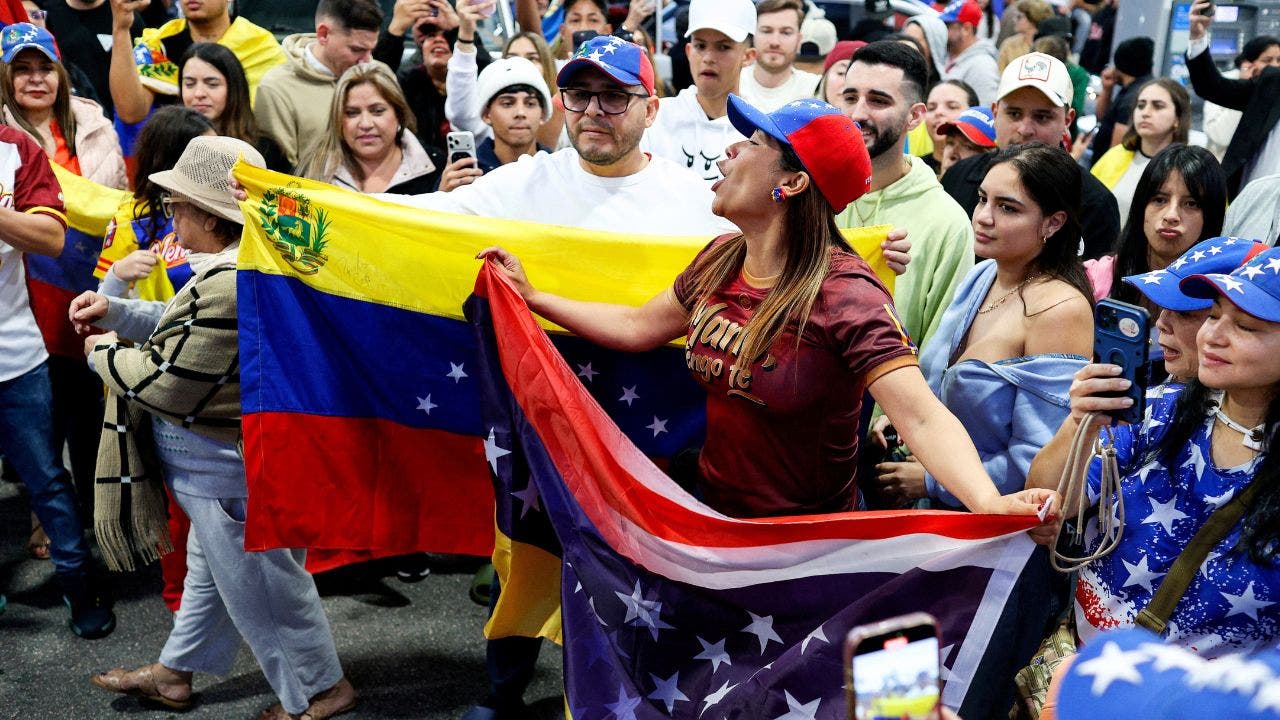
For the approximately 9-10 million forcibly displaced Venezuelans living abroad, the development represents a potential turning point. Isaias Medina, an international lawyer and former senior Venezuelan diplomat who resigned in protest of Maduro’s regime in 2017, told Fox News Digital that exiled Venezuelans “have been preparing ourselves to go back to rebuild our nation.”
Medina emphasized that establishing a transitional government capable of restoring rule of law and rebuilding decimated institutions must be the immediate priority. He stressed the particular importance of implementing genuinely free and fair elections, describing it as “a legal obligation owed to Venezuela’s people, because on their occupied territory, it was never equitable or really free.”
The former diplomat painted a stark picture of Venezuela under Maduro, describing a nation where “there was no separation of powers, there was no rule of law, there was not even sovereignty.” Instead, he characterized Venezuela as effectively occupied territory, heavily influenced by terrorist and trafficking organizations including Hamas, Hezbollah, the Ejército de Liberación Nacional (ELN), and the Revolutionary Armed Forces of Colombia (FARC), which he claimed were exploiting the country’s natural resources.
Security experts suggest the post-Maduro transition will determine whether such groups can maintain their operational foothold in the country. David Daoud, senior fellow at the Foundation for Defense of Democracies, told Fox News Digital that the “ideal situation” would involve “American guidance for determined local action,” provided Venezuela poses no threat to U.S. national security.
“The best we can shepherd Venezuela to be is a productive member of the family of nations, and that’s something that we can help with a softer touch, without boots on the ground,” Daoud said. “I don’t think we need to be in the business of trying to create Jeffersonian democracies anywhere.”
The effectiveness of a new Venezuelan government in establishing territorial control and rule of law will be crucial in determining whether terror groups can continue operations. Daoud noted that a stable state implementing the rule of law would make it “very, very complicated, if not impossible, for Hezbollah to operate, at least in the way it has been operating for a decade-plus, ever since the linkage between it and the original Chávez regime came about.”
Another significant security challenge involves managing armed civilian groups known as “colectivos” – violent pro-regime militias armed with American and Russian weapons. Medina suggested offering these groups amnesty in exchange for disarmament could help “unite the nation under one banner of development and evolution.”
The transitional period comes at a critical juncture for Venezuela, which was once among Latin America’s wealthiest nations before suffering economic collapse under the Chávez and Maduro regimes. Hyperinflation, widespread poverty, food and medicine shortages, and infrastructure deterioration have characterized daily life for most Venezuelans in recent years.
Opposition leader María Corina Machado has emerged as a potential successor, though no formal transition plan has been announced. The international community, particularly through the Organization of American States, is expected to play a significant role in supporting Venezuela’s transition.
Despite enormous challenges, Medina expressed optimism about Venezuela’s future. “What we have ahead of us is a great journey to be able to build upon the ruins of what this regime left us. But I think we’re going to become stronger, and this is the moment. The time has come,” he said.
The coming weeks will prove crucial in determining whether Venezuela can successfully transition to democratic governance and begin addressing the humanitarian crisis that has displaced millions of its citizens.
Fact Checker
Verify the accuracy of this article using The Disinformation Commission analysis and real-time sources.

10 Comments
It’s encouraging to hear that exiled Venezuelans are prepared to return and help rebuild their nation. Their expertise and commitment will be invaluable. Cautiously optimistic about the prospects for Venezuela, but the road ahead is undoubtedly challenging.
Agreed, the exiled Venezuelans will play a vital role. Their involvement and leadership will be crucial for the country’s long-term stability and prosperity.
Restoring the rule of law and free elections will be a huge challenge, but absolutely vital for Venezuela to move forward. Curious to hear more about the specific plans and timeline for this transition process.
Yes, the details around the transition will be crucial. Implementing democratic reforms and rebuilding institutions will require significant effort and coordination.
The economic and humanitarian crises in Venezuela are dire, so it’s good to see the US taking a more active role in facilitating a stable transition. Curious to understand how this will impact the country’s critical mining and energy sectors.
That’s a good point. Venezuela’s vast natural resource wealth, including minerals and energy, will be essential to the country’s economic recovery. Transparent management of these sectors will be key.
Fascinating to see how the situation in Venezuela unfolds. It’s critical that the transition to a stable government be handled carefully and transparently to address the country’s dire economic and humanitarian crises. Exiled Venezuelans will undoubtedly play a key role in the rebuilding efforts.
Agreed, a peaceful and lawful transition is essential. The stakes are high for the Venezuelan people who have suffered tremendously under Maduro’s rule.
The transition process in Venezuela will be closely watched globally. Establishing rule of law, securing free elections, and reviving the economy are massive undertakings. Curious to see how the international community, including key players in the mining/energy sectors, will support these efforts.
Absolutely, international cooperation and support will be essential. Venezuela’s natural resources could be a boon, but only if managed transparently and for the benefit of the people.