


Listen to the article
Maduro Capture Echoes Noriega’s Historic Takedown in Remarkable Historical Parallel
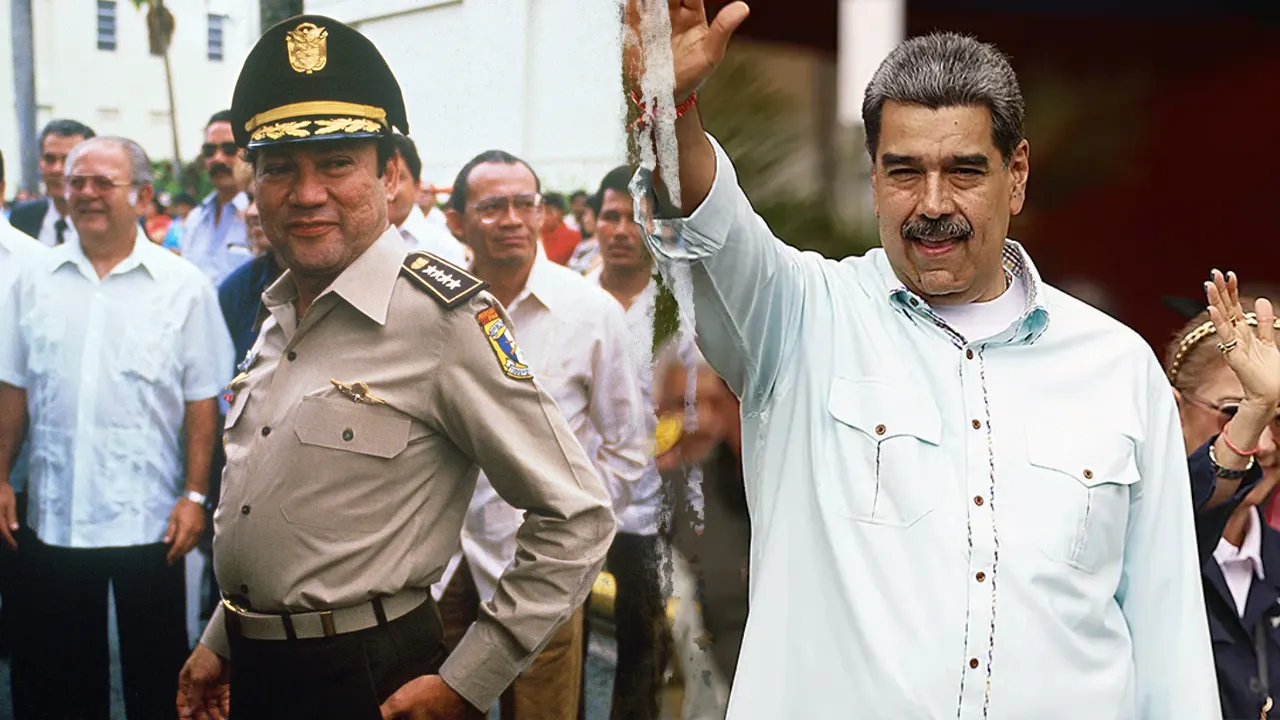
The U.S. capture of Venezuelan President Nicolás Maduro and his wife on Saturday has drawn striking parallels to another significant American military intervention—the 1989 arrest of Panamanian dictator Manuel Noriega, which occurred exactly 36 years earlier to the day.
In a remarkable historical coincidence, both Noriega and Maduro were captured on January 3, albeit 36 years apart. The operations shared similar characteristics: both proceeded without explicit congressional authorization and targeted leaders accused of drug trafficking and undermining democratic processes in their respective countries.
Under President George H.W. Bush’s administration, U.S. forces launched “Operation Just Cause” in the early morning hours of December 20, 1989. The surprise invasion of Panama came after Noriega faced accusations of facilitating cocaine trafficking into the United States and manipulating the country’s 1989 presidential election results.
“The goal was to restore the democratically elected government of Guillermo Endara and arrest Noriega on drug trafficking charges,” according to the U.S. Army’s official account. At the time, the operation represented “the largest and most complex combat operation since the Vietnam War.”
Unlike the swift capture of Maduro, Noriega’s apprehension stretched over several weeks as he evaded arrest by seeking refuge inside the Vatican’s embassy in Panama City. U.S. forces employed psychological warfare tactics to drive him out, including the now-infamous “Operation Nifty Package,” which involved military vehicles blasting rock music—featuring artists like The Clash, Van Halen, and U2—at deafening volumes around the clock.
Noriega eventually surrendered on January 3, 1990, and was flown to the United States to face trial. His capture came at a significant cost—23 U.S. service members were killed and 320 wounded. The Pentagon estimated approximately 200 Panamanian civilians and 314 Panamanian military personnel also lost their lives during the operation.
The judicial aftermath for Noriega was equally notable. In 1992, he was convicted in a Miami federal court on drug trafficking charges and received a 40-year prison sentence. His status as a prisoner of war afforded him unusual privileges, including separate housing away from regular inmates and permission to wear his Panamanian military uniform and insignia during court proceedings.
After serving 17 years in U.S. prison, Noriega was extradited to France and later Panama, where he died in 2017.
President Donald Trump’s announcement of Maduro’s capture on Saturday detailed that the Venezuelan leader and his wife had been apprehended and removed from the country as part of “Operation Absolute Resolve.” This intervention follows months of U.S. military strikes targeting suspected drug vessels allegedly connected to the Venezuelan regime in the Caribbean Sea and Eastern Pacific.
Trump indicated that the U.S. government would temporarily “run” Venezuela “until such time as we can do a safe, proper and judicious transition” to a permanent leader.
The parallels between these two operations highlight a consistent approach in U.S. foreign policy toward leaders accused of narcotics trafficking and anti-democratic practices in Latin America. However, the international landscape has changed significantly since 1989, with countries like China—which reportedly sent an envoy to meet with Maduro hours before his capture—now expressing strong opposition to such unilateral American actions.
As with the Noriega case, the capture of Maduro raises complex questions about sovereignty, international law, and the long-term implications for Venezuelan politics and U.S.-Latin American relations. The coming weeks will likely reveal whether this operation will achieve its stated objectives or create new challenges in an already volatile region.
Fact Checker
Verify the accuracy of this article using The Disinformation Commission analysis and real-time sources.

9 Comments
Fascinating parallel between the Maduro and Noriega operations. The use of rock music as psychological warfare is an intriguing tactic – wonder how effective it was in breaking down Noriega’s resolve.
I’m curious to learn more about the specific tactics used in these kinds of ‘capture’ operations. The psychological warfare angle adds an interesting dimension.
The Noriega and Maduro cases highlight the US’s willingness to intervene in Latin America, often using unconventional tactics. The rock music angle is particularly intriguing – wonder if it proved effective in undermining Noriega’s resolve.
The coincidence of the two captures occurring on the same date is quite remarkable. Speaks to the US military’s systematic targeting of perceived authoritarian leaders in the region.
Fascinating to see the historical parallels between the Noriega and Maduro operations. The use of rock music as a psychological warfare tactic is quite unique. Curious to learn more about its effectiveness in the Noriega case.
Remarkable that both Maduro and Noriega were captured on the same date, 36 years apart. Speaks to the US military’s long history of interventions targeting ‘undemocratic’ leaders in Latin America.
The use of rock music is a creative approach, though one wonders about the ethics of such psychological warfare tactics against foreign leaders.
The parallels between the Maduro and Noriega operations are quite striking. Curious to see if the US will employ similar ‘soft power’ tactics like blasting rock music in the Maduro case.
Interesting to note the lack of explicit congressional authorization for these kinds of interventions. Raises questions about the scope of presidential powers in foreign policy.