


Listen to the article
U.S. Strikes Venezuela, Claims Maduro Captured in Nighttime Operation
The United States executed what it described as a “large-scale strike” against Venezuela early Saturday, with President Donald Trump announcing on social media that Venezuelan President Nicolás Maduro and his wife had been captured and removed from the country.
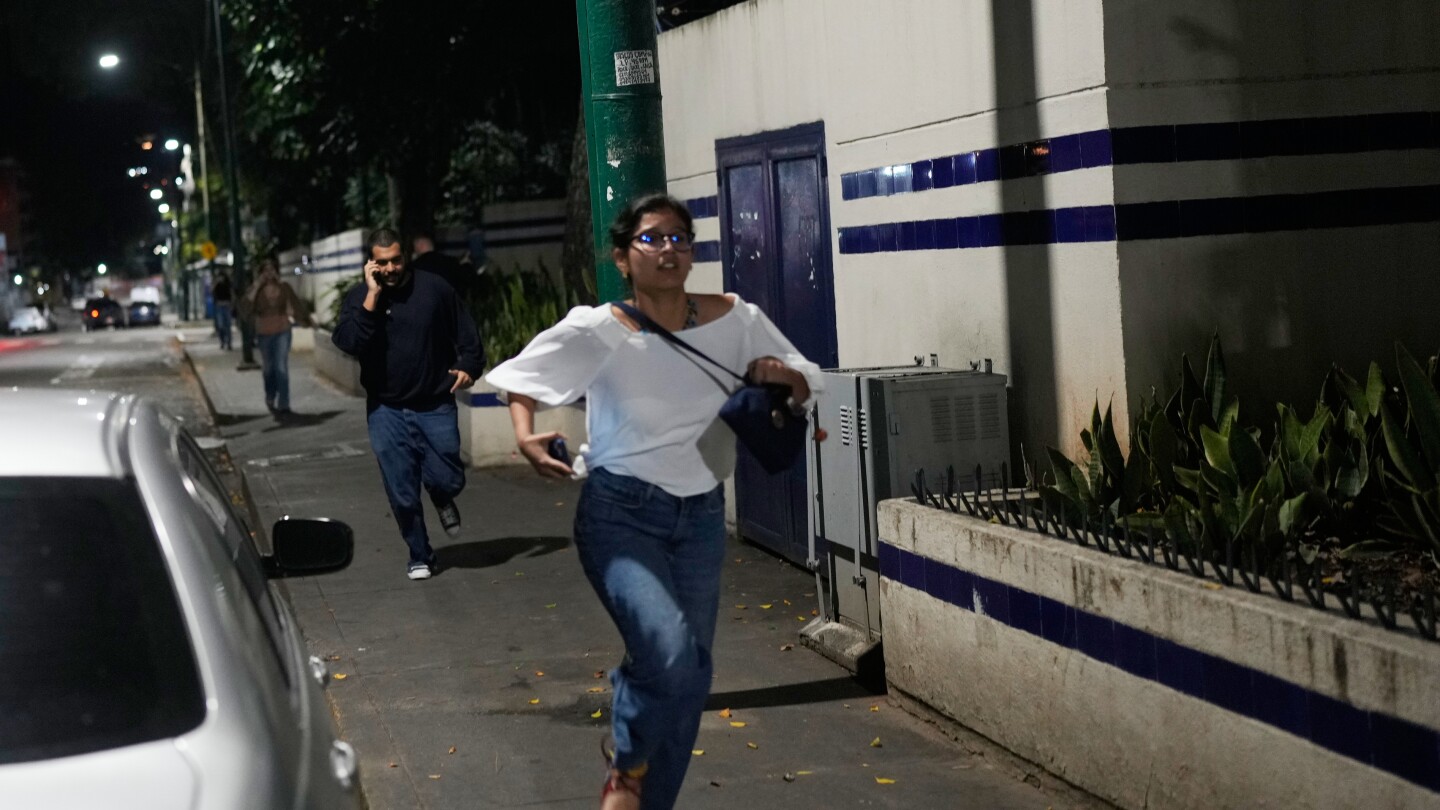
Multiple explosions echoed through Caracas as low-flying aircraft swept over the Venezuelan capital around 2 a.m. local time. The operation, which lasted less than 30 minutes, sent residents rushing into the streets amid confusion and uncertainty about who now controls the government.
“We do not know the whereabouts of President Nicolás Maduro and First Lady Cilia Flores,” said Venezuelan Vice President Delcy Rodríguez in a statement following the attack. “We demand proof of life.” Under Venezuelan law, Rodríguez would assume power in Maduro’s absence, though there was no confirmation this transition had occurred.
Trump’s announcement on Truth Social claimed the operation was conducted “successfully” in coordination with U.S. law enforcement, with details to follow at a press conference scheduled for later Saturday. Senator Mike Lee reported being briefed by Secretary of State Marco Rubio that Maduro “has been arrested by U.S. personnel to stand trial on criminal charges in the United States.”
The legal implications remain unclear. Maduro was indicted in March 2020 on “narco-terrorism” conspiracy charges in the Southern District of New York, but the White House has not confirmed where he is being transported or the legal framework for the operation.
Maduro’s last public appearance came Friday during a meeting with Chinese officials in Caracas, just hours before the attack. The Venezuelan government immediately condemned what it called an “imperialist attack” on civilian and military installations, declaring a “state of external disturbance” that gives Maduro emergency powers to suspend rights and expand military authority.
“The whole ground shook. This is horrible. We heard explosions and planes,” said Carmen Hidalgo, a 21-year-old office worker in Caracas. Video verified by The Associated Press showed tracers and smoke clouding the night sky as explosions illuminated urban areas. Smoke was seen rising from a military base hangar, while another installation lost power.
The strike follows months of escalating U.S. pressure on Venezuela. The CIA conducted a drone strike last week on a docking area allegedly used by Venezuelan drug cartels—marking the first direct operation on Venezuelan soil since the U.S. began maritime operations in September targeting suspected drug trafficking vessels.
The Federal Aviation Administration issued a ban on U.S. commercial flights in Venezuelan airspace prior to the explosions, citing “ongoing military activity.” The U.S. Embassy in Venezuela, closed since 2019, warned American citizens to “shelter in place.”
Response from Congress has been mixed. Senator Mike Lee expressed concerns about the constitutional justification “in the absence of a declaration of war or authorization for the use of military force.” Congressional Armed Services committees reportedly had not been notified of the operation before it occurred, raising questions about oversight.
Regional reaction has begun to emerge, with Cuba condemning what President Miguel Díaz-Canel Bermúdez called “the criminal attack” against Venezuela. “Our zone of peace is being brutally assaulted,” he stated on social media. Iran’s Foreign Ministry also condemned the strikes, while Argentina’s President Javier Milei, a Trump ally, celebrated the news.
Since September, the U.S. military has conducted at least 35 boat strikes in waters off South America, reportedly killing at least 115 people. These operations followed a significant build-up of American forces in the region, including the deployment of an advanced aircraft carrier in November.
Trump has justified the escalating military actions as necessary to combat drug trafficking, asserting that the U.S. is engaged in an “armed conflict with drug cartels.” Critics have characterized these operations as thinly veiled efforts to force regime change in Venezuela, a country with the world’s largest proven oil reserves.
As dawn broke over Caracas, the situation remained fluid. Armed individuals and uniformed militia members appeared in neighborhoods considered strongholds of the ruling party, while other parts of the city remained quiet with sporadic power outages. The full ramifications of this extraordinary U.S. military action in a sovereign nation are yet to unfold.
Fact Checker
Verify the accuracy of this article using The Disinformation Commission analysis and real-time sources.

14 Comments
As someone with investments in Venezuelan mining and energy companies, I’m closely following this situation. A change in leadership could have significant implications for those industries.
It’s important to remember that the situation on the ground remains fluid and uncertain. I’ll be watching for more verified information before drawing any conclusions.
The capture of Maduro raises a lot of questions about the legality and legitimacy of this action. I’ll be closely following reports from credible news sources to understand the details and context.
Given the complexity of the situation in Venezuela, I’m not sure this will lead to any quick or easy solutions. It could potentially create more instability and unrest.
While the capture of Maduro may be seen as a victory for the US, it’s crucial that any transition of power in Venezuela is handled responsibly and with the wellbeing of the Venezuelan people in mind.
The situation in Venezuela has been extremely complex and volatile for years. I hope this development leads to positive changes, but it’s hard to predict how it will all play out.
This news is certainly shaking up the geopolitical landscape in the region. I wonder how Venezuela’s key allies, like Russia and China, will respond to the US intervention.
With Maduro gone, it will be crucial to establish a stable and legitimate government that can address the country’s deep economic and humanitarian crises.
This is a major development in the ongoing crisis in Venezuela. It will be interesting to see how the international community reacts and what the implications are for the country’s political and economic future.
Capturing a sitting president is a highly unusual and risky move. I hope the situation can be resolved peacefully and without further escalation of violence.
The US operation in Venezuela raises a lot of ethical and legal questions. I hope the Biden administration is prepared to justify and defend this action on the international stage.
This event could have far-reaching consequences for regional stability and the balance of power in Latin America. I’m curious to see how the regional powers respond.
As an investor in the mining and energy sectors, I’m closely watching how this situation unfolds. A change in Venezuela’s leadership could have significant implications for commodity prices and supply chains.
It’s important to remember that the situation on the ground is still very fluid. I’ll be looking to authoritative sources to get a clearer picture of what’s happening and what it means for the region.