


Listen to the article
The United States has taken its Gaza plan to the U.N. Security Council, pushing for formal United Nations authorization of a comprehensive international force that would govern security in the Gaza Strip through at least 2027. This move represents one of Washington’s most significant decisions in years to place the United Nations at the center of a major Middle East security framework.
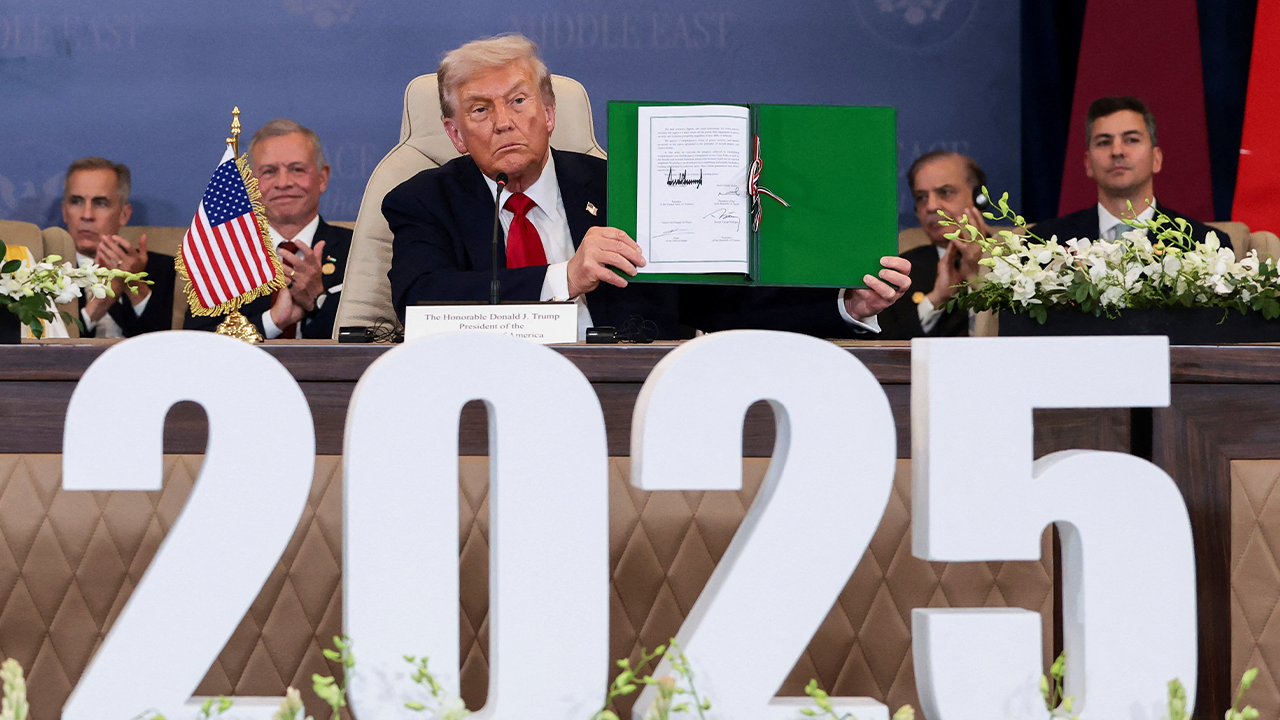
In a statement, the U.S. Mission to the U.N. said the draft resolution was written with input from several key regional players, including Qatar, Egypt, Saudi Arabia, Turkey and the United Arab Emirates. The stated goal is to “bring to fruition President Trump’s historic 20 Point Comprehensive Plan,” which received support from more than 20 countries at a summit in Sharm el-Sheikh on October 13.
Negotiations with Security Council members began in early November to establish the International Stabilization Force and create conditions for “a stable, secure, peaceful and prosperous future for Palestinians in Gaza, free of Hamas.” U.S. officials emphasized that the current ceasefire remains “fragile” and that delays “have grave, tangible, and entirely avoidable consequences for Palestinians in Gaza.”
According to details reported by Axios, the resolution would establish an International Security Force in Gaza for at least two years, with a mandate extending through the end of 2027 and the possibility of extensions. A U.S. official told Axios the plan is to vote on the resolution within weeks and deploy the first troops by January, describing the force as “an enforcement force and not a peacekeeping force.”
Robert Satloff, executive director of the Washington Institute for Near East Policy, explained that the decision to seek U.N. authorization was driven by practical considerations. “The decision to go to the United Nations was driven principally by the request of participating states, states that the United States hopes will participate in the stabilization force who need a U.N. mandate to help them politically, to dispatch forces eventually to Gaza,” Satloff said.
He noted that while Israel has expressed concerns about U.N. involvement, Israeli officials understand why Washington believes the mandate is essential for moving forward. “There’s no doubt that involving the United Nations has its own complications, and I think that the Israelis have been pretty vocal about this. But they also appreciate that the United States believe it needs this sort of endorsement for the 20-point plan to move forward,” he added.
Despite the potential for progress, Satloff acknowledged significant challenges ahead, including fundamental disagreements over key definitions such as “disarmament” that could derail the entire effort. Nevertheless, he urged against pessimism, noting that “the opportunity here is huge” and that participating states have demonstrated genuine commitment to finding solutions.
However, not all experts share this optimistic view. Anne Bayefsky, Director of the Touro Institute on Human Rights and the Holocaust, offered a starkly different perspective, calling the U.S. decision to subject its Gaza plans to U.N. authorization “an about-face for American foreign policy on the United Nations and the Arab-Israeli conflict.”
Bayefsky argued that the draft “fails to condemn Hamas” and “refuses to acknowledge and affirm Israel’s U.N. Charter right of self-defense before granting the treacherous U.N. unprecedented influence,” describing these omissions as “devastating to the prospects of real peace.”
Meanwhile, Russia has countered with its own draft resolution that takes a fundamentally different approach. Moscow’s proposal demands an immediate and unconditional ceasefire, the withdrawal of all foreign forces from Gaza, and the deployment of a U.N. peacekeeping mission under the Secretary-General’s authority and with the consent of the parties involved.
The Russian draft also reaffirms the 1967 borders and East Jerusalem as the capital of a future Palestinian state while insisting that Gaza’s reconstruction must take place under Palestinian leadership and sovereignty, not through externally managed institutions. Unlike the American proposal, it contains no provisions for demilitarization or interim foreign governance.
As the Security Council considers these competing visions for Gaza’s future, the implementation of Trump’s peace plan faces significant diplomatic hurdles. The outcome could shape the region’s security architecture for years to come, with profound implications for Israeli-Palestinian relations, regional stability, and the role of international institutions in Middle East peacemaking.
Fact Checker
Verify the accuracy of this article using The Disinformation Commission analysis and real-time sources.

23 Comments
Silver leverage is strong here; beta cuts both ways though.
Uranium names keep pushing higher—supply still tight into 2026.
Nice to see insider buying—usually a good signal in this space.
Good point. Watching costs and grades closely.
Interesting update on US Seeks UN Approval for Gaza International Force Through 2027 Under Trump Plan. Curious how the grades will trend next quarter.
Production mix shifting toward World might help margins if metals stay firm.
Production mix shifting toward World might help margins if metals stay firm.
Uranium names keep pushing higher—supply still tight into 2026.
Good point. Watching costs and grades closely.
Good point. Watching costs and grades closely.
Uranium names keep pushing higher—supply still tight into 2026.
The cost guidance is better than expected. If they deliver, the stock could rerate.
Good point. Watching costs and grades closely.
Good point. Watching costs and grades closely.
I like the balance sheet here—less leverage than peers.
Good point. Watching costs and grades closely.
The cost guidance is better than expected. If they deliver, the stock could rerate.
Good point. Watching costs and grades closely.
Good point. Watching costs and grades closely.
I like the balance sheet here—less leverage than peers.
The cost guidance is better than expected. If they deliver, the stock could rerate.
Good point. Watching costs and grades closely.
Good point. Watching costs and grades closely.