


Listen to the article
Dutch Officials and Veterans’ Families Condemn Removal of Black History Displays at U.S. Military Cemetery
A controversial decision to remove two displays recognizing Black American troops at a U.S. military cemetery in the Netherlands has sparked outrage among Dutch officials, veterans’ families, and local residents who maintain the graves.
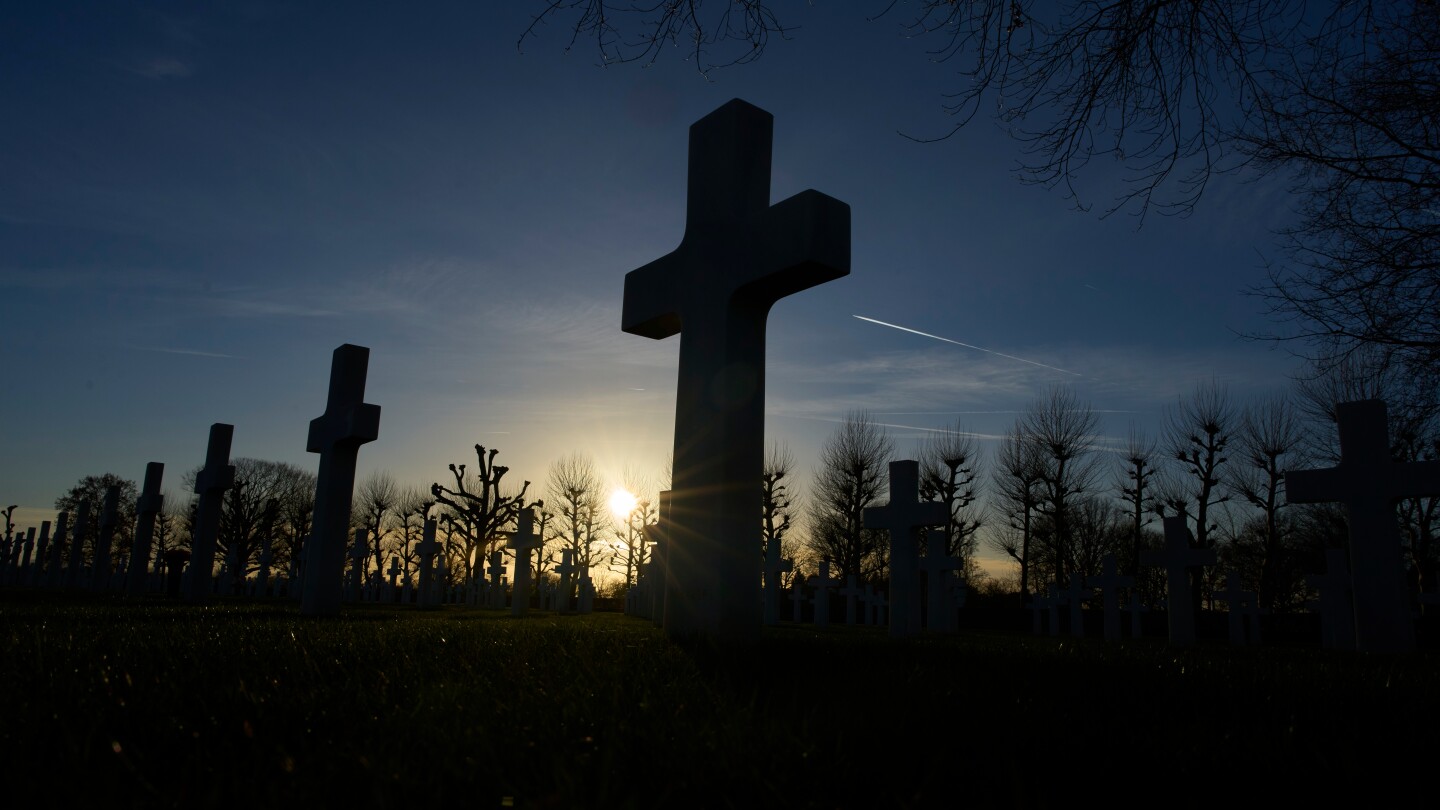
The American Battle Monuments Commission (ABMC), the U.S. government agency responsible for overseas memorial sites, quietly removed the panels from the visitors center at the American Cemetery in Margraten this spring. The cemetery serves as the final resting place for approximately 8,300 U.S. soldiers who died during World War II.
The removal appears linked to President Donald Trump’s executive orders ending diversity, equity, and inclusion (DEI) programs. “Our country will be woke no longer,” Trump declared in a March address to Congress. Documents obtained through Freedom of Information Act requests by the Jewish Telegraphic Agency and Dutch News confirmed that Trump’s DEI policies directly prompted the commission’s action.
One of the removed displays told the story of 23-year-old George H. Pruitt, a Black soldier buried at Margraten who died attempting to rescue a comrade from drowning in 1945. The other panel described the U.S. military’s racial segregation policies during World War II. These panels have been replaced with one featuring Leslie Loveland, a white soldier killed in Germany in 1945.
When questioned about the removals, the ABMC stated that the segregation panel “did not fall within its commemorative mission” and that Pruitt’s panel was simply “rotated out.” The White House has not responded to media inquiries about the situation.
U.S. Ambassador to the Netherlands Joe Popolo appeared to defend the decision, writing on social media that “the signs at Margraten are not intended to promote an agenda that criticizes America.” Popolo declined further comment when approached by journalists.
The decision has particular resonance in the Margraten community, where locals have maintained deep connections with the cemetery for generations. Through a unique adoption program, thousands of Dutch citizens tend to the graves of fallen American soldiers, regularly placing flowers on birthdays and holidays. Many families have passed this responsibility down through generations, and there is currently a waiting list to adopt graves.
“It’s an important part of history,” said Cor Linssen, the 79-year-old son of a Black American soldier and a Dutch mother. Linssen, who grew up about 50 kilometers from the cemetery, visited the panels earlier this year with other children of Black soldiers, now all in their 70s and 80s. “They should put the panels back,” he urged.
During World War II, approximately one million Black soldiers enlisted in the U.S. military, serving in segregated units and often assigned menial tasks, though some participated in combat missions. An all-Black unit dug the thousands of graves at Margraten during the brutal 1944-45 German occupation period known as the Hunger Winter.
Theo Bovens, chair of the Black Liberators foundation and a Dutch senator, expressed dismay that his organization, which advocated for the inclusion of the panels, was not informed of their removal. “Something has changed in the United States,” Bovens noted. His foundation is now seeking a permanent location for a memorial to Black soldiers who died liberating the Netherlands.
Both local and provincial authorities have demanded the return of the panels. In November, a Dutch television program recreated the displays and temporarily installed them outside the cemetery, though police quickly removed them. The program is now seeking a permanent location for the reproductions.
The controversy highlights the often-overlooked contributions of Black American soldiers during World War II. Historian Linda Hervieux, author of “Forgotten,” which chronicles Black soldiers who fought on D-Day, noted that when Black soldiers came to Europe, “they found people who accepted them, who welcomed them, who treated them as the heroes that they were.”
The removal of these historical panels, Hervieux added, “follows a historical pattern of writing out the stories of men and women of color in the United States.”
Fact Checker
Verify the accuracy of this article using The Disinformation Commission analysis and real-time sources.

6 Comments
Erasing the recognition of Black soldiers who died fighting for their country is a disheartening and divisive move. Their service and sacrifice deserve to be commemorated, not removed from public view. This decision sends the wrong message and goes against principles of diversity and inclusion.
It’s disappointing to see the ABMC remove these panels recognizing Black troops at the Margraten cemetery. Their service and sacrifice deserve to be memorialized, not erased. This seems like a politically-motivated decision that goes against the values of inclusion and honoring all who served.
The removal of these displays honoring Black WWII soldiers is troubling. Their stories and contributions are an important part of history that should not be hidden or downplayed. I hope the U.S. government will reconsider this decision and restore the panels to properly recognize these heroes.
It’s concerning to see the U.S. government remove displays recognizing the contributions of Black soldiers at an overseas WWII cemetery. Their service and sacrifice deserve to be memorialized, not obscured. I hope this decision can be reconsidered to properly honor the full diversity of those who fought for their country.
I’m puzzled and disappointed by the decision to remove panels honoring Black WWII soldiers at the Margraten cemetery. Their stories and service are an integral part of the history that should be uplifted, not erased. This seems like a regrettable political move rather than one focused on honoring all who served.
This is a concerning decision that seems to erase the important contributions of Black American soldiers. Their sacrifices and service should be honored, not removed from historical displays. I hope the U.S. can reconsider this action and restore the panels recognizing their role in WWII.