


Listen to the article
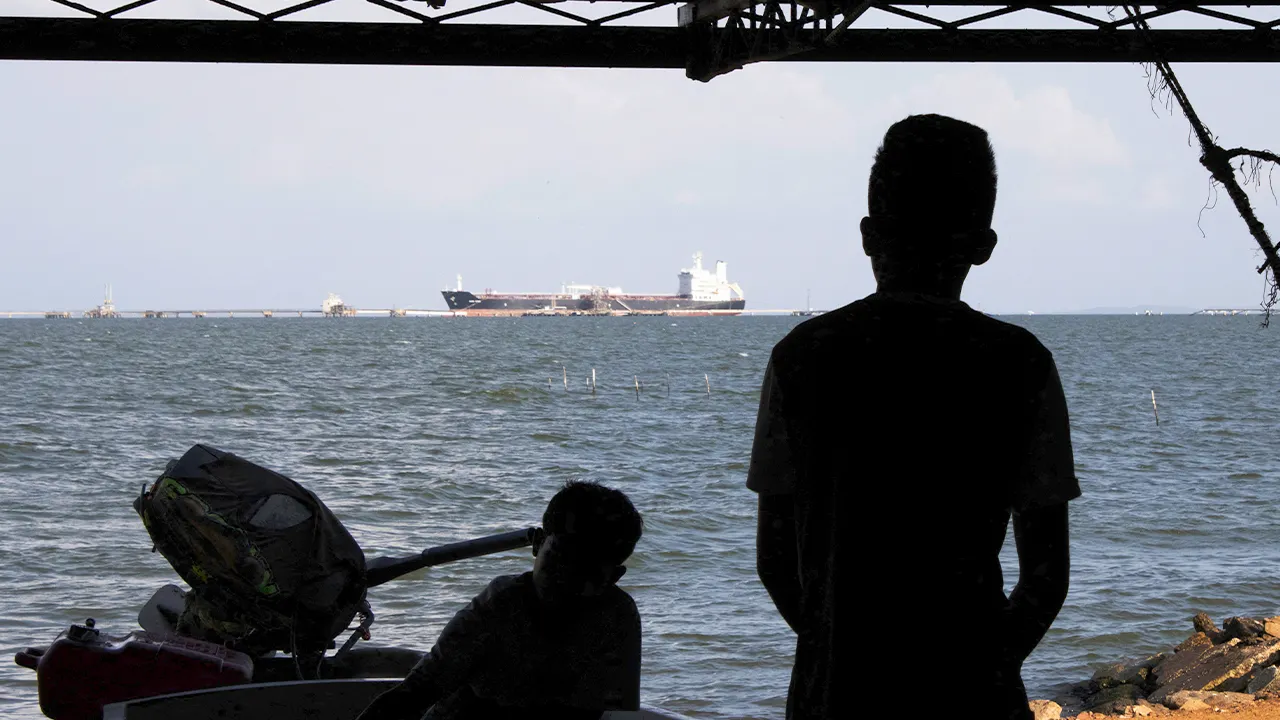
U.S. forces seized a suspected Venezuelan oil tanker in the Caribbean Sea during a pre-dawn operation on Friday, marking the fifth such seizure in recent weeks amid escalating tensions in the region.
“In a pre-dawn action, Marines and Sailors from Joint Task Force Southern Spear, in coordination with the Department of Homeland Security, launched from the USS Gerald R. Ford and apprehended Motor/Tanker Olina in the Caribbean Sea without incident,” the U.S. Southern Command announced in a statement posted to social media.
The operation was conducted as part of ongoing efforts to enforce sanctions against Venezuelan oil exports and combat illicit maritime activity in the Western Hemisphere. U.S. officials described the vessel as part of a “ghost fleet” of tankers attempting to evade international sanctions by operating under false claims of nationality.
Homeland Security Secretary Kristi Noem issued a stern warning following the operation, stating that “the world’s criminals are on notice” and emphasizing that “the ghost fleets will not outrun justice.”
“As another ‘ghost fleet’ tanker ship suspected of carrying embargoed oil, this vessel had departed Venezuela attempting to evade U.S. forces,” Noem wrote on social media. She praised the Coast Guard for its “relentless execution of this mission” and commitment to “enforce U.S. and international law, and eliminate these funding streams for illicit activity including narco-terrorism.”
The U.S. Southern Command highlighted the significant naval power backing these operations, noting that “apprehensions like this are backed by the full power of the U.S. Navy’s Amphibious Ready Group, including the ready and lethal platforms of the USS Iwo Jima, USS San Antonio, and USS Fort Lauderdale.”
This maritime seizure comes less than one week after another major U.S. operation in the region that resulted in the arrests of Venezuelan dictator Nicolás Maduro and his wife, Cilia Flores. The timing suggests an intensification of U.S. enforcement actions against the Maduro regime and its economic lifelines.
The seizure of the Olina represents the latest development in the ongoing U.S. strategy to pressure the Venezuelan government through economic sanctions. Venezuela’s oil industry, once the backbone of its economy, has been crippled by years of mismanagement and international sanctions. The country sits on the world’s largest proven oil reserves, but production has plummeted to historic lows under Maduro’s rule.
The “ghost fleet” phenomenon has emerged as sanctioned nations like Venezuela attempt to circumvent international restrictions by disguising vessel ownership, turning off tracking systems, and falsifying shipping documents. These tactics allow embargoed oil to reach international markets through shadowy networks of traders and shipping companies.
Global oil markets have shown limited reaction to these enforcement actions thus far, as Venezuelan production represents a relatively small portion of global supply. However, analysts note that continued disruption to Venezuela’s export capabilities could eventually impact regional energy dynamics, particularly for Caribbean nations that have historically relied on Venezuelan oil.
The U.S. Department of War’s Operation Southern Spear appears to be gaining momentum in its stated mission to “defend our homeland by ending illicit activity and restoring security in the Western Hemisphere.” Maritime security experts suggest these operations demonstrate both the reach of U.S. naval power and a renewed focus on combating sanction evasion through coordinated military and law enforcement actions.
As this remains a developing situation, U.S. officials have not yet released details about the cargo aboard the Olina, its crew, or its intended destination.
Fact Checker
Verify the accuracy of this article using The Disinformation Commission analysis and real-time sources.

9 Comments
This operation highlights the ongoing efforts to curb illicit oil exports and enforce sanctions. Seizing these ‘ghost fleet’ tankers is an important step in disrupting Venezuela’s ability to circumvent the measures.
This is another escalation in the tug-of-war between the U.S. and Venezuela over oil. While the sanctions aim to isolate the Maduro regime, the effects on regular Venezuelans are concerning.
You raise a fair point. The humanitarian impact of these measures is an important consideration that shouldn’t be overlooked.
While the sanctions are controversial, this interdiction aligns with the U.S. administration’s policy of clamping down on Venezuela’s oil trade. It will be interesting to see how the situation evolves.
Interesting to see the U.S. leveraging its naval forces to interdict these tankers. It demonstrates the lengths they’ll go to enforce the sanctions and disrupt Venezuela’s oil trade.
The seizure of this Venezuelan oil tanker is part of the broader crackdown on the country’s energy exports. Homeland Security’s tough rhetoric suggests the U.S. is committed to disrupting these ‘ghost fleets’.
Enforcing sanctions through these kinds of maritime operations is challenging but necessary to maintain pressure. Curious to see if this affects global oil supply and prices in the short term.
The ‘ghost fleet’ terminology used by officials paints a vivid picture. These covert operations to seize suspected sanctions-busting tankers show the cat-and-mouse game at play.
While the sanctions are controversial, this latest interdiction highlights the U.S. government’s determination to cut off Venezuela’s oil revenues. It will be worth monitoring the broader geopolitical implications.