


Listen to the article
U.S. Military Completes Withdrawal from Strategic Syrian Base
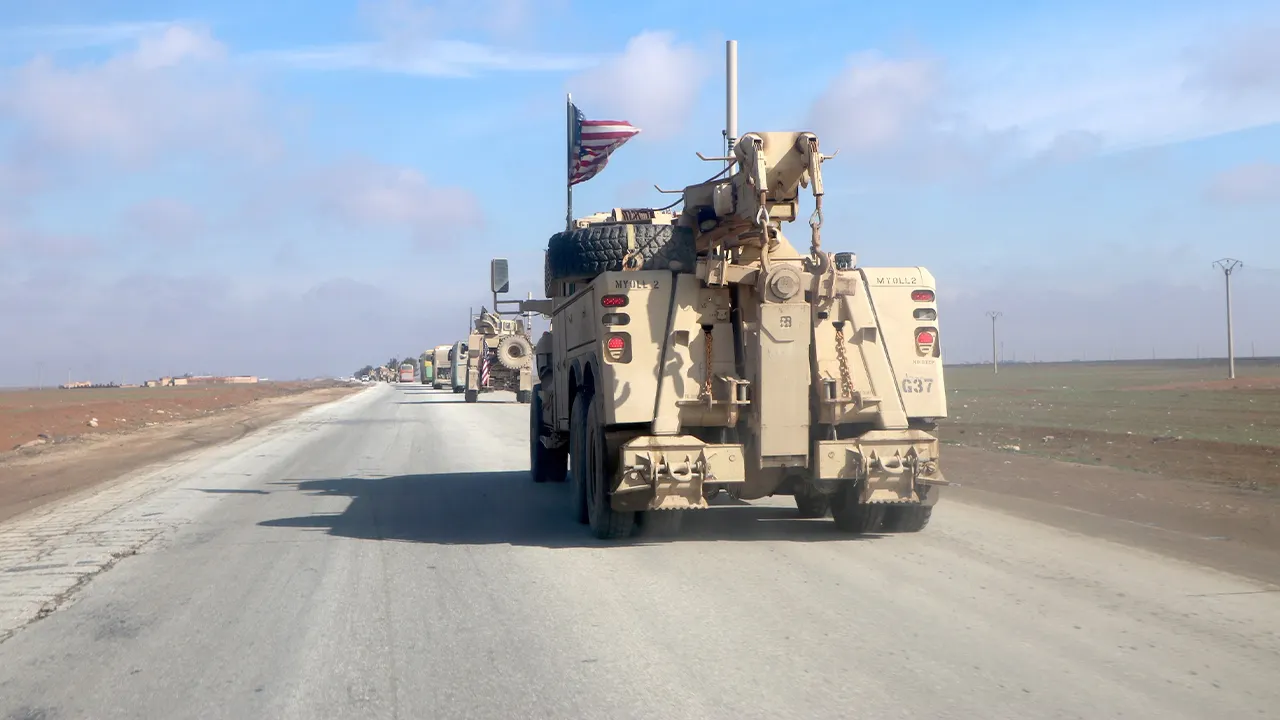
The U.S. military has completed its withdrawal from al-Tanf Garrison in Syria, U.S. Central Command (CENTCOM) announced Thursday. The departure, finalized on February 11, marks a significant shift in American military presence in the region as part of Operation Inherent Resolve, the coalition mission launched in 2014 to combat ISIS.
Following the U.S. withdrawal, Syria’s Defense Ministry confirmed that government forces have taken control of the base and begun deploying along the country’s borders with Iraq and Jordan. The handover was reportedly coordinated with U.S. officials, with Syrian Arab Army units moving in to secure the base and surrounding areas in the strategically important tri-border desert region.
The development follows the Pentagon’s April 2025 decision to scale back and consolidate U.S. forces in Syria. American troops have maintained a limited presence in the country since ISIS was territorially defeated in 2019, primarily to support partner forces and prevent the terrorist group from resurging.
According to Caroline Rose, director at the New Lines Institute, al-Tanf was among the most strategically significant U.S. garrisons in the Middle East, offering crucial intelligence collection and access along Syria’s borders with Jordan and Iraq.
“This was not only pivotal during the U.S.-led Coalition to defeat the Islamic State, where there was a threat of cross-border offensives and violence, but also proved key to U.S. deterrence efforts against Iran-backed militia networks that operated in Iraq and Syria,” Rose explained.
The expert noted that the withdrawal signals Washington’s confidence in the current state of the counter-ISIS campaign and the defeat of Iran-aligned proxy networks in the region. However, she cautioned that the departure could represent a setback for Jordan, which has long relied on the U.S. position at al-Tanf to deter adversarial actors in the region.
Despite the withdrawal, CENTCOM emphasized that U.S. forces remain prepared to counter ISIS threats. In the past two months alone, American forces have struck more than 100 targets in the region and captured or killed over four dozen ISIS fighters, demonstrating ongoing commitment to regional security objectives.
The redeployment comes just weeks after U.S. forces transferred 150 ISIS fighters from a detention facility in Hasakah, Syria, to a secure location in Iraq. Officials indicated in late January that thousands more detainees could also be relocated as part of the broader effort to maintain long-term security in the region.
The changing security landscape follows Syria’s November admission as the 90th member of the Global Coalition to Defeat ISIS, a U.S.-led alliance formed to coordinate international efforts against the extremist group. Tom Barrack, the U.S. ambassador to Turkey and special envoy for Syria, has stated that Damascus under interim President Ahmed al-Sharaa is prepared to assume security responsibilities, including control of ISIS detention facilities and camps.
This transition of security responsibilities comes in the wake of the 2024 ouster of longtime Syrian leader Bashar al-Assad, marking a new chapter in Syria’s post-civil war recovery and its relationship with international partners in regional security efforts.
The withdrawal from al-Tanf represents a significant milestone in America’s evolving Middle East strategy, reflecting changing priorities and security assessments nearly a decade after the launch of Operation Inherent Resolve. As U.S. forces recalibrate their presence, questions remain about the long-term stability of the region and the effectiveness of local forces in maintaining security against remaining terrorist threats.
Fact Checker
Verify the accuracy of this article using The Disinformation Commission analysis and real-time sources.

10 Comments
The U.S. withdrawal from al-Tanf is a significant move that reflects the evolving priorities in the region. While the fight against ISIS is not over, the focus appears to be shifting toward supporting local partners and preventing a resurgence, rather than maintaining a large direct presence. This could have important implications for the region’s stability and security.
It’s noteworthy that the withdrawal from al-Tanf was reportedly coordinated with Syrian government forces. This suggests a level of pragmatic cooperation, even as broader political tensions persist. It will be interesting to see how this development affects the dynamics between the U.S., Syria, and regional actors like Russia and Iran.
Absolutely. The coordination on the ground-level withdrawal could open the door for more dialogue, even if the broader geopolitical objectives remain at odds.
This pullback from al-Tanf aligns with the Pentagon’s broader plans to scale back the U.S. military footprint in Syria. After helping defeat ISIS, the focus now seems to be on supporting local partners and preventing the terrorist group from regaining a foothold, rather than maintaining a large direct presence.
Agreed. Consolidating forces and handing over control to Syrian government troops could reduce the risk of escalation, but will require careful coordination to ensure stability in the region.
The withdrawal from al-Tanf raises questions about the long-term U.S. strategy in Syria. While the mission to defeat ISIS has largely been accomplished, the geopolitical dynamics in the region remain complex. How will this shift in the U.S. military’s role impact the balance of power and the ongoing conflict?
That’s a good point. The U.S. will need to work closely with its partners to ensure the transition at al-Tanf doesn’t create a power vacuum that extremist groups could exploit.
Interesting development in Syria. The withdrawal from al-Tanf Garrison signals a shift in the U.S. military’s role there, as the focus seems to be on consolidating forces and supporting partner groups to prevent an ISIS resurgence. It will be worth watching how the handover to Syrian government forces unfolds.
Yes, the strategic location of al-Tanf makes this an important move. The tri-border region with Iraq and Jordan has long been a concern for regional stability.
This development at al-Tanf is a good reminder of the complexities involved in the Syrian conflict. The U.S. has maintained a limited presence there to support partner forces and prevent an ISIS comeback, but now seems to be consolidating its forces. It will be crucial to monitor how this transition is handled to ensure regional stability is not compromised.