


Listen to the article
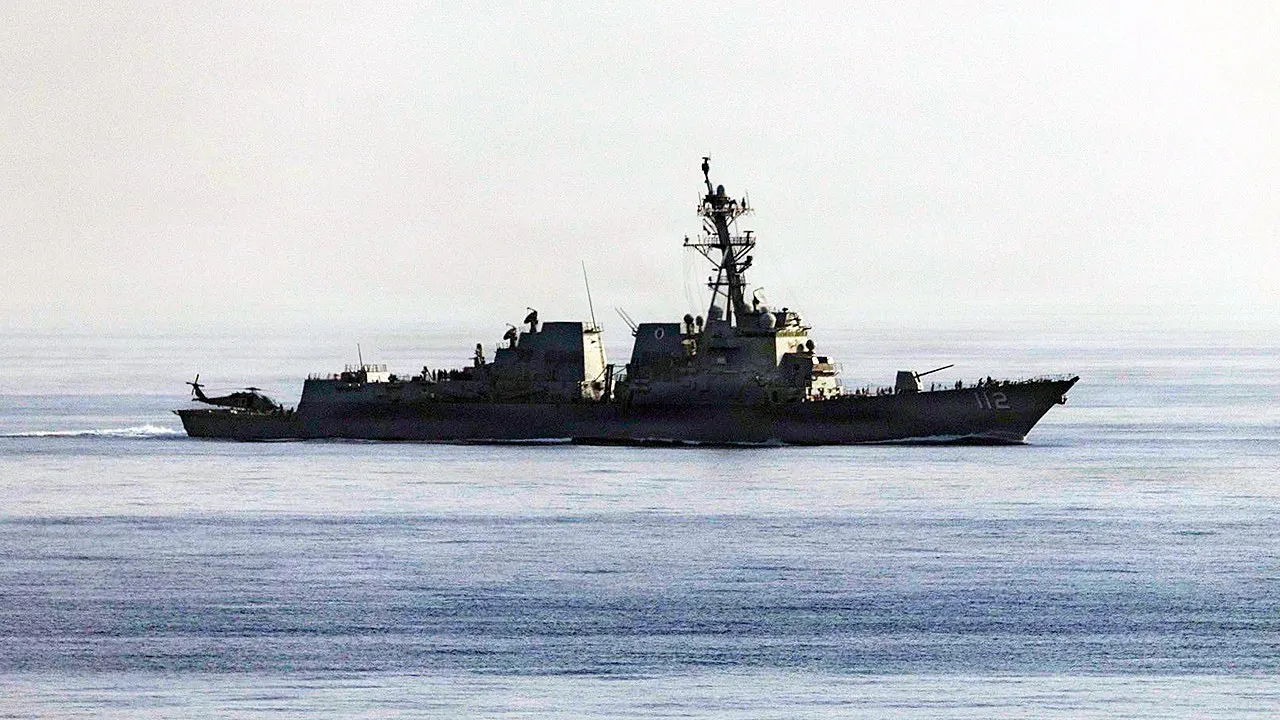
A U.S. destroyer intercepted two oil tankers attempting to depart from Iran on Tuesday as part of the Trump administration’s newly implemented naval blockade of Iranian ports, according to a U.S. official.
The vessels had departed from Chabahar port in the Gulf of Oman before being contacted by American naval forces through radio communication. They were among six merchant vessels that U.S. Central Command (CENTCOM) reported had complied with directives to turn around and return to Iranian ports during the first 24 hours of the operation.
“More than 10,000 U.S. Sailors, Marines, and Airmen along with over a dozen warships and dozens of aircraft are executing the mission to blockade ships entering and departing Iranian ports,” CENTCOM said in a statement. The military command confirmed that no ships had successfully bypassed the blockade during its initial day of operations.
The blockade represents a significant escalation in U.S. policy toward Iran, with CENTCOM emphasizing that the action “is being enforced impartially against vessels of all nations entering or departing Iranian ports and coastal areas, including all Iranian ports on the Arabian Gulf and Gulf of Oman.”
American forces are maintaining freedom of navigation for vessels traveling through the Strait of Hormuz to and from non-Iranian ports, a critical distinction as this narrow waterway serves as a vital maritime passage for global energy supplies. Approximately one-fifth of the world’s oil supply passes through this strait, making the region strategically crucial to international energy markets.
CENTCOM Commander Admiral Brad Cooper highlighted the economic implications of the blockade, noting that approximately 90% of Iran’s economy relies on international trade by sea. “In less than 36 hours since the blockade was implemented, U.S. forces have completely halted economic trade going into and out of Iran by sea,” Cooper stated.
The blockade employs substantial military resources, with U.S. Navy guided-missile destroyers playing a central role. According to CENTCOM, “A typical destroyer has a crew of more than 300 Sailors that are highly trained in conducting offensive and defensive maritime operations.”
This naval action comes amid increasing tensions between the United States and Iran. The Trump administration has taken an increasingly hardline approach toward Tehran, implementing what amounts to a complete maritime embargo. The blockade represents one of the most assertive actions taken against Iran in recent years, effectively isolating the country from international maritime commerce.
Maritime experts note that blockades of this nature are rare in modern international relations and signal a significant policy shift. The last major naval blockade of this scale was during the Cuban Missile Crisis in 1962, underlining the seriousness of the current situation.
The economic impact on Iran could be substantial, as the country’s oil exports—already hampered by previous sanctions—will face even greater obstacles. Iran’s ability to export petroleum products, its primary source of foreign revenue, is now severely constrained by the naval blockade.
International reaction has been mixed, with some U.S. allies expressing concern about the potential for escalation in the region. Maritime security analysts warn that the situation in the Gulf could remain volatile, with increased risk of miscalculation between naval forces operating in close proximity.
As the blockade continues, global oil markets are closely monitoring developments, concerned about potential supply disruptions or retaliatory actions that could affect global energy prices. The strategic waterways of the Persian Gulf and Strait of Hormuz remain crucial chokepoints for international energy supply chains.
Fact Checker
Verify the accuracy of this article using The Disinformation Commission analysis and real-time sources.

16 Comments
The US appears to be tightening the screws on Iran’s oil exports through this naval blockade. However, I’m curious to see how Iran and its trading partners will adapt to circumvent these restrictions.
This blockade puts a lot of pressure on Iran’s economy, but it also carries significant risks of escalation. Careful management will be needed to avoid miscalculation.
The US administration’s decision to implement a naval blockade of Iranian ports is a bold and potentially risky move. It will be crucial to monitor how Iran and other key players in the region respond to this escalation.
This blockade could have significant implications for global energy markets and the geopolitical dynamics in the Middle East. Careful diplomacy and conflict management will be essential to avoid an unintended military confrontation.
The US Navy’s interception of Iranian oil tankers is a clear attempt to tighten the economic noose on Iran. However, Iran may find ways to circumvent the blockade or retaliate, which could further destabilize the region.
This naval blockade represents a significant escalation in US policy toward Iran. It remains to be seen how Iran and its allies will respond, and what the broader implications will be for global energy markets and regional stability.
The US Navy’s interdiction of Iranian oil tankers is a clear attempt to restrict Iran’s ability to export its crude. However, Iran may find ways to circumvent the blockade or retaliate, which could lead to further conflict.
This blockade is a high-stakes move that could have significant economic and geopolitical consequences. It remains to be seen how Iran and its trading partners will adapt to these restrictions.
Interesting development in the ongoing tensions between the US and Iran. While the blockade aims to restrict Iranian oil exports, it remains to be seen how other nations will respond to these assertive actions by the US Navy.
The blockade seems like a high-stakes move that could further escalate the situation. Careful diplomacy will be crucial to avoid an unintended military confrontation.
The US blockade of Iranian ports represents a significant escalation in the ongoing tensions between the two countries. It will be interesting to see how Iran and its allies respond to this assertive move by the US Navy.
This naval blockade is a bold and risky step that could have major ramifications for global energy markets and regional stability. Careful diplomacy will be needed to de-escalate the situation.
The US Navy’s actions to intercept Iranian oil tankers is a clear attempt to choke off Iran’s oil exports. However, Iran may find ways to bypass the blockade or retaliate, which could further destabilize the region.
This blockade is a high-stakes gambit by the US administration. It will be crucial to monitor how Iran and other key players respond to avoid an unintended military confrontation.
This naval blockade represents a significant escalation in US policy toward Iran. I wonder how it will impact global energy markets and the geopolitical dynamics in the region.
Blockading Iranian ports is a bold move that could have serious economic and diplomatic consequences. It will be important to monitor how Iran and its allies respond.