


Listen to the article
The State Department on Monday designated Afghanistan as a sponsor of wrongful detention, as the U.S. intensifies pressure on the Taliban government over what officials describe as a pattern of detaining Americans to extract policy concessions.
The move places Afghanistan in the same category as Iran, which received an identical designation on February 27, just a day before the U.S. and Israel launched military strikes against the Islamic Republic. These designations represent a significant diplomatic escalation, designed to pressure both nations to cease taking Americans hostage.
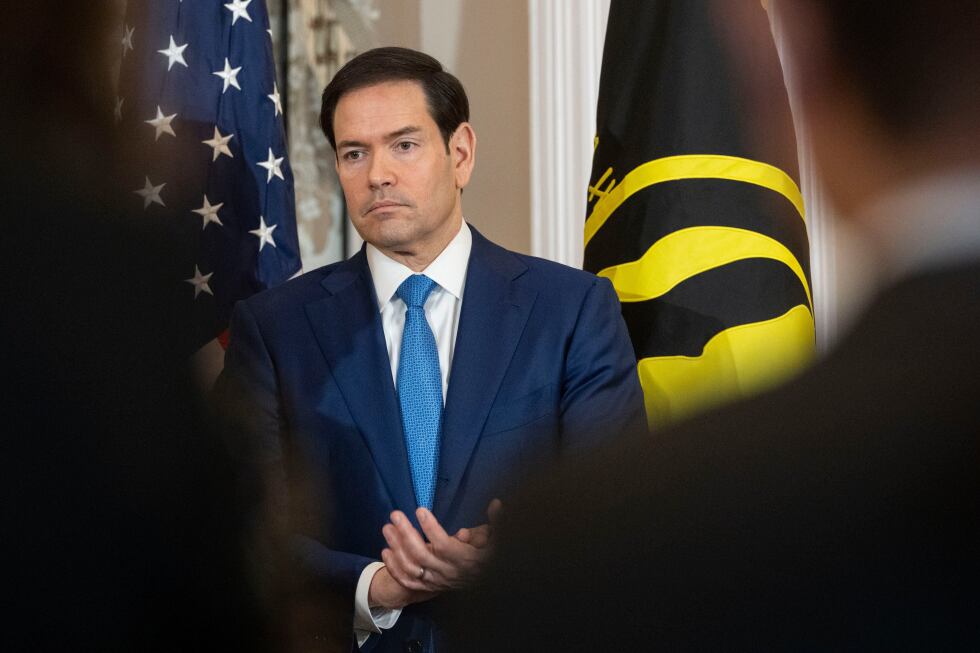
“The Taliban continues to use terrorist tactics, kidnapping individuals for ransom or to seek policy concessions. These despicable tactics need to end,” Secretary of State Marco Rubio said in a statement. “It is not safe for Americans to travel to Afghanistan because the Taliban continues to unjustly detain our fellow Americans and other foreign nationals.”
Rubio specifically called for the release of Americans believed to be in Taliban custody, including Dennis Coyle, an academic researcher detained since January 2025, and Mahmood Habibi, an Afghan American businessman who disappeared in 2022 while working as a contractor for a Kabul-based telecommunications company. Though the Taliban has denied holding Habibi, both the FBI and his family maintain he was taken by Taliban forces.
The designation received praise from Eric Lebson, a former National Security Council official who now serves as chief strategy officer at Global Reach, a nonprofit working on cases of detained Americans including Habibi. Lebson characterized it as a “clear message from the Trump administration to the Taliban that they hold the keys to resolving four cases of Americans who were arrested in their country and nothing will move forward in the US/Afghanistan relationship until that happens.”
The diplomatic pressure was further intensified on Monday when Mike Waltz, the U.S. ambassador to the U.N., directly accused Afghanistan’s Taliban leaders of engaging in “hostage diplomacy” during a U.N. Security Council meeting. Waltz also questioned the rationale behind the $1 billion in humanitarian aid being sought for Afghanistan while its leaders continue to deny basic rights to Afghan women.
“The Taliban’s actions demonstrate bad faith,” Waltz told the Security Council, adding that the U.S. is “deeply skeptical of their willingness to meet their international commitments or respect Afghanistan’s international obligations.”
Waltz expressed particular concern regarding the Doha peace deal, signed by then-President Donald Trump with the Taliban in February 2020. That agreement led to the withdrawal of U.S. troops from Afghanistan, which was followed by the Taliban’s takeover of the country and subsequent harsh restrictions on women’s rights.
“While the United States continues to participate in the (Doha) process and its working groups, we doubt the Taliban’s motives,” Waltz said. “We cannot build confidence with a group that continues to detain innocent Americans and ignores the basic needs of the Afghan people.”
The designation comes amid growing concerns about the Taliban’s governance since taking power in August 2021. The regime has imposed increasingly strict interpretations of Islamic law, drastically curtailed women’s rights, and restricted media freedoms, while also seeking international recognition and financial assistance.
International relations experts note that the wrongful detention designation represents a significant hardening of the U.S. position toward Afghanistan’s current government. It may complicate humanitarian efforts in a country where millions face food insecurity and economic hardship, while also making any future diplomatic normalization more difficult to achieve.
For families of those detained, however, the designation offers hope that increased pressure might lead to the release of their loved ones, though the Taliban’s response to this escalation remains uncertain.
Fact Checker
Verify the accuracy of this article using The Disinformation Commission analysis and real-time sources.

10 Comments
The Taliban’s use of ‘hostage diplomacy’ is deeply disturbing and undermines any progress towards stability in Afghanistan. I hope the US can leverage this designation to secure the release of all wrongfully detained individuals.
This is a concerning escalation with Afghanistan. Detaining Americans is unacceptable and puts their safety at risk. The Taliban needs to release all unjustly held foreign nationals immediately.
Agreed. The US designating Afghanistan as a state sponsor of wrongful detention is a serious step. It shows how critical this issue has become.
Designating Afghanistan as a state sponsor of wrongful detention is a significant move. However, I question whether this will actually compel the Taliban to change their behavior. Continued diplomatic efforts may be needed.
That’s a fair point. Escalating diplomatic pressure is important, but the US and allies will likely need to pursue multiple avenues to secure the release of American detainees in Afghanistan.
This is a very difficult and complex situation. While I understand the US perspective, I wonder if diplomacy and dialogue could lead to a more constructive resolution that ensures the safe return of detainees.
The use of ‘hostage diplomacy’ by the Taliban is deeply troubling. Holding Americans captive to extract policy concessions is an abhorrent tactic that must end. Their release should be an urgent priority.
Absolutely. The safety of American citizens detained in Afghanistan needs to be the top concern here. The Taliban must be held accountable for these actions.
While I understand the US perspective, I worry that this designation could further inflame tensions and make the situation more volatile. Constructive dialogue and diplomacy may be a better path forward, if possible.
The Taliban’s actions are unacceptable and warrant strong diplomatic pressure from the US. But I hope the two sides can find a peaceful way to resolve this crisis and secure the release of all unjustly held individuals.