


Listen to the article
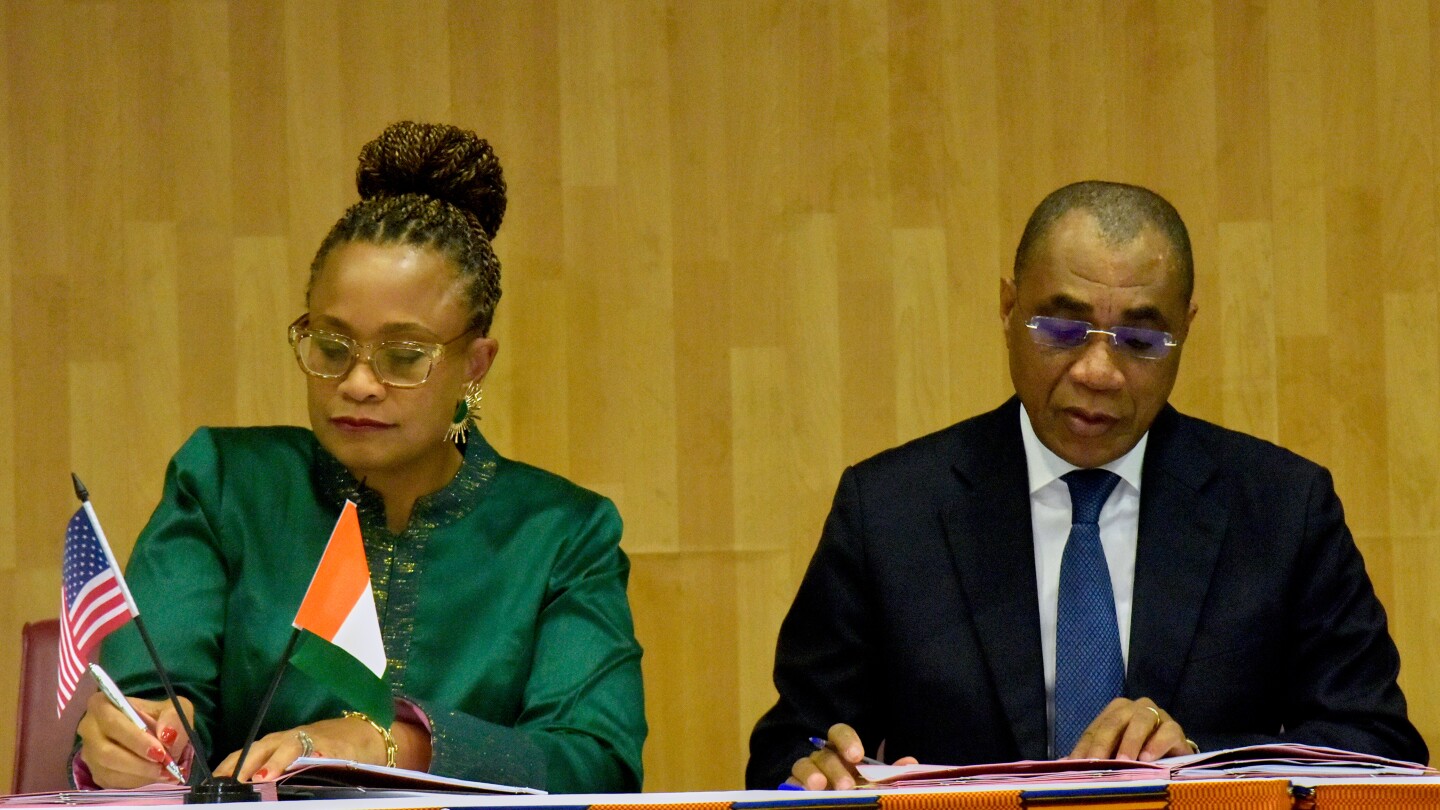
The United States and Ivory Coast formalized a significant health partnership on Tuesday, with the U.S. pledging $480 million to support the West African nation’s health sector through 2030. The agreement, signed in Abidjan, represents the latest in a series of “America First” global health funding pacts being implemented across Africa.
The comprehensive deal covers critical health areas including HIV prevention and treatment, malaria control, maternal and child health services, and global health security initiatives. It marks a notable shift in U.S. foreign aid strategy, emphasizing shared responsibility and reduced dependency.
Under the terms of the agreement, Ivory Coast has committed to provide approximately 163 billion CFA francs ($292 million) by 2030, which represents 60% of the overall financial commitment, according to Ivorian Prime Minister Robert Beugré Mambé. This structure reflects the Trump administration’s emphasis on partner countries taking greater ownership of their health systems.
U.S. Ambassador to Ivory Coast Jessica Davis Ba framed the agreement as a fundamental shift in approach, stating that the U.S. government is moving “beyond the traditional aid approach toward a model focused on trade, innovation, and shared prosperity.”
“Today, our bilateral cooperation is entering a new phase. We are implementing the America First global health strategy,” Ambassador Davis Ba said during the signing ceremony.
The new agreement comes at a critical time for Ivory Coast’s health system. Previously, USAID had invested $115 million in the country to support various sectors including health, education, and assistance for refugees, many of whom fled violence in neighboring Sahel countries. The country continues to face challenges in healthcare delivery, particularly in rural areas.
This health pact is part of a broader pattern of agreements the U.S. has recently established with more than a dozen African nations, many of which have experienced significant cuts in traditional U.S. aid funding. These reductions have strained health systems across the developing world, particularly in Africa, where numerous countries have relied heavily on U.S. funding for essential health programs, including disease outbreak responses.
The Trump administration has defended the new funding model, arguing that it aims to increase self-sufficiency while eliminating what it characterizes as ideological biases and inefficiencies in international assistance. These agreements replace a complex network of previous health arrangements managed through the United States Agency for International Development (USAID), which has seen its role diminished under the current administration.
Public health experts have expressed mixed reactions to the new approach. Supporters suggest that requiring greater financial commitments from recipient countries could foster sustainability and local ownership. Critics, however, worry that reducing traditional aid without adequate transition periods could leave vulnerable populations at risk.
Foreign policy analysts view these bilateral health agreements as consistent with President Trump’s transactional approach to international relations. By engaging directly with foreign governments and emphasizing specific deliverables, the administration aims to promote its global agenda while maintaining its “America First” posture.
For Ivory Coast, a country that has worked to rebuild its health infrastructure following years of political instability, the agreement provides much-needed resources but also increases domestic fiscal responsibilities at a time when many West African economies face significant challenges.
The success of this new model will likely depend on Ivory Coast’s ability to meet its substantial financial commitments while effectively implementing health programs across a diverse population of approximately 27 million people. Health officials in both countries have emphasized that the partnership will include technical assistance and capacity building, not just financial resources.
Fact Checker
Verify the accuracy of this article using The Disinformation Commission analysis and real-time sources.

8 Comments
This $480 million investment in Ivory Coast’s health sector is substantial. It will be interesting to track the progress and impact of this funding over the next decade.
While the ‘America First’ label may raise some eyebrows, the underlying principles of shared responsibility and reduced dependency seem sensible. It will be worth observing how this model evolves in other African nations.
This new health partnership between the US and Ivory Coast is an interesting development. It reflects a shift towards shared responsibility and reduced dependency, which could strengthen the local health system in the long run.
Absolutely, the 60% financial commitment from Ivory Coast is a notable aspect of this deal. It suggests a move away from the traditional aid model.
The focus on areas like HIV, malaria, and maternal/child health is commendable. These are critical public health challenges that require sustained, collaborative efforts.
Agreed. Addressing global health security is also an important component of this deal, which could have broader regional implications.
I’m curious to see how this ‘America First’ approach to global health funding plays out in practice. While the emphasis on local ownership is admirable, implementation will be key.
Good point. The success of this deal will depend on effective collaboration and clear accountability measures between the US and Ivory Coast.