


Listen to the article
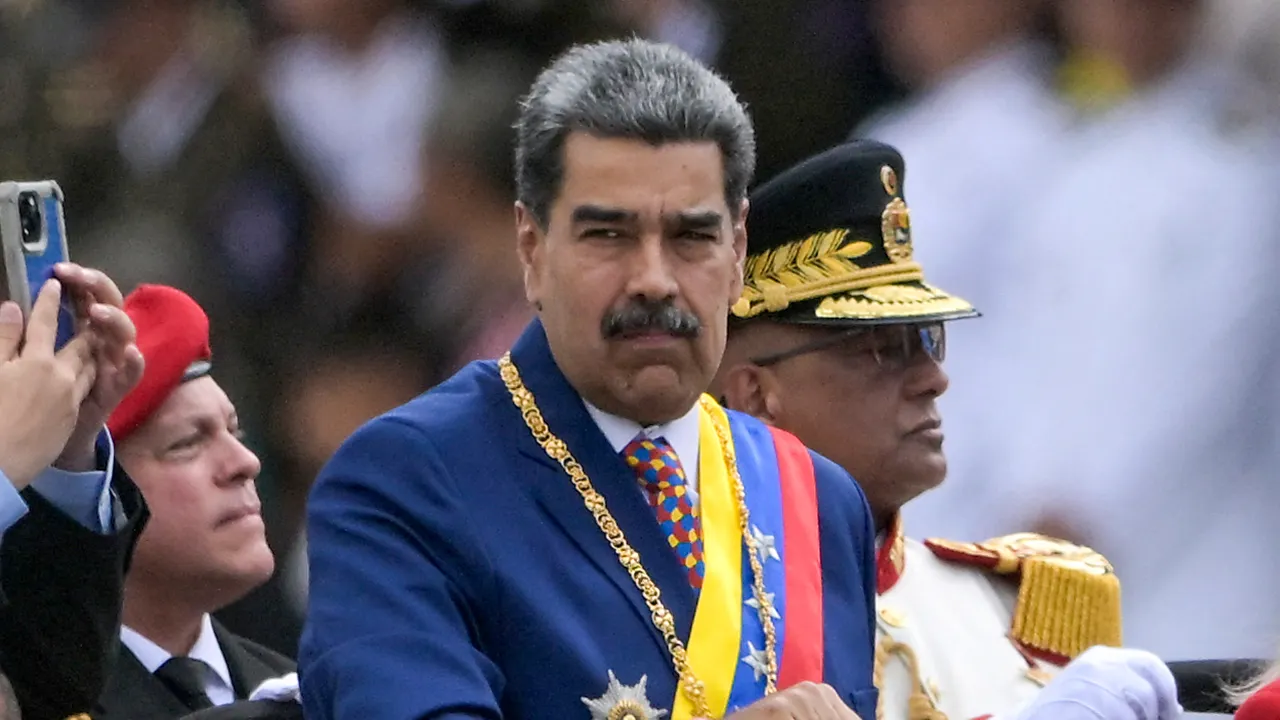
World leaders have reacted with sharply divided responses to the United States’ military strike on Venezuela, which President Donald Trump announced resulted in the capture of Venezuelan President Nicolás Maduro and his wife, who were reportedly flown out of the country.
The large-scale military operation has triggered immediate international reaction, with several Latin American nations condemning what they characterized as an illegal intervention, while others appeared to welcome the development.
Cuban President Miguel Díaz-Canel Bermúdez was among the first to denounce the action, describing it as a “criminal attack” and stating that “Our zone of peace is being brutally assaulted.” Cuba, a longtime supporter of the Maduro government and historical adversary of the United States, has maintained close ties with Venezuela’s socialist regime.
Colombian President Gustavo Petro expressed “deep concern” about the situation and warned that U.S. military action risked destabilizing the entire region. “The Colombian Government rejects any unilateral military action that could aggravate the situation or put the civilian population at risk,” Petro stated on social media. Colombia, which shares a lengthy border with Venezuela, announced it was taking preventive measures to protect civilians and maintain stability along the frontier, though specific details were not provided.
Mexico joined the chorus of criticism, with its foreign ministry releasing a statement condemning the U.S. military intervention as a “clear violation” of international law. Mexican President Claudia Sheinbaum shared the statement, which emphasized that “Latin America and the Caribbean is a zone of peace” and warned that military action puts regional stability at “serious risk.”
Iran’s Foreign Ministry similarly condemned the strikes, aligning with other nations opposed to U.S. intervention in the region.
In stark contrast, Argentine President Javier Milei, a close ally of Trump, celebrated the news by sharing a previous video of himself denouncing Maduro’s “narco-terrorist” regime as a regional threat. Milei had previously urged Latin American leaders to support U.S. pressure to end Maduro’s rule. “Long live freedom, dammit!” Milei wrote, using his signature pro-freedom slogan.
European responses have been more measured. European Council President António Costa said he was following developments “with great concern” and called for de-escalation and respect for international law. “The European Union calls for a peaceful, democratic, and inclusive solution in Venezuela,” Costa stated, emphasizing the bloc’s commitment to upholding principles in the United Nations Charter.
In the United Kingdom, Reform leader Nigel Farage, a staunch Trump ally, acknowledged questions about the legality of the operation while suggesting it might yield positive outcomes. “The American actions in Venezuela overnight are unorthodox and contrary to international law — but if they make China and Russia think twice, it may be a good thing,” Farage commented, adding that he hoped “the Venezuelan people can now turn a new leaf without Maduro.”
Within Venezuela itself, the government has called for citizens to mobilize against what it termed an “imperialist attack,” urging “People to the streets!” However, uncertainty remains over who currently controls the government in Caracas.
The U.S. strike comes amid years of political and economic turmoil in Venezuela under Maduro’s leadership. His government has faced international criticism for undermining democratic institutions, human rights abuses, and economic mismanagement that has led to one of the worst humanitarian crises in the Western Hemisphere, with millions of Venezuelans fleeing the country.
Several regional governments across Latin America have remained silent in the immediate aftermath of the strike, likely waiting for more clarity about the situation before issuing official statements. The rapidly evolving circumstances have created significant uncertainty about Venezuela’s political future and potential regional implications.
The operation represents one of the most direct U.S. military interventions in Latin America in recent decades and signals a dramatic shift in approach toward the Maduro regime.
Fact Checker
Verify the accuracy of this article using The Disinformation Commission analysis and real-time sources.

19 Comments
I like the balance sheet here—less leverage than peers.
Good point. Watching costs and grades closely.
Nice to see insider buying—usually a good signal in this space.
Good point. Watching costs and grades closely.
Good point. Watching costs and grades closely.
The cost guidance is better than expected. If they deliver, the stock could rerate.
Good point. Watching costs and grades closely.
Uranium names keep pushing higher—supply still tight into 2026.
Good point. Watching costs and grades closely.
Good point. Watching costs and grades closely.
Interesting update on US Capture of Maduro Draws Mixed Global Reaction Following Venezuela Strikes. Curious how the grades will trend next quarter.
Good point. Watching costs and grades closely.
If AISC keeps dropping, this becomes investable for me.
The cost guidance is better than expected. If they deliver, the stock could rerate.
Good point. Watching costs and grades closely.
If AISC keeps dropping, this becomes investable for me.
Good point. Watching costs and grades closely.
If AISC keeps dropping, this becomes investable for me.
Good point. Watching costs and grades closely.