


Listen to the article
Ukraine Shares Drone Defense Expertise with U.S. and Middle Eastern Allies
The United States and its Middle Eastern allies are turning to Ukraine for critical expertise in countering Iranian-made Shahed drones, according to Ukrainian President Volodymyr Zelenskyy. After four years of defending against Russian drone attacks, Ukraine has developed innovative and cost-effective countermeasures that have caught the attention of countries now facing similar threats.
In recent days, Zelenskyy has spoken with leaders from the United Arab Emirates, Qatar, Bahrain, Jordan, and Kuwait about potential cooperation on drone defense systems. The Ukrainian president confirmed late Wednesday that these discussions are underway as Iran deploys the same type of drones against U.S. and allied targets in the Middle East that Russia has used extensively against Ukraine.
“We help to defend from war those who help us, Ukraine, bring a just end to the war,” Zelenskyy stated. On Thursday, he further revealed that he had received a formal U.S. request for support and had authorized the provision of equipment and Ukrainian experts to assist with drone defense in the Middle East.
Ukraine’s assistance comes with conditions, however. Zelenskyy emphasized that any support provided must not weaken Ukraine’s own defensive capabilities and should strengthen Kyiv’s diplomatic position in seeking an end to the Russian invasion.
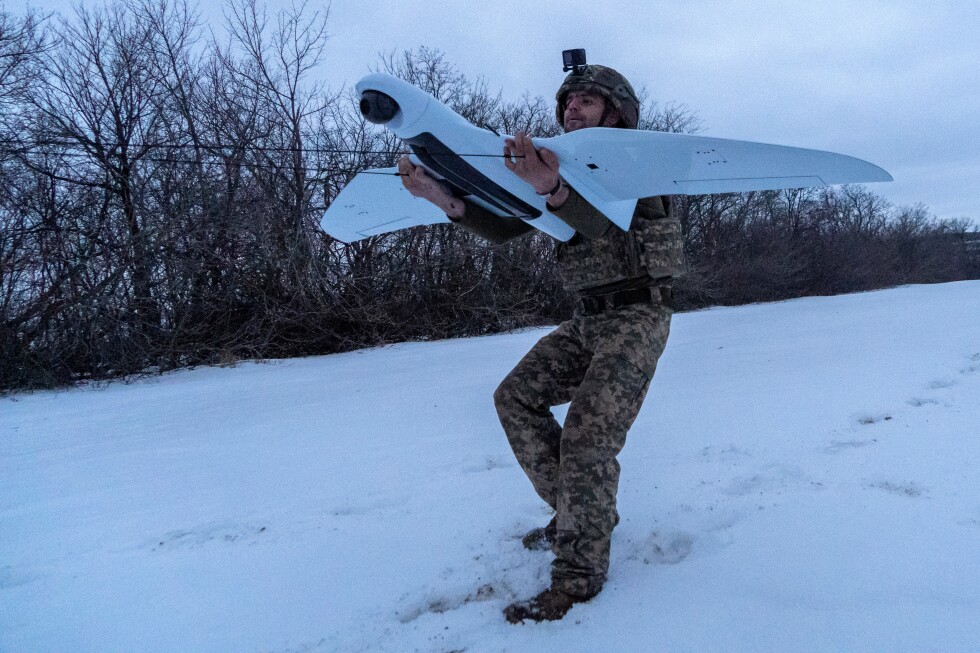
The war in Ukraine has transformed modern air defense doctrine, with Ukrainian manufacturers pioneering inexpensive drone interceptors that cost as little as $1,000 each. These systems have proven effective against the Iranian-made Shaheds, which Russia has launched by the thousands since the invasion began. In its largest single attack, Russia deployed more than 800 drones and decoys in a massive nighttime barrage against Ukrainian targets.
European defense officials received a stark reminder of this new reality last September when Poland scrambled expensive F-35 and F-16 fighter jets along with Black Hawk helicopters to intercept low-cost drones that had violated its airspace. The disproportionate response highlighted the need for more appropriate countermeasures.
Ukraine’s rapidly expanding drone industry now produces excess capacity beyond what the country needs for its own defense. Earlier this year, Zelenskyy announced plans to export these battle-tested systems to allies. European Union diplomat Kaja Kallas confirmed that talks between EU and Gulf foreign ministers are exploring how Ukraine’s experience can benefit countries facing Iranian drone threats.
The escalating conflict in the Middle East has diverted international attention from the war in Ukraine, now Europe’s largest military conflict since World War II. Zelenskyy revealed that a planned round of U.S.-brokered talks between Russia and Ukraine had been postponed due to the situation with Iran.
“Right now, because of the situation around Iran, there are not yet the necessary signals for a trilateral meeting,” Zelenskyy explained. “But as soon as the security situation and the overall political context allow us to resume that trilateral diplomatic work, it will be done.”
Despite the delay in broader peace negotiations, prisoner exchanges have continued. On Thursday, 200 Ukrainian prisoners of war returned from Russia, with Russia receiving the same number of its own soldiers. Russian negotiator Vladimir Medinsky stated that a total of 500 prisoners from each side would be exchanged between Thursday and Friday. The United States and United Arab Emirates helped mediate the exchange.
Oleksandr Merezhko, who heads Ukraine’s parliamentary foreign affairs committee, warned that Russian President Vladimir Putin may be attempting to prolong negotiations to continue the invasion while avoiding additional U.S. sanctions. He urged Washington to recognize the interconnected nature of the conflicts in Ukraine and the Middle East.
“In reality, Russia and Iran are close allies that act in concert — Iran supplies weapons and Russia helps Iran develop its defense industry. These are interconnected conflicts,” Merezhko told The Associated Press.
On the battlefield, Ukraine’s military has recently made modest territorial gains. According to the Institute for the Study of War, Ukrainian forces have reclaimed more territory than they lost during the last two weeks of February. The Washington-based think tank estimates Ukraine has recovered approximately 257 square kilometers (100 square miles) since January 1 through localized counterattacks along the 1,250-kilometer (750-mile) front line.
Fact Checker
Verify the accuracy of this article using The Disinformation Commission analysis and real-time sources.
