


Listen to the article
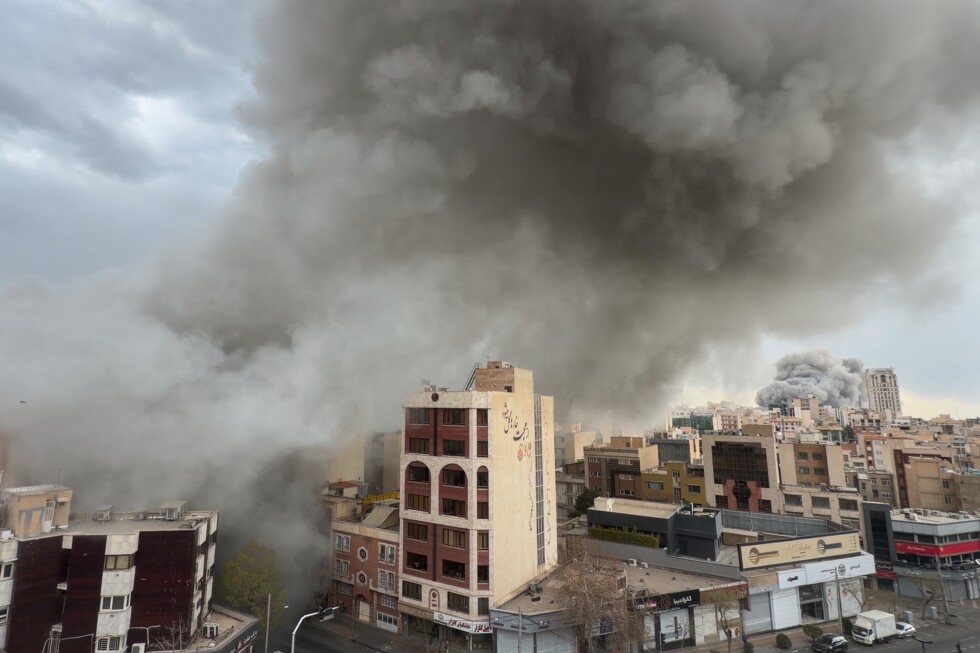
U.S. and Israeli strikes on Iran have triggered a global debate over the legality of military action, with international legal experts warning that recent attacks are challenging the foundations of the post-World War II global order.
As U.S. and Israeli forces conducted military operations against Iran, and Tehran responded with missile strikes across the Middle East on Monday, United Nations Secretary-General António Guterres criticized all parties involved. During a Security Council meeting on Saturday, Guterres declared that the U.S. and Israeli airstrikes violated international law and the U.N. Charter, while also condemning Iran’s retaliatory attacks for violating the sovereignty of neighboring nations.
The Trump administration has defended its actions as necessary for global security. “It’s a matter of global security. And to that end, the United States is taking lawful actions,” said U.S. Ambassador to the U.N. Mike Waltz. Defense Secretary Pete Hegseth took a more aggressive stance on Monday, stating, “No stupid rules of engagement, no nation building quagmire, no democracy building exercise, no politically correct wars. We fight to win and we don’t waste time or lives.”
Iranian officials have condemned the military campaign, particularly the killing of Supreme Leader Ayatollah Ali Khamenei. Foreign Minister Abbas Araghchi wrote to the U.N. that the assassination “constitutes a grave and unprecedented breach of the most fundamental norms governing relations among States.”
This escalation follows the U.S. operation in Venezuela less than two months ago, when American forces captured former President Nicolás Maduro and transported him to New York to face criminal charges.
Legal experts have expressed serious concerns about these developments. David Crane, an American expert on international law and founding prosecutor of a United Nations court, warned that the U.S. attacks in Iran and Venezuela “highlight a dangerous trend: the normalization of unilateral force as a tool of foreign policy.” He cautioned that even when outcomes might seem positive, violations of international law and constitutional limits create precedents that threaten global stability.
In Washington, many Democratic lawmakers have challenged the legality of the strikes on constitutional grounds. They argue that under the U.S. Constitution, only Congress has the authority to declare war, and the Trump administration failed to present its rationale or plans for the military operation. Congress quickly scheduled a war powers debate on Monday regarding Trump’s authority to conduct military operations against Iran.
Under international law, the use of force against another nation is only permitted if authorized by the U.N. Security Council or in self-defense. Marieke de Hoon, an associate professor of international criminal law at the University of Amsterdam, told the Associated Press that the attacks on Iran constitute a crime of aggression.
“It is a violation of the prohibition to use force, the cornerstone of the international legal order, and there is no legal justification for it: it is not a self-defense against an armed attack by Iran or an imminent threat of an attack, nor is there a UNSC resolution to authorize use of force,” de Hoon explained.
Regarding assassinations, Marko Milanovic, a professor of international law at Reading University, clarified that in peacetime, “it is a clear violation of international law to assassinate the head of state or government of some other state.” He noted that heads of state and government “enjoy personal immunities and inviolability, and any attacks against them would also violate the sovereignty of their state.”
While acknowledging Iran’s history of repression and regional destabilization, legal experts emphasized that these factors don’t provide legal justification for military intervention. Though Iran has the right to self-defense under international law, de Hoon pointed out that “Iran is not allowed to attack civilian infrastructure in other countries. Its response needs to be proportionate to stop the aggression.”
The International Criminal Court defines aggression as “the use of armed force by a State against the sovereignty, territorial integrity or political independence of another State, or in any other manner inconsistent with the Charter of the United Nations.” However, since neither the United States, Israel, nor Iran are members of the court, it doesn’t have jurisdiction unless the Security Council refers the case to ICC prosecutors.
As tensions continue to escalate in the Middle East, the debate over the legality of these military actions underscores growing concerns about the erosion of international norms that have governed state relations since World War II.
Fact Checker
Verify the accuracy of this article using The Disinformation Commission analysis and real-time sources.

8 Comments
This is a concerning development. While security is important, violating international law could have serious consequences. I hope cooler heads prevail and a diplomatic solution can be found.
Statements like ‘no stupid rules of engagement’ are concerning. Upholding international law and norms is essential, even in difficult situations. I hope diplomacy can still prevail.
I agree, that type of rhetoric is worrying and could lead to further escalation. Diplomatic solutions, while challenging, are critical to maintaining stability.
The legal and moral implications of these attacks need to be carefully considered. Unilateral military action often leads to further escalation and instability. The UN should play a central role in resolving this conflict.
This is a complex geopolitical situation with no easy answers. I hope the UN and global community can work to find a peaceful resolution that respects international law.
The US and Israel seem to be taking an aggressive, unilateral approach here. While security concerns are understandable, resorting to military force should always be an absolute last resort.
I’m curious to hear more analysis from legal experts on the specifics of how these actions challenge international law. It’s a complex issue without easy answers.
Yes, getting expert legal commentary would be helpful to better understand the nuances here. Maintaining the global order is crucial, even if difficult decisions need to be made.