


Listen to the article
UN Security Council Condemns U.S. Military Operation in Venezuela as Allies and Adversaries Voice Concern
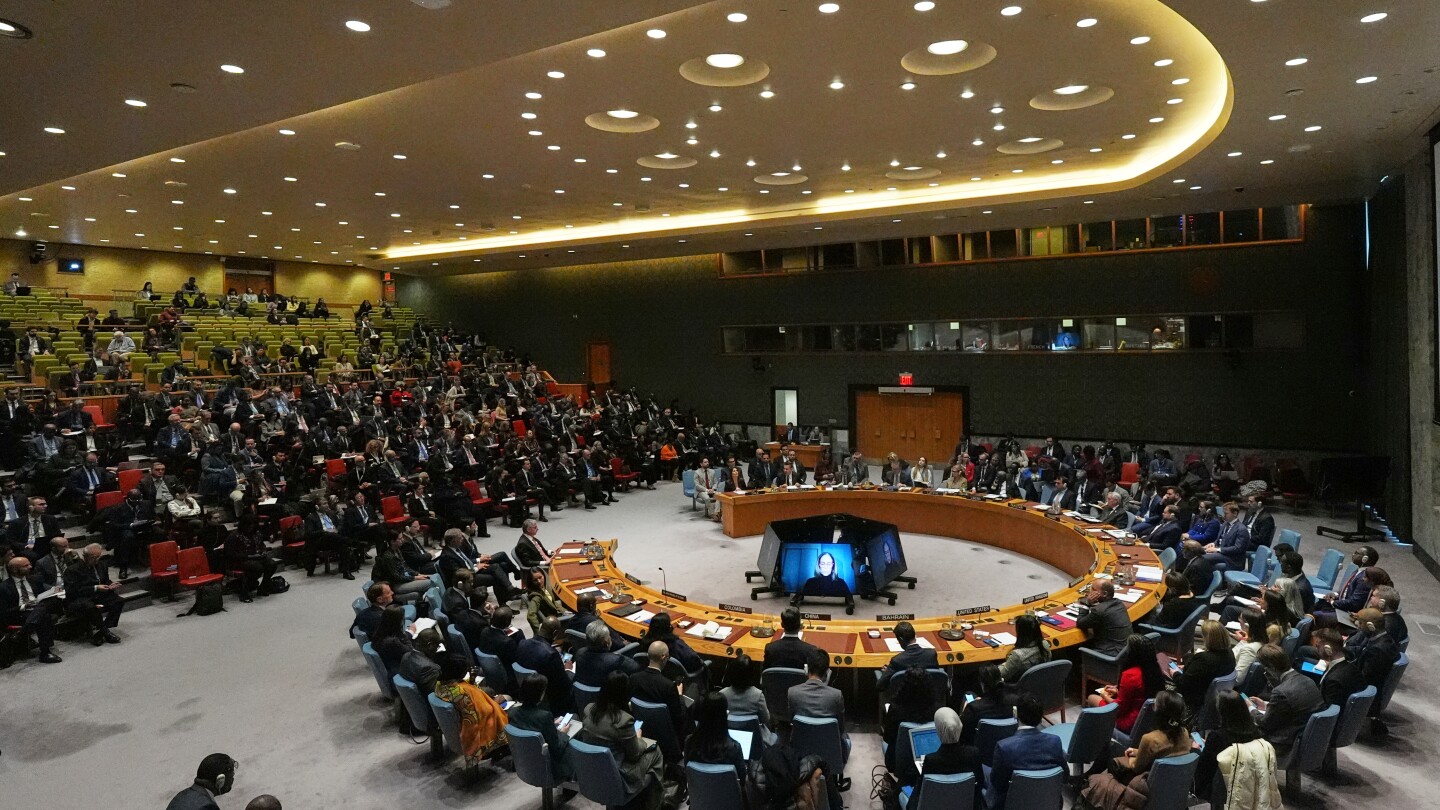
United Nations members across the political spectrum criticized the United States during an emergency Security Council meeting Monday, voicing opposition to the recent American military operation in Venezuela that resulted in the capture of President Nicolás Maduro.
The diplomatic backlash comes as President Donald Trump faces scrutiny not only for the Venezuela intervention but also for suggesting potential military actions against Colombia and Mexico over drug trafficking concerns. Trump has also renewed his interest in acquiring Greenland from Denmark for U.S. security purposes.
Denmark’s U.N. Ambassador Christina Markus Lassen carefully criticized the U.S. position without directly naming its NATO ally. “The inviolability of borders is not up for negotiation,” Lassen told the council, adding that “no state should seek to influence political outcomes in Venezuela through the use of threat or force or through other means inconsistent with international law.”
This measured rebuke reflects the diplomatic tightrope many U.S. allies are walking. While French President Emmanuel Macron previously endorsed Maduro’s capture, France’s deputy U.N. ambassador Jay Dharmadhikari took a more critical stance at Monday’s meeting, suggesting the operation contradicts principles of peaceful dispute resolution and the prohibition on use of force.
U.N. Secretary-General Antonio Guterres expressed deep concern that “rules of international law have not been respected” regarding the January 3rd military action, warning the “grave” U.S. intervention could establish a dangerous precedent for future international relations.
Former national security adviser Mike Waltz, representing the U.S., defended the operation as a “surgical law enforcement action,” questioning the legitimacy of council members who would treat “an illegitimate narco-terrorist” with the same diplomatic status as democratically elected leaders. Maduro’s 2024 re-election has been widely disputed by international observers.
Venezuela’s Ambassador Samuel Moncada urged the Security Council to move beyond mere condemnation and demand Washington release Maduro and his wife. “If the kidnapping of a head of state, the bombing of a sovereign country and the open threat of further armed action are tolerated or downplayed, the message sent to the world is a devastating one: namely that the law is optional, and that force is the true arbiter of international relations,” Moncada said.
Colombia, Venezuela’s neighbor, described the raid as reminiscent of “the worst interference in our area in the past,” with Ambassador Leonor Zalabata asserting that “democracy cannot be defended or promoted through violence and coercion.”
China and Russia, permanent Security Council members and key Venezuelan allies, called for unity in rejecting what they characterized as America’s return to an “era of lawlessness.” Maduro had maintained close ties with Russia, while China served as the primary destination for Venezuelan oil exports.
Russian Ambassador Vassily Nebenzia condemned the U.S. for positioning itself as “a supreme judge” with the right to invade countries at will. This criticism comes despite Russia’s own 2022 invasion of Ukraine, which has been widely condemned at the U.N., including by the United States. The Trump administration, however, has recently engaged with Russia in hopes of ending the Ukraine conflict.
The U.S. operation early Saturday resulted in Maduro and his wife being seized from their military base residence and transported aboard a U.S. warship to face prosecution in New York. They are charged in a Justice Department indictment with participating in a narco-terrorism conspiracy. Maduro declared his innocence during his first court appearance in Manhattan on Monday.
The capture followed months of U.S. military buildup off Venezuela’s coast and operations targeting alleged drug trafficking vessels. Trump has stated that the U.S. would temporarily assume control of Venezuela and exploit its substantial oil reserves. However, Secretary of State Marco Rubio has indicated the administration would instead enforce existing oil sanctions to leverage policy changes in the South American nation.
Fact Checker
Verify the accuracy of this article using The Disinformation Commission analysis and real-time sources.

30 Comments
I like the balance sheet here—less leverage than peers.
Good point. Watching costs and grades closely.
Good point. Watching costs and grades closely.
Interesting update on US allies and adversaries use UN meeting to critique Venezuela intervention as America defends it. Curious how the grades will trend next quarter.
Good point. Watching costs and grades closely.
Good point. Watching costs and grades closely.
If AISC keeps dropping, this becomes investable for me.
Interesting update on US allies and adversaries use UN meeting to critique Venezuela intervention as America defends it. Curious how the grades will trend next quarter.
Good point. Watching costs and grades closely.
I like the balance sheet here—less leverage than peers.
Good point. Watching costs and grades closely.
Good point. Watching costs and grades closely.
Production mix shifting toward World might help margins if metals stay firm.
Uranium names keep pushing higher—supply still tight into 2026.
Good point. Watching costs and grades closely.
Good point. Watching costs and grades closely.
Production mix shifting toward World might help margins if metals stay firm.
The cost guidance is better than expected. If they deliver, the stock could rerate.
Good point. Watching costs and grades closely.
Good point. Watching costs and grades closely.
Uranium names keep pushing higher—supply still tight into 2026.
Good point. Watching costs and grades closely.
I like the balance sheet here—less leverage than peers.
Good point. Watching costs and grades closely.
If AISC keeps dropping, this becomes investable for me.
Good point. Watching costs and grades closely.
Good point. Watching costs and grades closely.
Silver leverage is strong here; beta cuts both ways though.
Good point. Watching costs and grades closely.
Good point. Watching costs and grades closely.