


Listen to the article
The United Nations Security Council has called for Rwanda to withdraw its forces from eastern Democratic Republic of Congo while extending the mandate of the UN peacekeeping mission there for another year, as violence continues to escalate in the troubled region despite recent diplomatic efforts.
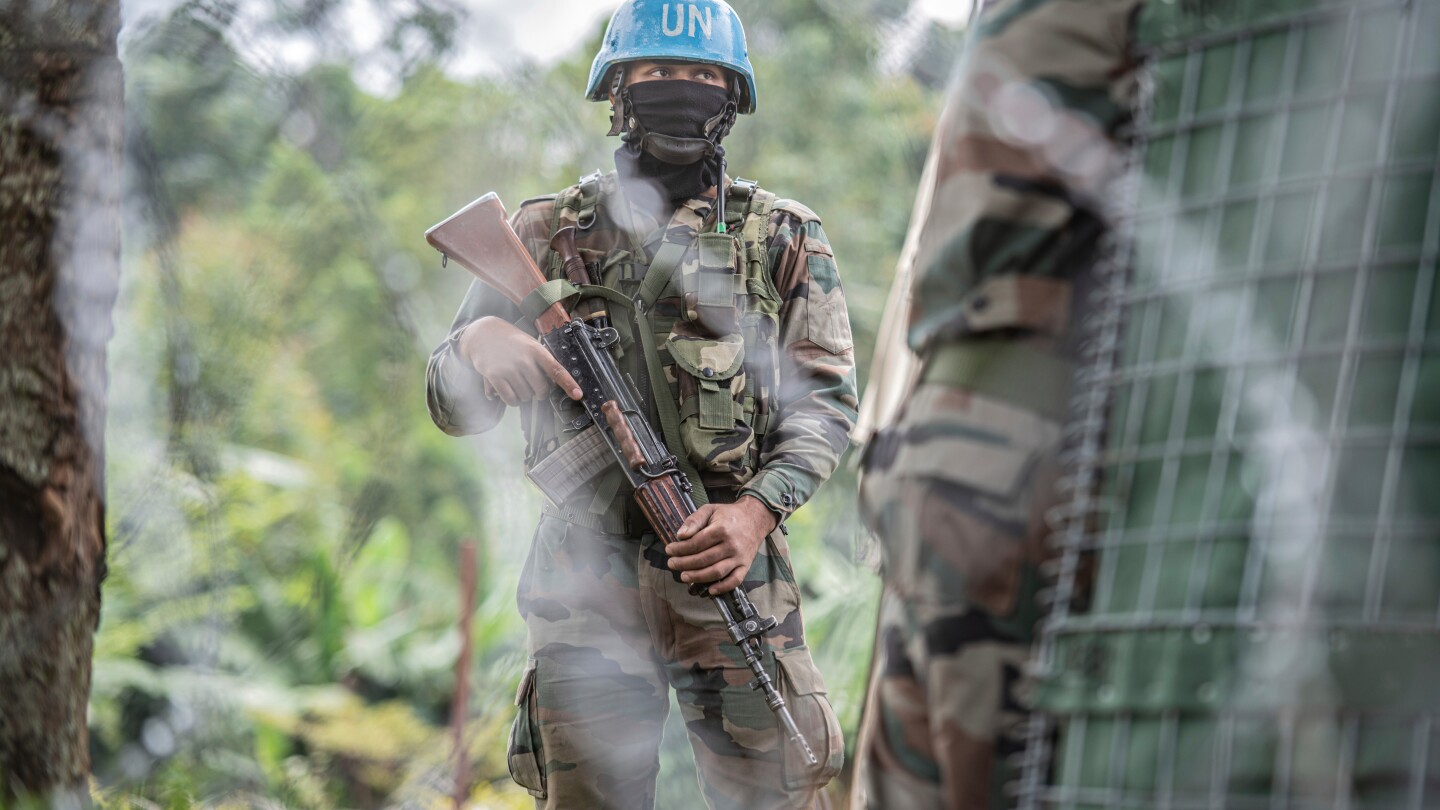
In a unanimous resolution adopted Friday, the Security Council condemned the offensive by the Rwanda-backed M23 rebel group and demanded Rwanda cease its support for the rebels and pull out its troops. The resolution extends the mandate of MONUSCO, the UN peacekeeping force in Congo, maintaining approximately 11,500 military personnel in the country.
The Council’s decision comes amid contradictory claims about the situation in Uvira, a strategically important city in eastern Congo. The M23 rebels announced Wednesday they had withdrawn from the city they seized last week, a claim that came after significant international pressure, particularly from the United States. However, Congo’s government dismissed this announcement as “staged,” insisting that rebel forces remain in the area.
Jennifer Locetta, U.S. deputy ambassador, addressed the Security Council on Friday, demanding that M23 retreat at least 75 kilometers (47 miles) from Uvira. The rebel group’s capture of the city marked a significant escalation in the conflict and occurred despite a peace agreement brokered by the United States and signed by the presidents of Congo and Rwanda in Washington earlier this month.
The U.S.-mediated accord did not directly include the M23 rebels, who are engaged in separate negotiations with the Congolese government. Both sides had previously agreed to a ceasefire earlier this year, but each has accused the other of violations. The bilateral agreement between Congo and Rwanda does, however, obligate Rwanda to stop supporting armed groups, including M23, and work toward ending hostilities in the region.
The Congolese government, the United States, and UN experts have consistently accused Rwanda of providing backing to M23, which has grown dramatically from just hundreds of members in 2021 to approximately 6,500 fighters today, according to UN estimates. Rwanda has repeatedly denied these allegations despite substantial evidence to the contrary.
Eastern Congo has become a battleground for more than 100 armed groups competing for control in the mineral-rich region near the Rwandan border. This persistent conflict has created one of the world’s most severe humanitarian crises, with the UN refugee agency reporting more than seven million people displaced within the country.
MONUSCO, which has operated in Congo since 2010 after replacing a previous UN mission, was established with the mandate to protect civilians and humanitarian personnel while supporting the Congolese government’s stabilization and peace efforts. However, the mission has faced growing criticism from local Congolese populations who feel inadequately protected from rebel attacks, leading to sometimes deadly protests against the UN presence.
Last year, at the request of Congo’s government, the Security Council voted unanimously to begin drawing down the peacekeeping force and gradually transfer security responsibilities to Congolese authorities. This transition process continues amid the renewed violence.
The situation in eastern Congo remains volatile despite multiple international peace initiatives. The M23 rebellion, which first gained prominence in 2012, has resurged dramatically in recent years, creating further instability in a region that has experienced decades of conflict linked to ethnic tensions, resource exploitation, and foreign intervention.
As international diplomatic efforts continue, millions of Congolese civilians remain caught in the crossfire, facing violence, displacement, and humanitarian challenges in a conflict that shows few signs of abating despite the recent peace agreement and Security Council action.
Fact Checker
Verify the accuracy of this article using The Disinformation Commission analysis and real-time sources.

27 Comments
Exploration results look promising, but permitting will be the key risk.
Exploration results look promising, but permitting will be the key risk.
Good point. Watching costs and grades closely.
The cost guidance is better than expected. If they deliver, the stock could rerate.
Good point. Watching costs and grades closely.
Good point. Watching costs and grades closely.
Nice to see insider buying—usually a good signal in this space.
Good point. Watching costs and grades closely.
Uranium names keep pushing higher—supply still tight into 2026.
Good point. Watching costs and grades closely.
Nice to see insider buying—usually a good signal in this space.
Nice to see insider buying—usually a good signal in this space.
The cost guidance is better than expected. If they deliver, the stock could rerate.
Good point. Watching costs and grades closely.
The cost guidance is better than expected. If they deliver, the stock could rerate.
Exploration results look promising, but permitting will be the key risk.
Good point. Watching costs and grades closely.
Good point. Watching costs and grades closely.
Nice to see insider buying—usually a good signal in this space.
Good point. Watching costs and grades closely.
Silver leverage is strong here; beta cuts both ways though.
Good point. Watching costs and grades closely.
Uranium names keep pushing higher—supply still tight into 2026.
Good point. Watching costs and grades closely.
Exploration results look promising, but permitting will be the key risk.
Good point. Watching costs and grades closely.
Good point. Watching costs and grades closely.