


Listen to the article
The United Nations Security Council is preparing to vote Monday on a United States-led plan for Gaza that would provide international backing for a stabilization force and outline a potential pathway to Palestinian statehood. However, uncertainty looms over whether Russia, one of the five permanent Security Council members with veto power, will block the resolution.
After nearly two weeks of negotiations, Russia unexpectedly introduced a competing proposal late Thursday. The Russian draft would eliminate references to a transitional authority headed by President Donald Trump and instead request the UN Secretary-General to provide options for an international security force in Gaza.
The vote represents a critical juncture for the fragile ceasefire between Israel and Hamas and efforts to shape Gaza’s future. Several Arab and Muslim nations that have expressed willingness to contribute troops to an international stabilization force have indicated that UN Security Council authorization is essential for their participation.
Diplomatic sources speaking on condition of anonymity due to the sensitivity of the matter expressed hope that Russia and China might abstain rather than veto, given their ties to eight Muslim-majority countries that have urged swift adoption of the US resolution. However, Moscow’s voting intentions remain unclear.
The US resolution endorses Trump’s 20-point ceasefire plan, which proposes establishing a Board of Peace as a transitional authority under his leadership. The plan would authorize a stabilization force with a broad mandate including border oversight, security provision, and demilitarization of Gaza. Both the board and the force would be authorized through the end of 2027.
After facing criticism about weak language regarding Palestinian self-determination, the US strengthened its resolution to state that following Palestinian Authority reforms and Gaza’s redevelopment, “the conditions may finally be in place for a credible pathway to Palestinian self-determination and statehood.” It adds that “the United States will establish a dialogue between Israel and the Palestinians to agree on a political horizon for peaceful and prosperous coexistence.”
This revised language has provoked strong opposition from Israeli Prime Minister Benjamin Netanyahu, who declared Sunday he would oppose any attempt to establish a Palestinian state. Netanyahu has long maintained that creating a Palestinian state would reward Hamas and eventually lead to an even larger Hamas-controlled state threatening Israel’s security.
Russia’s alternative draft resolution contains stronger language supporting Palestinian statehood and emphasizes that the West Bank and Gaza must be joined as a state under Palestinian Authority governance. The Russian UN mission stated Friday that its proposal aims to give the Security Council “a rightful role and the necessary tools to ensure accountability and control.”
“We would like to stress that our document does not contradict the American initiative,” the Russian mission said. “On the contrary, it notes the tireless efforts by the mediators — the United States, Qatar, Egypt, and Turkey — without which the long-awaited ceasefire and the release of hostages and detainees would have been impossible.”
The US proposal authorizes the stabilization force “to use all necessary measures to carry out its mandate” in compliance with international law – diplomatic language permitting military force when required. The force would help secure border areas alongside a trained and vetted Palestinian police force, and coordinate with other countries to facilitate humanitarian aid delivery. It calls for close consultation and cooperation with neighboring Egypt and Israel.
A significant challenge remains in how to disarm Hamas, which has not fully accepted demilitarization. The US resolution stipulates that as the stabilization force establishes control and stability, Israeli forces would withdraw from Gaza “based on standards, milestones, and timeframes linked to demilitarization.” These parameters must be agreed upon by the stabilization force, Israeli forces, the US, and the ceasefire guarantors.
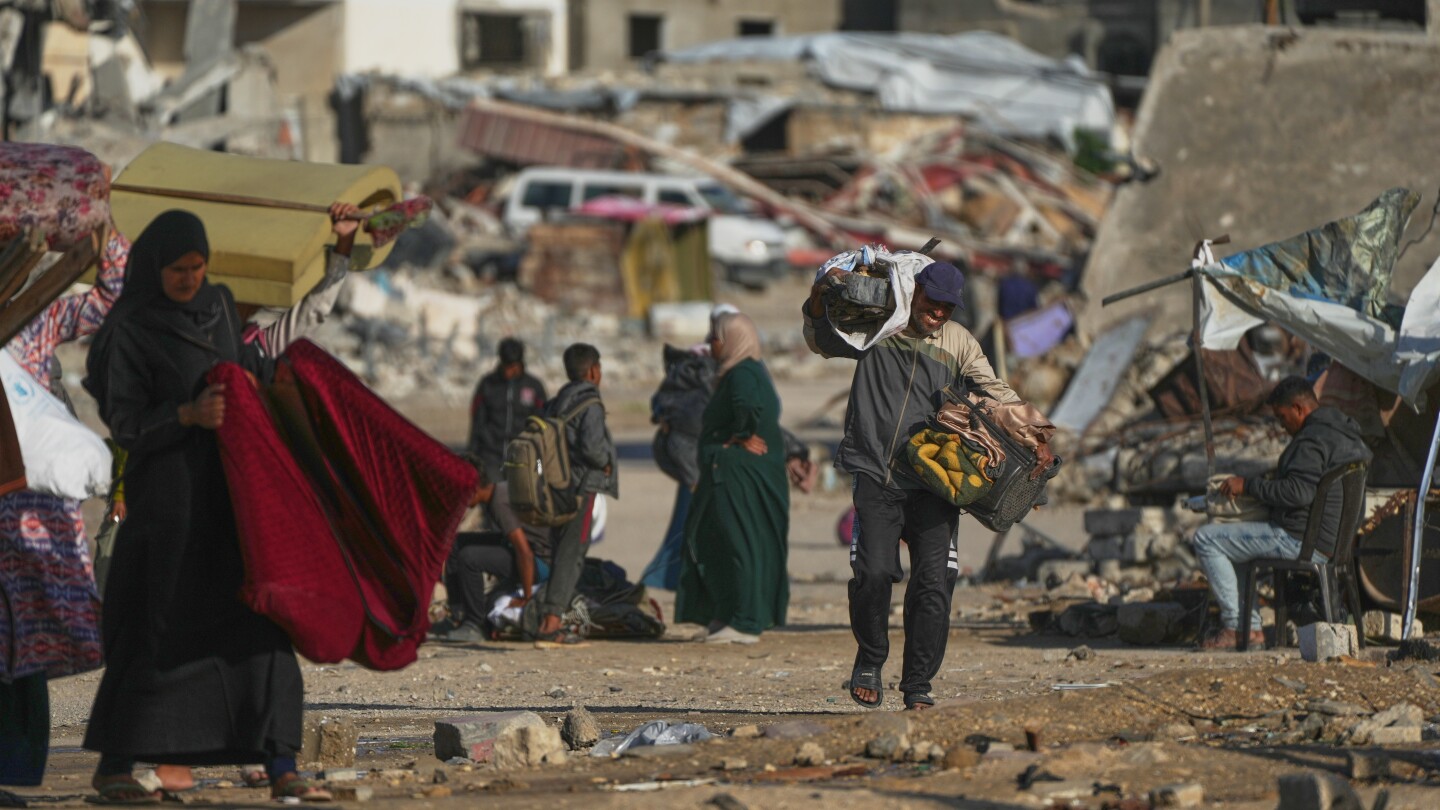
The outcome of Monday’s vote could significantly impact the prospects for lasting peace in Gaza, which has been devastated by two years of conflict. The resolution represents an attempt to provide international legitimacy to the ceasefire framework while addressing the complex questions of Gaza’s governance, security, and eventual political status within a potential Palestinian state.
Fact Checker
Verify the accuracy of this article using The Disinformation Commission analysis and real-time sources.

18 Comments
Given the sensitivity of the Gaza issue, I hope the UN vote can move the needle in a positive direction, even if it’s just incremental progress. A functioning security force and pathway to statehood would be welcome developments.
That’s a good point. Any steps towards a more stable, self-governing Gaza should be seen as progress, even if the overall solution remains elusive.
The situation in Gaza remains deeply concerning. I hope the UN vote can pave the way for meaningful progress, whether through the US plan, the Russian proposal, or some compromise between the two.
Absolutely. The people of Gaza have suffered for far too long. A durable solution that provides security, self-governance, and economic opportunities is desperately needed.
It’s encouraging to hear that several Arab and Muslim nations are willing to contribute troops to a UN stabilization force in Gaza. That kind of regional buy-in could be crucial for the success of any intervention.
Absolutely. Regional partners will be key, both in terms of providing boots on the ground and lending legitimacy to the UN’s efforts.
The situation in Gaza is so complex, with many competing interests at play. I’m curious to see how the UN vote plays out and whether it can lay the groundwork for a durable ceasefire and eventual peace negotiations.
Yes, the UN’s role is critical in providing international legitimacy and support for any stabilization plan. It will be a delicate balancing act.
Given Russia’s involvement, this UN vote on Gaza is shaping up to be another proxy battle in the broader geopolitical tensions. I sincerely hope the council can rise above those dynamics and focus on the humanitarian needs.
That’s a valid concern. Great power rivalries often get in the way of effective conflict resolution. The people of Gaza deserve better than to be caught in the crossfire.
The upcoming UN vote on Gaza is a high-stakes moment. I hope the permanent members, including Russia, can set aside their geopolitical differences and focus on the humanitarian needs of the Palestinian people.
Yes, the veto power of Russia and China is a real concern. Compromise and pragmatism will be essential if the UN is to play a constructive role.
While the details of the US and Russian proposals are unclear, it’s good to see the UN engaged on this issue. Ultimately, any solution needs to prioritize the well-being and rights of the Gazan population.
Agreed. Resolving the Gaza crisis requires a holistic approach that addresses the root causes of the conflict, not just short-term stabilization.
Interesting that the UN vote on Gaza may hinge on Russia’s position. Geopolitics often complicates humanitarian efforts. I hope all parties can find a balanced solution that prioritizes stability and Palestinian self-determination.
Agreed, Russia’s stance will be crucial. Diplomacy and compromise are needed to make progress on this long-standing conflict.
While the US plan may have good intentions, it’s concerning that Russia has introduced a competing proposal. Geopolitical rivalries shouldn’t undermine efforts to address the humanitarian crisis in Gaza.
Absolutely. The people of Gaza have suffered enough – they need tangible progress on the ground, not political posturing at the UN.